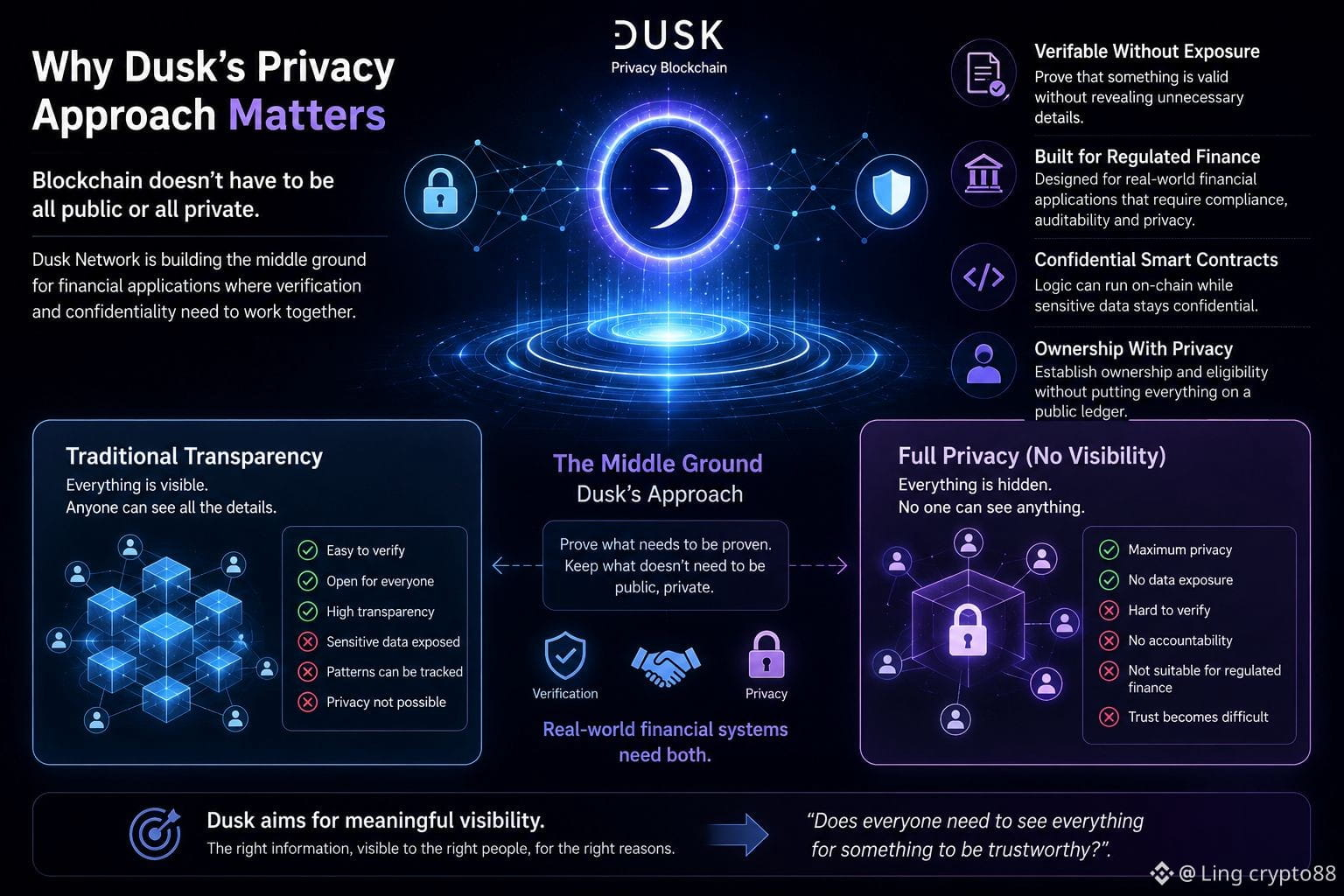
Wenn ich zuerst an Blockchain denke, komme ich natürlich immer wieder auf Transparenz zurück. Das war eine der Ideen, die Blockchain für mich von Anfang an interessant gemacht haben. Aufzeichnungen sind sichtbar, Transaktionen können verifiziert werden, und es gibt weniger Anlass, einfach jemandem beim Wort zu vertrauen. Für viele Krypto-Anwendungsfälle fühlt sich diese Offenheit wie eine Stärke an.
Doch je mehr ich mir Dusk angesehen habe, desto mehr ertappte ich mich dabei, mich zu fragen, wo diese Idee aufhört, nützlich zu sein, und anfängt, zu unnötiger Preisgabe zu werden.
Finanzielle Systeme sind ein gutes Beispiel für das Problem. Verifizierung ist wichtig. Compliance ist wichtig. Eigentumsnachweise sind wichtig. Es muss Verantwortlichkeit geben. Aber bedeutet das automatisch, dass jede einzelne Einzelheit hinter einer finanziellen Transaktion für alle sichtbar sein muss?
Ich glaube nicht, dass das tatsächlich dasselbe ist.
Diese Unterscheidung hat meine Aufmerksamkeit auf Dusk gelenkt. Ich fing an, Privatsphäre weniger als das Verbergen von Informationen zu sehen, sondern vielmehr als die Kontrolle darüber, welche Informationen tatsächlich offengelegt werden müssen. Es gibt einen Unterschied zwischen dem Nachweis, dass etwas gültig ist, und dem Offenlegen von allem, was hinter diesem Nachweis steckt.
Je mehr ich Dusk’ Ansatz betrachtet habe, desto besser verstand ich, warum vertrauliche Smart Contracts für Finanzanwendungen relevant sein können. Das Ziel scheint nicht einfach darin zu bestehen, alles unsichtbar zu machen. Es geht vielmehr darum, ein Gleichgewicht zu finden, in dem wichtige Dinge weiterhin verifiziert werden können, sensible Details aber nicht standardmäßig öffentlich werden müssen.
Das hat dazu geführt, dass ich Blockchain-Privatsphäre anders betrachtet habe.
Vielleicht bedeutet Transparenz nicht, dass jeder alles sehen muss.
Vielleicht lautet die bessere Frage: Was muss tatsächlich sichtbar sein, damit ein Finanzsystem weiterhin vertrauenswürdig bleibt?
Ich glaube nicht, dass es darauf eine einfache Antwort gibt, aber ich denke, Dusk stellt die richtige Frage.
@Dusk #dusk $DUSK
Doch je mehr ich mir Dusk angesehen habe, desto mehr ertappte ich mich dabei, mich zu fragen, wo diese Idee aufhört, nützlich zu sein, und anfängt, zu unnötiger Preisgabe zu werden.
Finanzielle Systeme sind ein gutes Beispiel für das Problem. Verifizierung ist wichtig. Compliance ist wichtig. Eigentumsnachweise sind wichtig. Es muss Verantwortlichkeit geben. Aber bedeutet das automatisch, dass jede einzelne Einzelheit hinter einer finanziellen Transaktion für alle sichtbar sein muss?
Ich glaube nicht, dass das tatsächlich dasselbe ist.
Diese Unterscheidung hat meine Aufmerksamkeit auf Dusk gelenkt. Ich fing an, Privatsphäre weniger als das Verbergen von Informationen zu sehen, sondern vielmehr als die Kontrolle darüber, welche Informationen tatsächlich offengelegt werden müssen. Es gibt einen Unterschied zwischen dem Nachweis, dass etwas gültig ist, und dem Offenlegen von allem, was hinter diesem Nachweis steckt.
Je mehr ich Dusk’ Ansatz betrachtet habe, desto besser verstand ich, warum vertrauliche Smart Contracts für Finanzanwendungen relevant sein können. Das Ziel scheint nicht einfach darin zu bestehen, alles unsichtbar zu machen. Es geht vielmehr darum, ein Gleichgewicht zu finden, in dem wichtige Dinge weiterhin verifiziert werden können, sensible Details aber nicht standardmäßig öffentlich werden müssen.
Das hat dazu geführt, dass ich Blockchain-Privatsphäre anders betrachtet habe.
Vielleicht bedeutet Transparenz nicht, dass jeder alles sehen muss.
Vielleicht lautet die bessere Frage: Was muss tatsächlich sichtbar sein, damit ein Finanzsystem weiterhin vertrauenswürdig bleibt?
Ich glaube nicht, dass es darauf eine einfache Antwort gibt, aber ich denke, Dusk stellt die richtige Frage.
@Dusk #dusk $DUSK