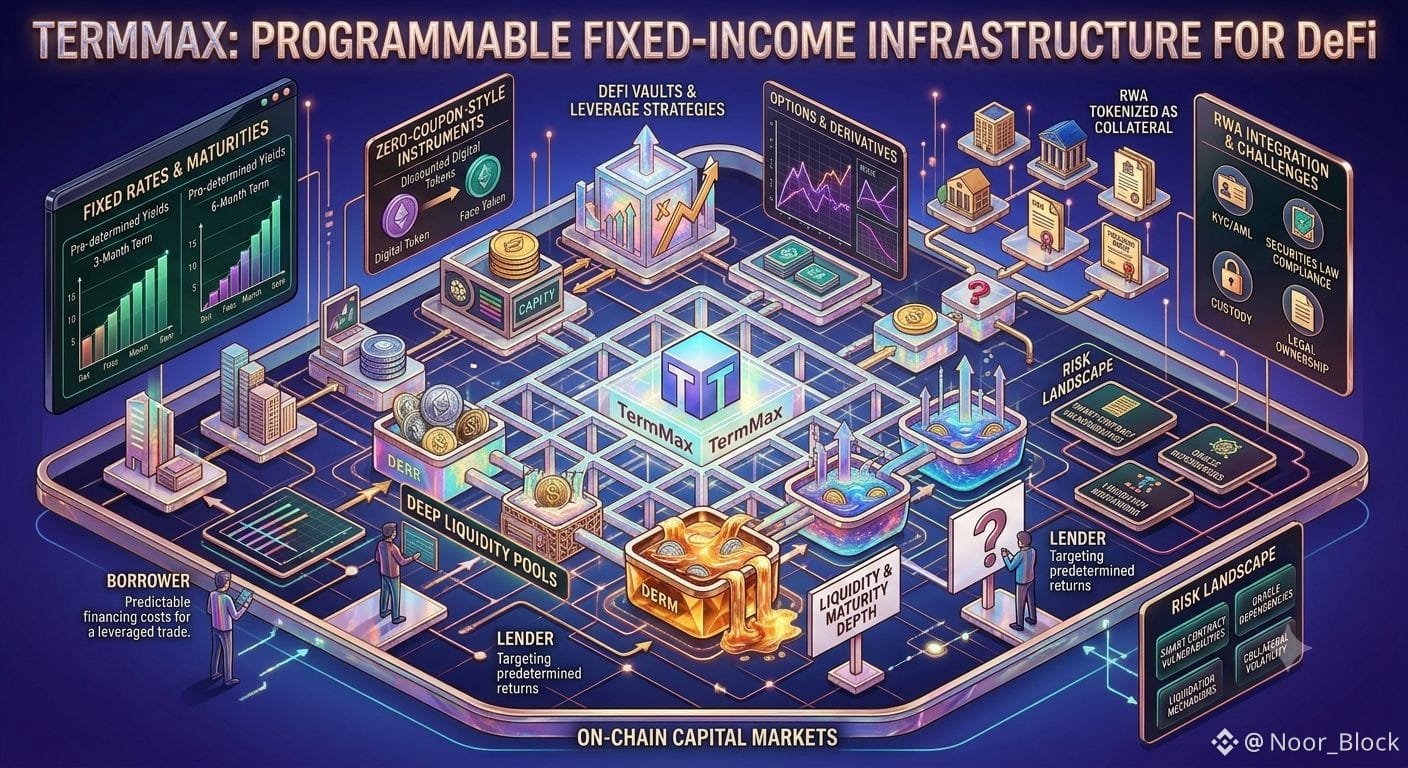

TermMax is taking a different route from the usual variable-rate lending model in DeFi. Instead of leaving borrowing costs entirely exposed to changing utilization, it builds markets around fixed rates and defined maturities, creating a structure that feels closer to traditional fixed-income instruments.
That distinction matters. For borrowers using leverage, predictable financing costs make risk management and trade planning easier. Lenders, meanwhile, can target predetermined returns instead of constantly reacting to changing lending rates. TermMax also introduces zero-coupon-style instruments, vault infrastructure, leverage strategies, and options-related products, expanding the protocol beyond basic lending.
The RWA angle is particularly interesting. Tokenized assets can potentially be used as collateral, allowing capital that represents real-world financial instruments to participate in on-chain credit markets. But this should not be confused with automatic regulatory compliance. KYC, AML, custody, securities law, and legal ownership remain separate challenges.
The biggest question is liquidity. Fixed-rate markets are useful only when borrowers and lenders can find sufficient depth across different maturities and collateral types. Smart-contract, oracle, liquidation, and collateral risks also remain.
My view is that TermMax is best understood as an attempt to build programmable fixed-income infrastructure for DeFi. If it can develop deep liquidity and reliable RWA markets, its role could extend beyond lending into broader on-chain capital markets.
#termmax @TermMax
That distinction matters. For borrowers using leverage, predictable financing costs make risk management and trade planning easier. Lenders, meanwhile, can target predetermined returns instead of constantly reacting to changing lending rates. TermMax also introduces zero-coupon-style instruments, vault infrastructure, leverage strategies, and options-related products, expanding the protocol beyond basic lending.
The RWA angle is particularly interesting. Tokenized assets can potentially be used as collateral, allowing capital that represents real-world financial instruments to participate in on-chain credit markets. But this should not be confused with automatic regulatory compliance. KYC, AML, custody, securities law, and legal ownership remain separate challenges.
The biggest question is liquidity. Fixed-rate markets are useful only when borrowers and lenders can find sufficient depth across different maturities and collateral types. Smart-contract, oracle, liquidation, and collateral risks also remain.
My view is that TermMax is best understood as an attempt to build programmable fixed-income infrastructure for DeFi. If it can develop deep liquidity and reliable RWA markets, its role could extend beyond lending into broader on-chain capital markets.
#termmax @TermMax