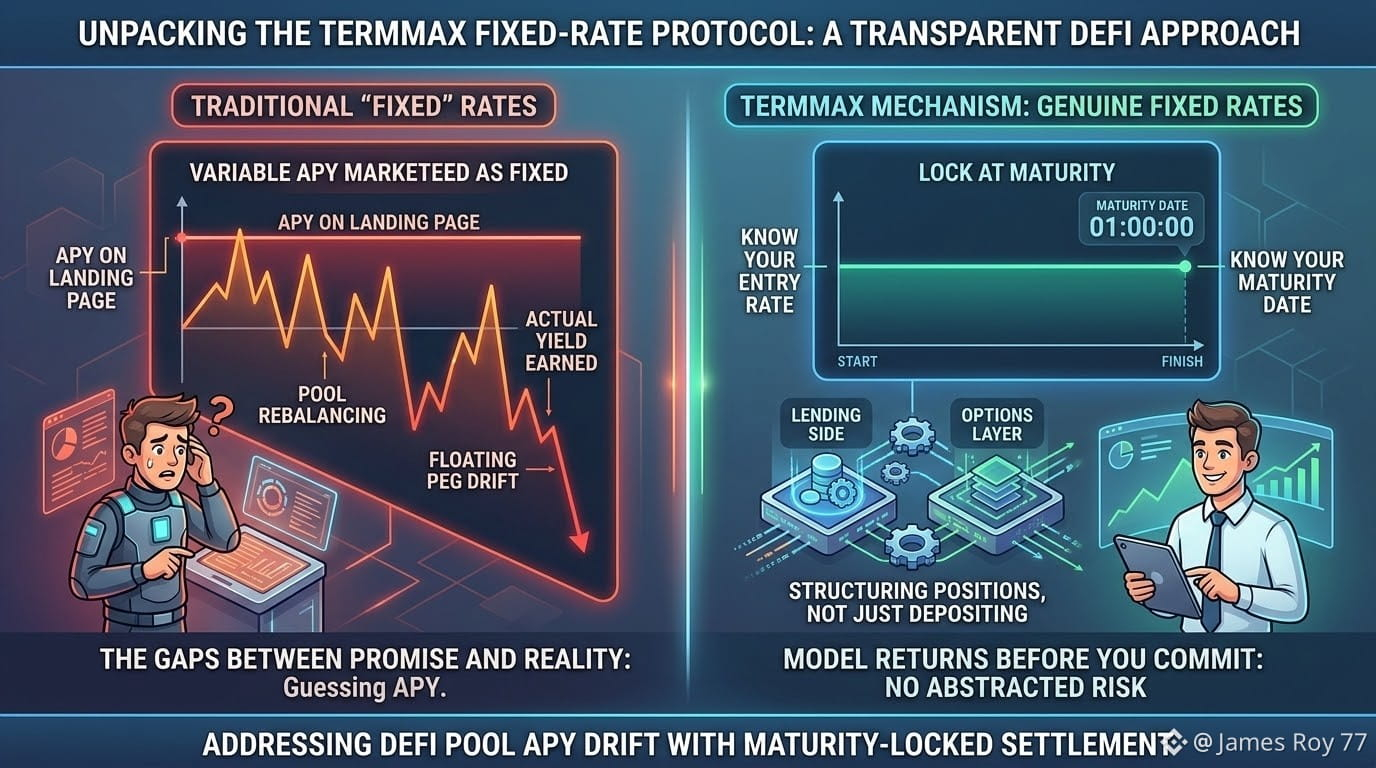
Daran habe ich schon eine Weile gedacht – die meisten „Fixed Rate“-DeFi-Produkte sind in Wahrheit nicht wirklich fix. Es sind eher variable Sätze, die nur besser vermarktet werden. Die Raten driften, Pools rebalancieren sich, und plötzlich ist deine „feste“ Position nicht mehr das, was du unterschrieben hast.
Ich habe in den letzten Wochen etwas Zeit in TermMax verbracht, und es ist ein anderes Mechanismus-Prinzip. Der Satz wird im Moment deiner Eingabe festgeschrieben – gekoppelt an ein Fälligkeitsdatum und nicht an irgendeinen Floating-Peg, der sich unter dir verschiebt. Außerdem gibt es diese Options-Schicht, die parallel zur Lending-Seite läuft. Ehrlich gesagt hat es bei mir eine Weile gedauert, das zu durchdringen – denn du kannst Positionen so strukturieren, dass es nicht nur „einzahlen und hoffen, dass die APY hält“ ist.
Was ich tatsächlich schätze, ist, dass dabei das Risiko nicht wegabstrahiert wird. Du kennst deinen Einstiegssatz, du kennst deine Laufzeit bis zur Fälligkeit. Du kannst deine Rendite modellieren, bevor du dich festlegst, statt zu raten. Für jemanden, der von Pools verbrannt wurde, in denen die APY auf der Landingpage und die APY, die man tatsächlich verdient, zwei verschiedene Zahlen sind, ist das wichtiger, als viele es sich eingestehen.
Ich sage nicht, dass es risikofrei ist – Smart-Contract-Risiken verschwinden nicht, nur weil der Ratenmechanismus „sauberer“ ist, und Liquidität bei Fälligkeit ist etwas, das ich im Blick habe, bevor ich die Position größer dimensioniere. Aber die Design-Logik wirkt so, als würde sie ein echtes Problem lösen, statt einer Story hinterherzulaufen.
Mich würde interessieren, ob jemand anderes seine Positionen schon durch einen vollständigen Laufzeitzyklus gefahren hat – wie hat sich das Settlement in der Praxis angefühlt?
#termmax @TermMax
Ich habe in den letzten Wochen etwas Zeit in TermMax verbracht, und es ist ein anderes Mechanismus-Prinzip. Der Satz wird im Moment deiner Eingabe festgeschrieben – gekoppelt an ein Fälligkeitsdatum und nicht an irgendeinen Floating-Peg, der sich unter dir verschiebt. Außerdem gibt es diese Options-Schicht, die parallel zur Lending-Seite läuft. Ehrlich gesagt hat es bei mir eine Weile gedauert, das zu durchdringen – denn du kannst Positionen so strukturieren, dass es nicht nur „einzahlen und hoffen, dass die APY hält“ ist.
Was ich tatsächlich schätze, ist, dass dabei das Risiko nicht wegabstrahiert wird. Du kennst deinen Einstiegssatz, du kennst deine Laufzeit bis zur Fälligkeit. Du kannst deine Rendite modellieren, bevor du dich festlegst, statt zu raten. Für jemanden, der von Pools verbrannt wurde, in denen die APY auf der Landingpage und die APY, die man tatsächlich verdient, zwei verschiedene Zahlen sind, ist das wichtiger, als viele es sich eingestehen.
Ich sage nicht, dass es risikofrei ist – Smart-Contract-Risiken verschwinden nicht, nur weil der Ratenmechanismus „sauberer“ ist, und Liquidität bei Fälligkeit ist etwas, das ich im Blick habe, bevor ich die Position größer dimensioniere. Aber die Design-Logik wirkt so, als würde sie ein echtes Problem lösen, statt einer Story hinterherzulaufen.
Mich würde interessieren, ob jemand anderes seine Positionen schon durch einen vollständigen Laufzeitzyklus gefahren hat – wie hat sich das Settlement in der Praxis angefühlt?
#termmax @TermMax