

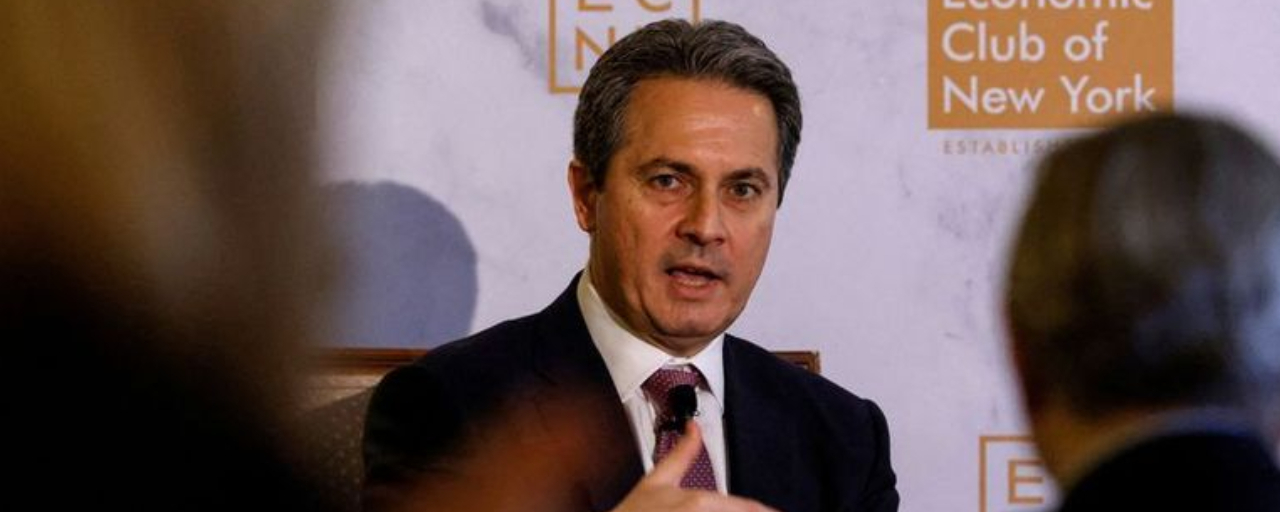
Alberto Musalem, Präsident der Federal Reserve Bank of St. Louis, der in 2026 kein stimmberechtigtes Mitglied des Federal Open Market Committee (FOMC) ist — St. Louis rotiert den Stimmplatz mit Atlanta und Dallas, und Dallas hat ihn in diesem Jahr, sagte, er habe empfohlen, die Zinsen im Juli anzuheben, habe jedoch davon abgesehen, durchblicken zu lassen, was er sich für die September-Sitzung wünscht. Diese Zurückhaltung steht im Gegensatz zu einer eher hawkischen Lesart der Preise: Die zugrunde liegende Inflation liege zwischen 2,5 % und 3 %, sagte er, und sie sei zu hoch und müsse sinken.
Er möchte, dass die Schlagzeilen-Inflation innerhalb von 18 Monaten wieder auf 2% kommt, aber angesichts dessen, wo die Zinsen heute stehen, sieht er eine geringere Wahrscheinlichkeit, dass das tatsächlich gelingt. Die Geldpolitik ist seiner Einschätzung nach derzeit neutral bis locker — nicht restriktiv — und ein früheres Anheben könnte der Fed später ein noch aggressiveres hektisches Vorgehen ersparen.
In Bezug auf den Arbeitsmarkt schlug Musalem einen ruhigeren Ton an und sah in dieser Ecke der Wirtschaft keinen Inflationsdruck. Er verwies auf ein mögliches besonders starkes El Nino als den nächsten möglichen Angebotsschock und betonte, dass die Fed bei Schocks wie diesem das Rauschen durchschauen müsse — hin zur Kerninflation — statt der Schlagzeilen-Zahl hinterherzulaufen.
Die Finanzierungsbedingungen seien insgesamt ziemlich locker, sagte er — mit starkem Wachstum und Investitionen, die in den Anleihemarkt hineinwirken — allerdings wies er auf Bereiche der Wirtschaft hin, in denen es zunehmend dazu kommt, dass Kredite verdrängt werden.
Musalem war in Bezug auf die institutionelle Seite unmissverständlich: Die Glaubwürdigkeit der Fed steht nicht in Frage, und die Zentralbank bleibt darauf fokussiert, die Geldpolitik unabhängig von der Fiskalpolitik zu halten. Forward Guidance, so fügte er hinzu, sei ein Instrument für eine Welt mit Nullzinsen — nicht für die, in der die Fed derzeit operiert. Er machte außerdem den Fall, dass das Beste, was die Fed für das Wachstum tun kann, darin besteht, die Inflation wieder auf das Zielniveau zu bringen — selbst während Unternehmen mit hohen Inputkosten zu kämpfen haben und die Produktivität erste Anzeichen einer Erholung zeigt.
Kernaussagen
Geldpolitik
Empfohlen wird, die Zinsen im Juli anzuheben, aber er wird keine klare Einschätzung dazu abgeben, was er sich im September für das FOMC von der Fed wünscht.
Die Geldpolitik ist derzeit neutral oder locker.
Zinserhöhungen jetzt könnten später stärkeres Handeln verhindern.
Inflation
Er will, dass die Inflation innerhalb von 18 Monaten auf 2% sinkt.
Wenn man Angebotsschocks hat, muss man auf die Kerninflation schauen.
Die zugrunde liegende Inflation liegt zwischen 2,5% und 3%.
Sie ist zu hoch und muss gesenkt werden.
Die größte Sorge der Öffentlichkeit ist die Inflation.
Angesichts der aktuellen Fed-Zinsen sieht er eine geringere Wahrscheinlichkeit, die Inflation auf 2% zu bringen.
Arbeitsmarkt
Vom Arbeitsmarkt kommt kein Inflationsdruck.
Fed-Transparenz & Rechenschaftspflicht
Die Forward Guidance deutet auf eine Verpflichtung hin; sie zeigt, dass ein Rahmen kommuniziert wird, ist etwas anderes.
Forward Guidance ist nützlich, wenn die Zinsen bei null liegen.
Die Glaubwürdigkeit der Fed steht nicht in Frage.
Die Fed konzentriert sich darauf, die Geldpolitik unabhängig von der Fiskalpolitik zu halten.
Finanzierungsbedingungen
In einigen Teilen der Wirtschaft kommt es dazu, dass Kredite verdrängt werden.
Starkes Wachstum und Investitionen wirken auf die Anleihemärkte.
Die Finanzierungsbedingungen sind hier ziemlich locker.
Wachstum & Wirtschaft
Unternehmen stehen vor hohen Inputkosten.
Das Beste, was die Fed für das Wachstum tun kann, ist, die Inflation wieder auf 2% zu bringen.
KI & Produktivität
Die Produktivität zeigt eine Erholung.
Energie- & externe Risiken
Ein besonders starkes El Nino könnte der nächste Angebotsschock sein.