Die versteckte Variable in DeFi ist nicht immer die Rendite
Eine Sache, die ich an TermMax interessant finde, ist, dass dessen Vault-Modell die Art verändert, wie ich über passives Kapital nachdenke.
In einer typischen DeFi-Oberfläche kann sich die Strategie ganz einfach anfühlen: Vermögenswerte einzahlen, abwarten, Erträge einsammeln. Aber die echte Komplexität steckt darunter.
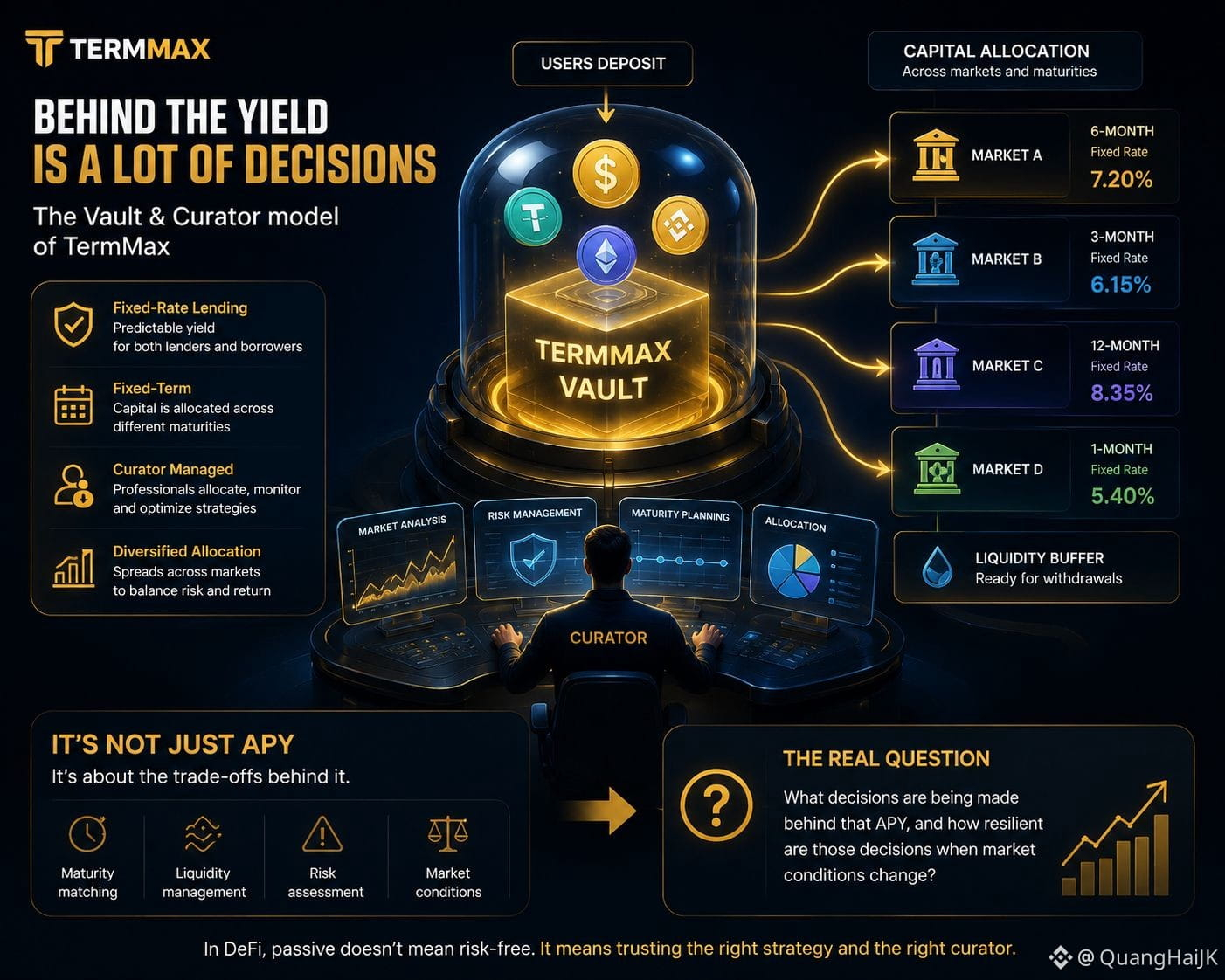
Sobald Kapital in einen Vault gelangt, muss jemand Entscheidungen darüber treffen, wie dieses Kapital eingesetzt wird. Welche Instrumente eignen sich? Wie sollten die Laufzeiten verteilt werden? Wie viel Liquidität sollte verfügbar bleiben? Was passiert, wenn sich die Marktbedingungen ändern, bevor diese Positionen fällig werden?
Das schafft eine interessante Unterscheidung zwischen dem Erwirtschaften von Rendite und dem Management der Bedingungen, die erforderlich sind, um diese Rendite zu erzielen.
Festzins-Produkte machen das noch deutlicher. Eine angegebene Rendite ist keine isolierte Zahl. Sie hängt mit der Zeit, der Liquidität, der Marktnachfrage und der spezifischen Struktur der Position zusammen. Zwei Strategien mit ähnlichen Renditen können völlig unterschiedliche Risikoprofile haben, wenn sich ihre Laufzeit- und Liquiditätsannahmen unterscheiden.
Darum denke ich, dass die Curator-Rolle mehr Aufmerksamkeit verdient. Der Wert liegt nicht einfach darin, die höchste verfügbare Rendite zu finden. Es geht darum, eine Allokation zu konstruieren, bei der die Rendite im Verhältnis zu den eingegangenen Verpflichtungen sinnvoll ist.
Für mich ist die spannendere Frage rund um TermMax daher nicht:
„Wie viel APY kann dieser Vault generieren?“
Sondern:
„Welche Entscheidungen werden hinter diesem APY getroffen, und wie resilient sind diese Entscheidungen, wenn die Marktbedingungen nicht mehr freundlich sind?“
Genau dort wird eine passive Strategie deutlich interessanter zu analysieren.
$BTC $ETH $XRP
#termmax @TermMax
Eine Sache, die ich an TermMax interessant finde, ist, dass dessen Vault-Modell die Art verändert, wie ich über passives Kapital nachdenke.
In einer typischen DeFi-Oberfläche kann sich die Strategie ganz einfach anfühlen: Vermögenswerte einzahlen, abwarten, Erträge einsammeln. Aber die echte Komplexität steckt darunter.
Sobald Kapital in einen Vault gelangt, muss jemand Entscheidungen darüber treffen, wie dieses Kapital eingesetzt wird. Welche Instrumente eignen sich? Wie sollten die Laufzeiten verteilt werden? Wie viel Liquidität sollte verfügbar bleiben? Was passiert, wenn sich die Marktbedingungen ändern, bevor diese Positionen fällig werden?
Das schafft eine interessante Unterscheidung zwischen dem Erwirtschaften von Rendite und dem Management der Bedingungen, die erforderlich sind, um diese Rendite zu erzielen.
Festzins-Produkte machen das noch deutlicher. Eine angegebene Rendite ist keine isolierte Zahl. Sie hängt mit der Zeit, der Liquidität, der Marktnachfrage und der spezifischen Struktur der Position zusammen. Zwei Strategien mit ähnlichen Renditen können völlig unterschiedliche Risikoprofile haben, wenn sich ihre Laufzeit- und Liquiditätsannahmen unterscheiden.
Darum denke ich, dass die Curator-Rolle mehr Aufmerksamkeit verdient. Der Wert liegt nicht einfach darin, die höchste verfügbare Rendite zu finden. Es geht darum, eine Allokation zu konstruieren, bei der die Rendite im Verhältnis zu den eingegangenen Verpflichtungen sinnvoll ist.
Für mich ist die spannendere Frage rund um TermMax daher nicht:
„Wie viel APY kann dieser Vault generieren?“
Sondern:
„Welche Entscheidungen werden hinter diesem APY getroffen, und wie resilient sind diese Entscheidungen, wenn die Marktbedingungen nicht mehr freundlich sind?“
Genau dort wird eine passive Strategie deutlich interessanter zu analysieren.
$BTC $ETH $XRP
#termmax @TermMax