Tiefes Eintauchen in die @TermMax Timelock-Mechanik verändert, wie wir über Systemsicherheit nachdenken.
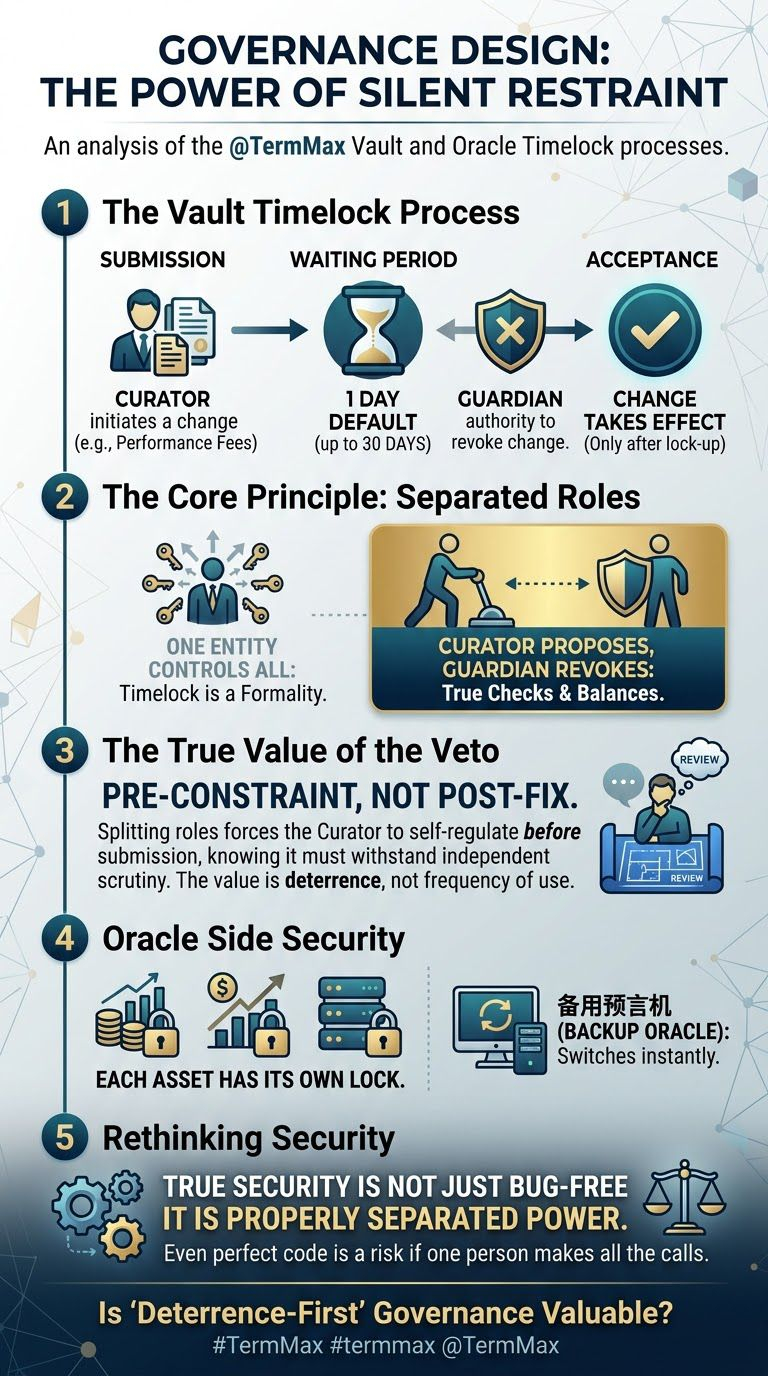
Die TermMax Vault-Parameter-Update-Pipeline ist unkompliziert:
Curator übermittelt den Vorschlag (wie das Verschieben von Performance Fees)
Das System geht in eine 1- bis 30-tägige Sperrphase
Die Änderung wird akzeptiert, nachdem die Sperrfrist abgelaufen ist
Der Guardian kann während dieser Wartezeit eingreifen und die Änderung stoppen.
Der clevere Teil ist nicht die Dauer der Wartezeit – sondern die Aufteilung der Macht. Wenn Vorschlags- und Ausführungsrechte an einem Ort zusammenlaufen, werden Timelocks nutzlos. Durch die Entkopplung funktioniert die Vetomacht psychologisch: Sie zwingt den Curator, ihre eigenen schlechten Ideen vor der Einreichung zu zensieren. Vorbeugung statt Korrektur.
Dieser Ansatz setzt sich in ihrer Oracle-Einrichtung fort: Er kombiniert einzelne Asset-Sperren mit dedizierten Backup-Oracles für schnelle Anpassung.
Das ist eine klare Erinnerung daran, dass fehlerfreier Code wenig bedeutet, wenn Ihre Governance auf absoluter Autorität beruht. Strukturelle Sicherheit erfordert Checks and Balances.
Ist „deterrence-first“-Governance das richtige Modell für die langfristige Widerstandsfähigkeit von DeFi-Protokollen? #TermMax #termmax @TermMax
Die TermMax Vault-Parameter-Update-Pipeline ist unkompliziert:
Curator übermittelt den Vorschlag (wie das Verschieben von Performance Fees)
Das System geht in eine 1- bis 30-tägige Sperrphase
Die Änderung wird akzeptiert, nachdem die Sperrfrist abgelaufen ist
Der Guardian kann während dieser Wartezeit eingreifen und die Änderung stoppen.
Der clevere Teil ist nicht die Dauer der Wartezeit – sondern die Aufteilung der Macht. Wenn Vorschlags- und Ausführungsrechte an einem Ort zusammenlaufen, werden Timelocks nutzlos. Durch die Entkopplung funktioniert die Vetomacht psychologisch: Sie zwingt den Curator, ihre eigenen schlechten Ideen vor der Einreichung zu zensieren. Vorbeugung statt Korrektur.
Dieser Ansatz setzt sich in ihrer Oracle-Einrichtung fort: Er kombiniert einzelne Asset-Sperren mit dedizierten Backup-Oracles für schnelle Anpassung.
Das ist eine klare Erinnerung daran, dass fehlerfreier Code wenig bedeutet, wenn Ihre Governance auf absoluter Autorität beruht. Strukturelle Sicherheit erfordert Checks and Balances.
Ist „deterrence-first“-Governance das richtige Modell für die langfristige Widerstandsfähigkeit von DeFi-Protokollen? #TermMax #termmax @TermMax