Nachhilfe für ankommende Studierende: Das Schwierigste ist immer, zwei zusammenhängende Ideen so im Kopf einer Person zu trennen, dass sie nicht ineinander verlaufen. Beim Durcharbeiten von Dusk' Privacy-Stack diese Woche hatte ich genau dasselbe Problem.
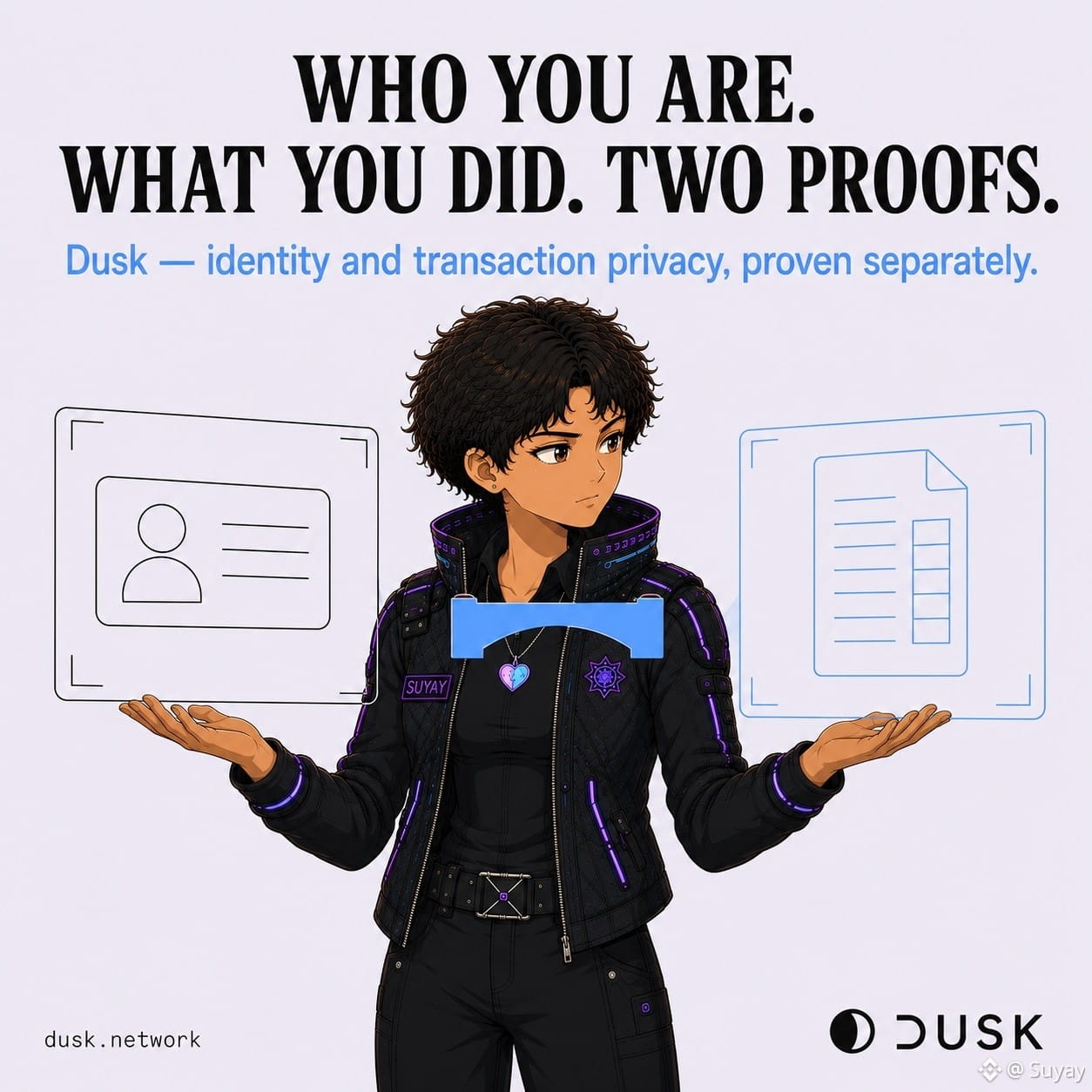
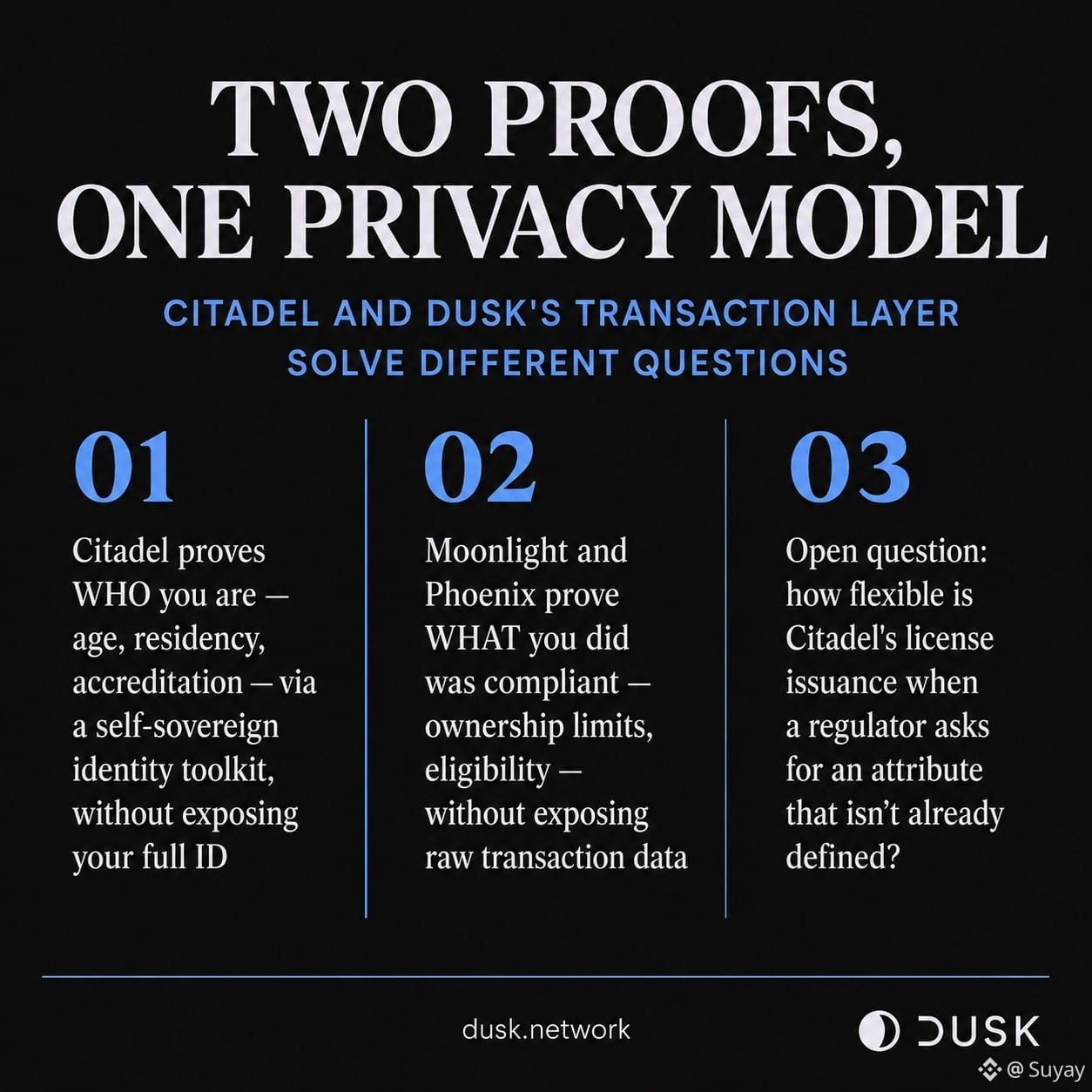
Citadel und die vertrauliche Transaktionsschicht von Dusk lösen unterschiedliche Fragen, die sich wie dieselbe Frage anhören. Citadel geht darum zu beweisen, wer du bist: Alter, Wohnsitz, Akkreditierung – ausgestellt und verifiziert über ein Toolkit für Self-Sovereign Identity, damit du belegen kannst, dass du für etwas qualifiziert bist, ohne deine vollständige ID herauszugeben. Die Transaktionsschicht hingegen geht über Moonlight und Phoenix darum zu beweisen, dass das, was du getan hast, konform ist: Eigentumsgrenzen, Übertragungsfähigkeit – verifiziert, ohne dass die Rohdaten der Transaktion der Öffentlichkeit offengelegt werden.
Zusammen ergibt das den eigentlichen Anspruch hinter „programmable privacy“: ein Nachweis für die Identität, ein separater Nachweis für das Verhalten – keiner der beiden muss den anderen vollständig öffentlich machen, um einen Regulierer zu zufrieden zu stellen, der tatsächlich berechtigt ist zu prüfen.
Was ich immer wieder bedenke: Die Anforderungen an Identität sind nicht in allen Rechtsräumen gleich. Was in einer regulatorischen Umgebung als ausreichender Nachweis für den Wohnsitz oder für eine Akkreditierung gilt, ist nicht automatisch das, was in einer anderen verlangt wird. Ich habe noch nicht gesehen, wie flexibel die Lizenzerteilung von Citadel tatsächlich ist, wenn das Attribut, das ein Regulierer haben möchte, nicht zu den bereits definierten gehört. Das ist weniger eine Datenschutzfrage und mehr eine Frage: „Wie viele Regulierer kann das gleichzeitig tatsächlich bedienen?“
#dusk $DUSK @Dusk
Citadel und die vertrauliche Transaktionsschicht von Dusk lösen unterschiedliche Fragen, die sich wie dieselbe Frage anhören. Citadel geht darum zu beweisen, wer du bist: Alter, Wohnsitz, Akkreditierung – ausgestellt und verifiziert über ein Toolkit für Self-Sovereign Identity, damit du belegen kannst, dass du für etwas qualifiziert bist, ohne deine vollständige ID herauszugeben. Die Transaktionsschicht hingegen geht über Moonlight und Phoenix darum zu beweisen, dass das, was du getan hast, konform ist: Eigentumsgrenzen, Übertragungsfähigkeit – verifiziert, ohne dass die Rohdaten der Transaktion der Öffentlichkeit offengelegt werden.
Zusammen ergibt das den eigentlichen Anspruch hinter „programmable privacy“: ein Nachweis für die Identität, ein separater Nachweis für das Verhalten – keiner der beiden muss den anderen vollständig öffentlich machen, um einen Regulierer zu zufrieden zu stellen, der tatsächlich berechtigt ist zu prüfen.
Was ich immer wieder bedenke: Die Anforderungen an Identität sind nicht in allen Rechtsräumen gleich. Was in einer regulatorischen Umgebung als ausreichender Nachweis für den Wohnsitz oder für eine Akkreditierung gilt, ist nicht automatisch das, was in einer anderen verlangt wird. Ich habe noch nicht gesehen, wie flexibel die Lizenzerteilung von Citadel tatsächlich ist, wenn das Attribut, das ein Regulierer haben möchte, nicht zu den bereits definierten gehört. Das ist weniger eine Datenschutzfrage und mehr eine Frage: „Wie viele Regulierer kann das gleichzeitig tatsächlich bedienen?“
#dusk $DUSK @Dusk