#dusk $DUSK @Dusk
Die meisten bewerten die Privatsphäre von Dusk, ohne die Belastung für Validatoren einzupreisen, die durch das Verstecken von Zustandsinformationen entsteht.
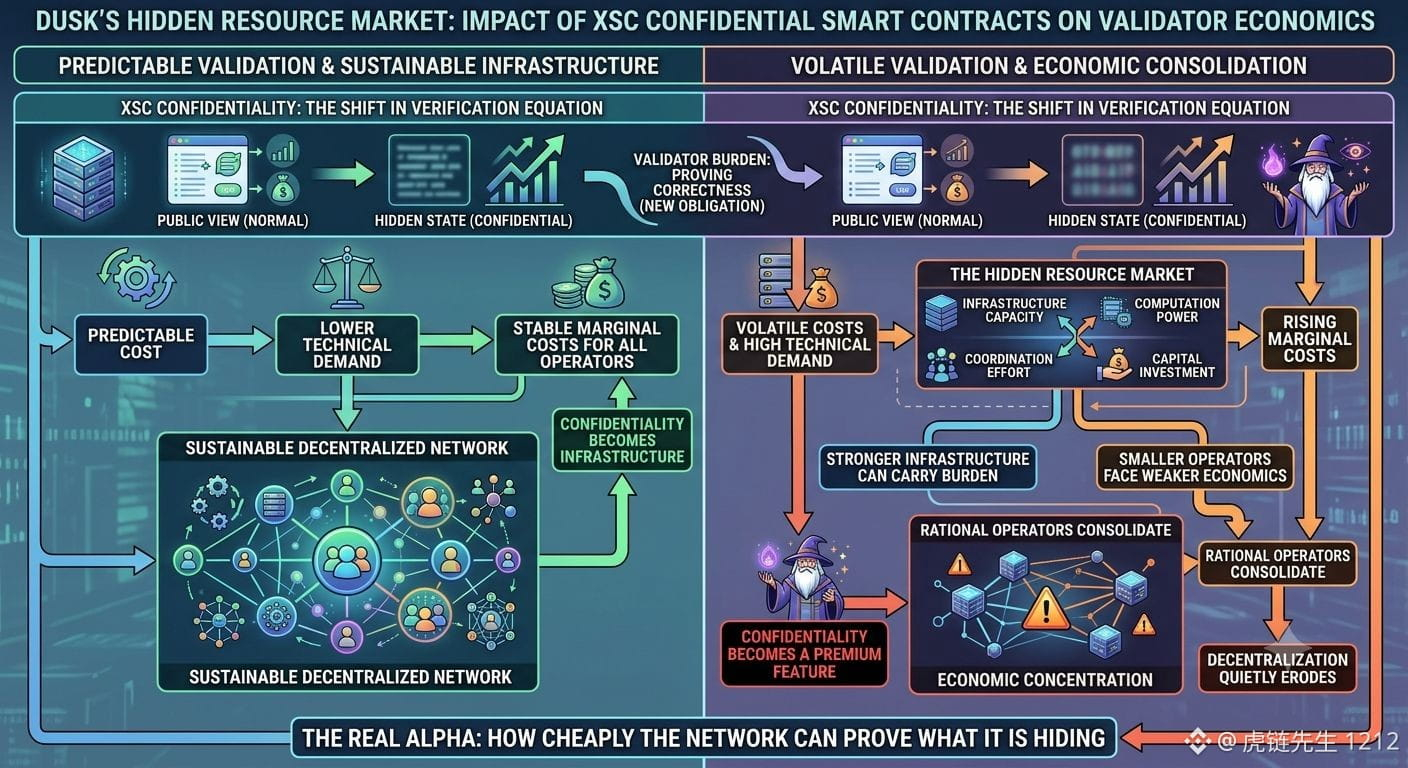
Der XSC-Standard verändert die Verifikationsgleichung, weil vertrauliche Smart Contracts Informationen entfernen, die die Transaktionsvalidierung normalerweise unkompliziert machen. Die Daten verschwinden aus der öffentlichen Sicht, aber die Pflicht, Korrektheit nachzuweisen, bleibt bestehen. Sie verlagert sich in Validierungslogik, Infrastruktur, Berechnung und die Koordination zwischen den Teilnehmern. Das schafft einen versteckten Ressourcenmarkt innerhalb der Layer-1. Irgendjemand muss die zusätzliche Arbeit übernehmen, jedes Mal wenn Vertraulichkeit die Verifikationskomplexität erhöht. Validatoren mit stärkerer Infrastruktur können diese Last länger tragen, während kleinere Betreiber mit steigenden Grenzkosten und schwächerer Wirtschaftlichkeit konfrontiert werden. Genau dort kann Dezentralisierung still und leise erodieren.
Der Verhaltensimpuls ist einfach. Wenn Validierung planbar bleibt, nehmen Betreiber weiter teil und Vertraulichkeit wird zu nachhaltiger Infrastruktur statt zu einem Premium-Feature. Wenn die Kosten für Verifikation jedoch volatil werden oder technisch anspruchsvoll sind, schließen sich rationale Betreiber um besser finanzierte Infrastruktur zusammen — und drängen Dusk in Richtung wirtschaftlicher Konzentration, auch wenn das Protokoll technisch dezentral bleibt. Die eigentliche Alpha liegt nicht darin, wie viel Information XSC verbirgt. Entscheidend ist, wie günstig das Netzwerk nachweisen kann, was es verbirgt.
Die meisten bewerten die Privatsphäre von Dusk, ohne die Belastung für Validatoren einzupreisen, die durch das Verstecken von Zustandsinformationen entsteht.
Der XSC-Standard verändert die Verifikationsgleichung, weil vertrauliche Smart Contracts Informationen entfernen, die die Transaktionsvalidierung normalerweise unkompliziert machen. Die Daten verschwinden aus der öffentlichen Sicht, aber die Pflicht, Korrektheit nachzuweisen, bleibt bestehen. Sie verlagert sich in Validierungslogik, Infrastruktur, Berechnung und die Koordination zwischen den Teilnehmern. Das schafft einen versteckten Ressourcenmarkt innerhalb der Layer-1. Irgendjemand muss die zusätzliche Arbeit übernehmen, jedes Mal wenn Vertraulichkeit die Verifikationskomplexität erhöht. Validatoren mit stärkerer Infrastruktur können diese Last länger tragen, während kleinere Betreiber mit steigenden Grenzkosten und schwächerer Wirtschaftlichkeit konfrontiert werden. Genau dort kann Dezentralisierung still und leise erodieren.
Der Verhaltensimpuls ist einfach. Wenn Validierung planbar bleibt, nehmen Betreiber weiter teil und Vertraulichkeit wird zu nachhaltiger Infrastruktur statt zu einem Premium-Feature. Wenn die Kosten für Verifikation jedoch volatil werden oder technisch anspruchsvoll sind, schließen sich rationale Betreiber um besser finanzierte Infrastruktur zusammen — und drängen Dusk in Richtung wirtschaftlicher Konzentration, auch wenn das Protokoll technisch dezentral bleibt. Die eigentliche Alpha liegt nicht darin, wie viel Information XSC verbirgt. Entscheidend ist, wie günstig das Netzwerk nachweisen kann, was es verbirgt.