„Hier ist ein Szenario, das ich nicht aufhören kann, im Kopf hin- und herzuwälzen.
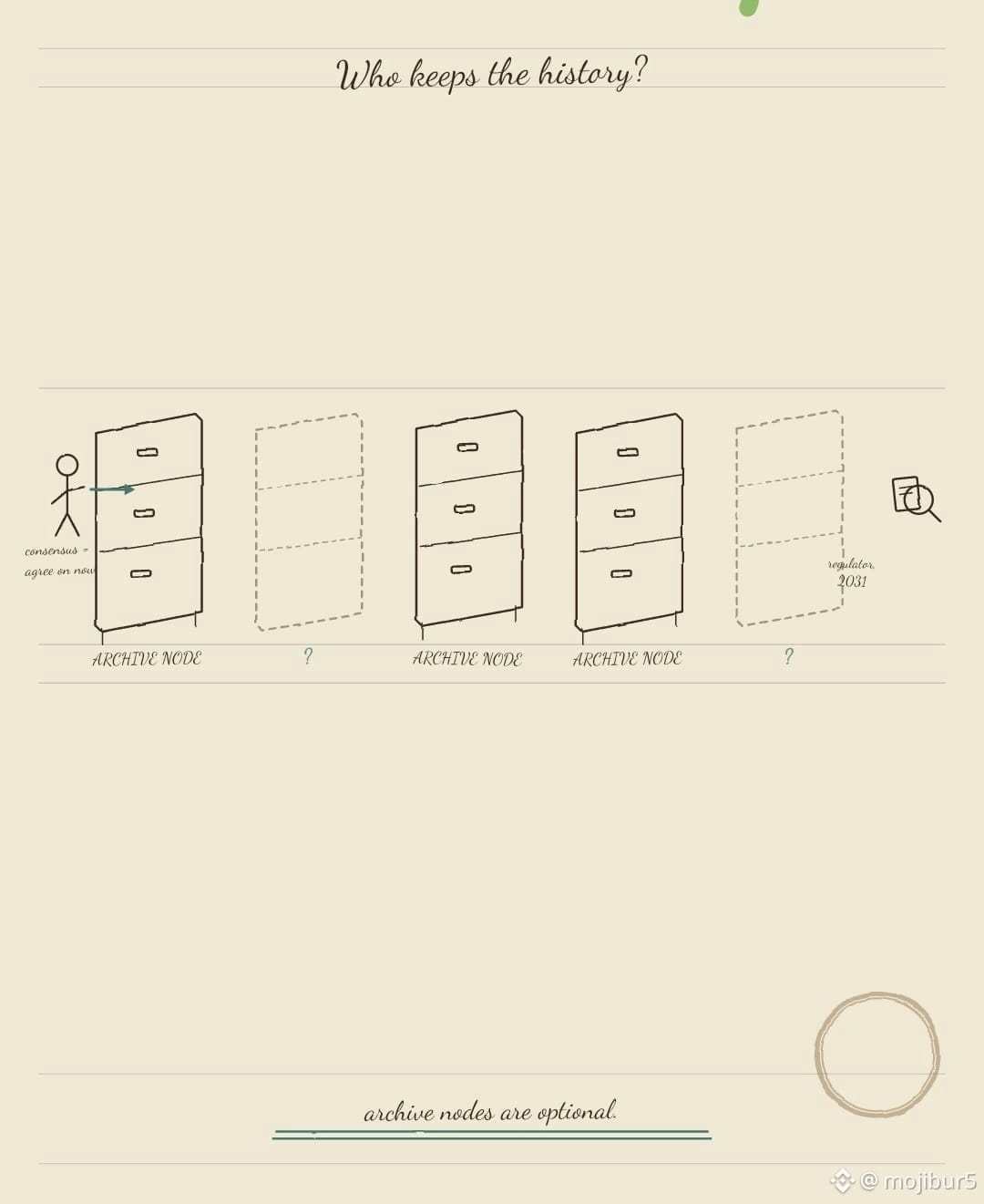
Es ist 2031. Ein Regulierer fragt eine Location nach @Dusk , sie solle die vollständige Ereignishistorie eines tokenisierten Bonds bereitstellen, der 2026 ausgegeben wurde — jede Übertragung, jede fehlgeschlagene Übertragung, jede Unternehmensmaßnahme.
Wer hat das?
Nicht Provisionierer. Ihre Aufgabe ist Konsens, und Konsens braucht nicht, sich an die gesamte Vergangenheit zu erinnern — es geht darum, sich auf die Gegenwart zu einigen. Die vollständige Historie liegt bei Archiv-Knoten, das ist ein eigener, optionaler Knotentyp in Dusk’s Doku, der neben Provisionierern und Provern sitzt.
„Optional“ macht in diesem Satz die schwere Arbeit.
Boreas hat die Archivdaten tatsächlich reichhaltiger gemacht, nicht dünner. Revertierte Vertragsevents werden nun mit einem „reverted“-Marker aufbewahrt, sodass Archiv-Consumer den Unterschied erkennen können zwischen „das ist passiert“ und „das wurde versucht und rückgängig gemacht“. Das ist eine durchdachte Änderung — viele Ketten werfen fehlgeschlagene Events einfach weg und lassen Indexer im Unklaren.
Aber eine reichhaltige Historie muss auch irgendwo gespeichert werden. Und als ich mir angesehen habe, was tatsächlich läuft: der Block-Explorer, den die meisten nutzen, und das Netzwerk-Dashboard werden beide auf der eigenen Ecosystem-Seite von Dusk als gemeinschaftlich betrieben aufgeführt — mit einem ausdrücklichen Hinweis, dass sie unabhängig sind und keine Empfehlung darstellen.
Damit beruht die Nachvollziehbarkeit, die eine regulierte-Asset-Kette plausibel macht, derzeit auf Freiwilligen und Community-Infrastruktur. Das ist nicht einzigartig für $DUSK — es gilt für die meisten Ketten. Nur dass die meisten Ketten sich nicht aktiv gegenüber Auditoren anpreisen.
Ich glaube nicht, dass das ein Skandal ist. Ich glaube, es ist eine unbezahlte Abhängigkeit.
Wenn du der Compliance-Officer in einer Location wärst, die on-chain abwickelt — würdest du deinen eigenen Archivknoten betreiben oder darauf vertrauen, dass jemand anders ihn noch in fünf Jahren betreibt?
#dusk
Es ist 2031. Ein Regulierer fragt eine Location nach @Dusk , sie solle die vollständige Ereignishistorie eines tokenisierten Bonds bereitstellen, der 2026 ausgegeben wurde — jede Übertragung, jede fehlgeschlagene Übertragung, jede Unternehmensmaßnahme.
Wer hat das?
Nicht Provisionierer. Ihre Aufgabe ist Konsens, und Konsens braucht nicht, sich an die gesamte Vergangenheit zu erinnern — es geht darum, sich auf die Gegenwart zu einigen. Die vollständige Historie liegt bei Archiv-Knoten, das ist ein eigener, optionaler Knotentyp in Dusk’s Doku, der neben Provisionierern und Provern sitzt.
„Optional“ macht in diesem Satz die schwere Arbeit.
Boreas hat die Archivdaten tatsächlich reichhaltiger gemacht, nicht dünner. Revertierte Vertragsevents werden nun mit einem „reverted“-Marker aufbewahrt, sodass Archiv-Consumer den Unterschied erkennen können zwischen „das ist passiert“ und „das wurde versucht und rückgängig gemacht“. Das ist eine durchdachte Änderung — viele Ketten werfen fehlgeschlagene Events einfach weg und lassen Indexer im Unklaren.
Aber eine reichhaltige Historie muss auch irgendwo gespeichert werden. Und als ich mir angesehen habe, was tatsächlich läuft: der Block-Explorer, den die meisten nutzen, und das Netzwerk-Dashboard werden beide auf der eigenen Ecosystem-Seite von Dusk als gemeinschaftlich betrieben aufgeführt — mit einem ausdrücklichen Hinweis, dass sie unabhängig sind und keine Empfehlung darstellen.
Damit beruht die Nachvollziehbarkeit, die eine regulierte-Asset-Kette plausibel macht, derzeit auf Freiwilligen und Community-Infrastruktur. Das ist nicht einzigartig für $DUSK — es gilt für die meisten Ketten. Nur dass die meisten Ketten sich nicht aktiv gegenüber Auditoren anpreisen.
Ich glaube nicht, dass das ein Skandal ist. Ich glaube, es ist eine unbezahlte Abhängigkeit.
Wenn du der Compliance-Officer in einer Location wärst, die on-chain abwickelt — würdest du deinen eigenen Archivknoten betreiben oder darauf vertrauen, dass jemand anders ihn noch in fünf Jahren betreibt?
#dusk