

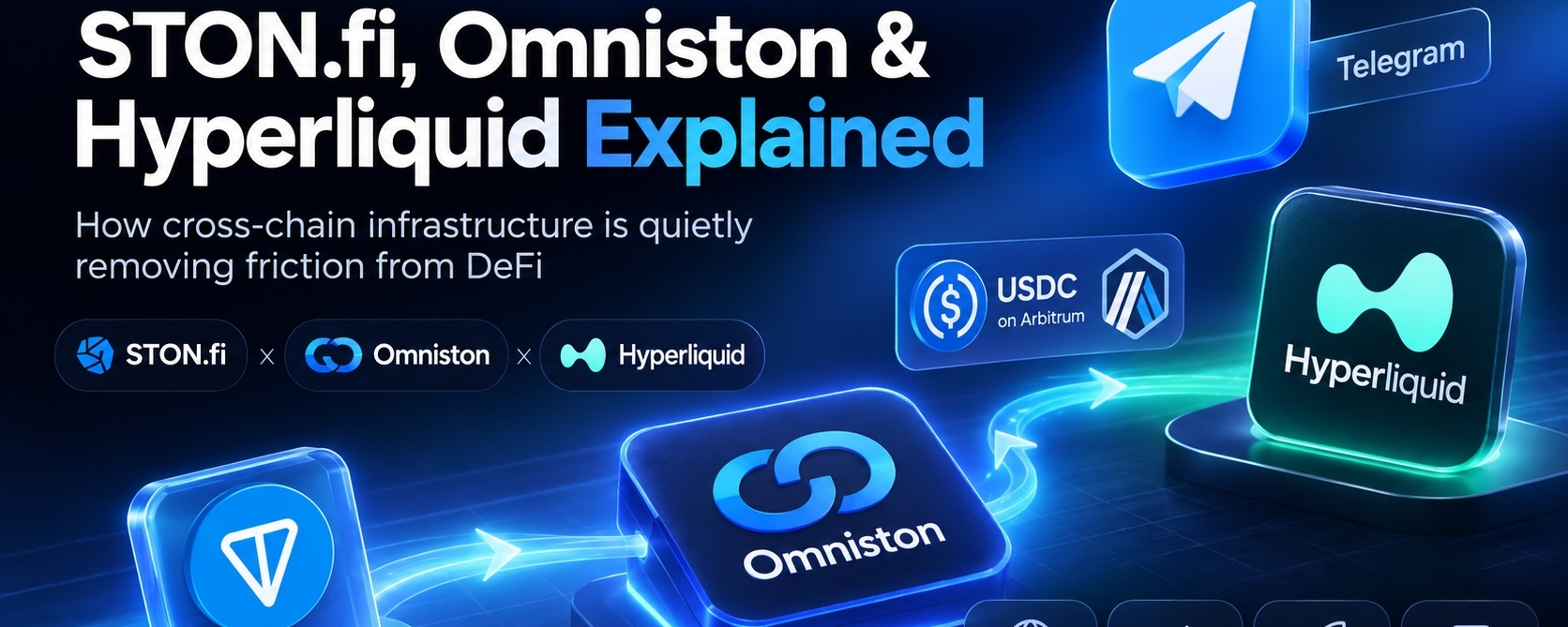

Wie Cross-Chain-Infrastruktur leise die Reibung aus DeFi entfernt
Wenn du neu bei Cross-Chain-DeFi bist, kann sich dieses Thema zunächst komplex anfühlen. Sobald du siehst, wie die Bausteine zusammenhängen, wird es überraschend unkompliziert.
TON. Omniston. Arbitrum. Hyperliquid. Telegram.
Was macht eigentlich jeder davon? Lass es uns klar aufschlüsseln.
1. Was ist @STONfi DEX ?
STON.fi ist ein dezentrales Exchange-Ökosystem, das auf der TON-Blockchain aufgebaut ist. Im Kern ermöglicht es Nutzern, Tokens zu tauschen und auf dezentrale Liquidität zuzugreifen – ohne sich auf eine zentrale Börse zu verlassen.
Da Krypto zunehmend Multi-Chain wird, brauchen Nutzer einen zuverlässigen Weg, um Werte zwischen verschiedenen Blockchain-Ökosystemen zu bewegen. Das schafft eine praktische Herausforderung:
Wie verbindet man Liquidität über Chains hinweg, ohne Nutzer durch einen komplizierten, mehrstufigen Prozess zu zwingen?
Genau an dieser Stelle kommt Omniston ins Spiel.
2. Was ist Omniston?
Stell dir Omniston als eine Cross-Chain-Liquiditäts- und Routing-Schicht vor.
Anstatt Nutzer dazu zu zwingen zu denken:
> „Ich muss eine Bridge finden, dann einen weiteren Swap, dann Netzwerke wechseln…“
Das Ziel ist näher an:
> „Ich habe dieses Asset → Ich möchte dieses Asset → finde die beste verfügbare Route.“
Omniston ermöglicht es Anwendungen, auf Cross-Chain-Liquidität zuzugreifen und Swaps zwischen verschiedenen Blockchain-Ökosystemen zu routen. Die komplexe Infrastruktur bleibt „unter der Haube“, damit die Nutzererfahrung sauber bleibt.
Das sollte gute Infrastruktur leisten.
3. Warum Cross-Chain wichtig ist
Stell dir vor, du hältst USDT auf TON, aber die Anwendung, die du nutzen willst, benötigt USDC in einem anderen Netzwerk.
Deine Assets sind auf einer Chain. Die Anwendung lebt auf einer anderen.
Ohne solide Cross-Chain-Infrastruktur könnte ein typischer Nutzer Folgendes benötigen:
1. Eine passende Bridge finden
2. Vermögenswerte auf das Zielnetzwerk verschieben
3. In den erforderlichen Token swappen
4. Netzwerkgebühren bezahlen
5. Wallet erneut verbinden
6. In die Anwendung einzahlen
Erfahrene Nutzer behandeln das als normal. Neueinsteiger finden es oft verwirrend und brechen den Prozess ab.
Cross-Chain-Infrastruktur existiert, um genau diese Reibung zu reduzieren.
4. Wo passt Hyperliquid hinein?
Hyperliquid ist ein blockchainbasiertes Trading-Ökosystem, das für Perpetual Futures und Spot-Märkte bekannt ist.
Perpetual Futures (häufig „Perps“ genannt) ermöglichen es Tradern, auf den Preis eines Assets zu spekulieren, ohne das zugrunde liegende Asset auf die gleiche Weise zu besitzen wie bei einem Spot-Trade. Sie können außerdem Leverage einsetzen.
Beispiel: Mit 5× Leverage kann $100 Sicherheiten eine $500-Position steuern.
Wichtiger Hinweis: Leverage verstärkt sowohl potenzielle Renditen als auch das Risiko. Eine relativ kleine ungünstige Preisbewegung kann zu erheblichen Verlusten oder zur Liquidation führen. Perps sind nicht dasselbe wie einfache Token-Swaps.
5. Was macht WenLong?
WenLong, eine Drittanbieter-Anwendung, die von @lambospeak gebaut wurde, bringt Perpetual Trading mit Hyperliquid in Telegram.
Anstatt Nutzer dazu zu zwingen, Telegram zu verlassen und mehrere Apps manuell zu navigieren, möchte WenLong das Trading-Erlebnis direkt im Messenger liefern.
Es gibt jedoch noch eine technische Hürde: Ein Nutzer startet möglicherweise mit Assets auf TON, während Hyperliquid für Einzahlungen typischerweise Assets in einem anderen Netzwerk benötigt. Irgendetwas muss diese Ökosysteme verbinden.
Genau dort passt Omniston in den Flow.
6. Der Cross-Chain-Flow in der Praxis
Eine vereinfachte Version sieht so aus:
TON USDT
↓
Omniston
↓
USDC auf Arbitrum
↓
Hyperliquid-Einzahlung
↓
Perpetual-Trading
Aus Sicht des Nutzers fühlt sich das Erlebnis deutlich einfacher an. Hinter den Kulissen übernimmt Cross-Chain-Infrastruktur die Bewegung der Assets und das Routing.
Wenn Web3 gut funktioniert, bemerken Nutzer die Infrastruktur selten. Sie sehen einfach, dass die Anwendung funktioniert.
7. Warum das für Builder wichtig ist
Das ist nicht nur für Trader relevant.
Wenn du eine:
- Telegram-Trading-Bot
- Web3-Wallet
- DeFi-Anwendung
- Zahlungs-App
- Cross-Chain-Swap-Interface
- Multi-Chain-Trading-Plattform
…deine Nutzer werden wahrscheinlich Assets über mehrere Netzwerke hinweg halten.
Jede Bridge, jede Liquiditätsroute und jede Cross-Chain-Verbindung von Grund auf neu zu bauen, ist komplex und zeitaufwendig. Infrastruktur wie Omniston bietet Buildern eine praktische Alternative: sich auf die Produkt-Erfahrung zu konzentrieren, während man bestehendes Cross-Chain-Routing nutzt.
Die beste Infrastruktur ist oft die Art, die Nutzer kaum bemerken.
8. Warum Telegram wichtig ist
Telegram ist zu einer wichtigen Umgebung für Krypto-Anwendungen geworden. Dort interagieren Nutzer bereits mit Wallets, Bots, Communities, Trading-Tools und Mini-Apps.
Wenn man ein Trading-Erlebnis direkt in Telegram integriert, entfernt man eine weitere Ebene an Reibung.
Das größere Ganze sieht so aus:
- Telegram → Benutzeroberfläche
- WenLong → Trading-Anwendung
- Omniston → Cross-Chain-Routing
- Hyperliquid → Trading-Infrastruktur
Jede Komponente hat eine klar abgegrenzte Rolle. Wenn sie zusammenarbeiten, erleben die Nutzer sie als einen einzigen Flow.
9. Das größere Problem: Fragmentierung
Das ist die wichtigste Erkenntnis.
Krypto hat viele Blockchains. Diese Vielfalt treibt Innovation an, erzeugt aber auch Fragmentierung.
Deine Liquidität könnte auf TON liegen.
Deine bevorzugte Anwendung könnte auf Arbitrum liegen.
Vielleicht gibt es auch auf Base eine weitere Gelegenheit.
Ein anderer Handelsplatz könnte anderswo betrieben werden.
Nutzer sollten nicht verstehen müssen, wie jede einzelne Blockchain-Architektur aufgebaut ist, nur um Kapital zu bewegen. Deshalb werden Interoperabilität und hochwertige Cross-Chain-Infrastruktur zunehmend wichtig.
10. Woran STON.fi arbeitet
Darum ist die Omniston-Seite des STON.fi-Ökosystems interessant.
Das Gespräch ist nicht mehr einfach:
> „Wo kann ich Tokens swappen?“
Es entwickelt sich weiter zu:
> „Wie kann sich Liquidität zwischen Ökosystemen bewegen, sodass es sich einfach anfühlt?“
Das ist ein deutlich größeres Infrastrukturproblem. Wenn man es löst, kann das Wallets, Trading-Apps, DeFi-Protokolle, Telegram-Anwendungen und andere Web3-Produkte unterstützen.
Finaler Take
Das WenLong-Beispiel veranschaulicht das größere Ganze sehr klar.
Ein Nutzer kann mit einem Asset auf TON starten, eine auf Telegram basierende Anwendung öffnen, auf ein Hyperliquid-Trading-Erlebnis zugreifen und sich dabei auf Cross-Chain-Infrastruktur verlassen, um die verschiedenen Ökosysteme zu verbinden.
Die Technologie darunter kann komplex sein.
Das Ziel für den Nutzer sollte einfach bleiben:
Wähle, was du tun möchtest.
Lass die Infrastruktur die Komplexität übernehmen.
Das ist das Versprechen von gut konzipiertem Cross-Chain-DeFi – und genau dort werden STON.fi und Omniston relevant.
Wichtiger Risikohinweis
WenLong ist eine Drittanbieter-Anwendung, die STON.fi-Infrastruktur integriert. STON.fi betreibt nicht, unterstützt nicht, sponsert nicht oder empfiehlt keine Drittanbieter-Anwendungen und ist nicht für deren Handlungen verantwortlich.
Perpetual Futures beinhalten ein erhebliches Risiko, insbesondere wenn Leverage eingesetzt wird. Verluste können sehr schnell auftreten und Positionen können liquidiert werden.
Mach immer deine eigene Recherche, verstehe vollständig jede Anwendung, mit der du interagierst, und setze niemals Gelder aufs Spiel, die du nicht verlieren kannst.