#dusk $DUSK @Dusk #Dusk. #dusk
Die echten Kosten öffentlicher Ledger liegen nicht im Gas. Sondern darin, dass jede Position und jeder Kontrahent für immer sichtbar bleibt.
Die meisten Institutionen behandeln das immer noch als klares „Nein“. Sie wollen Endgültigkeit der Abwicklung und Regeln, die sich selbst ausführen, aber sie werden Order-Flow- oder Eigentumsdetails nicht dort platzieren, wo sie von jedem beobachtet werden können. Ketten erzwingen meist einen Kompromiss: entweder vollständig offen und nutzbar oder privat und in einer Ecke gefangen.
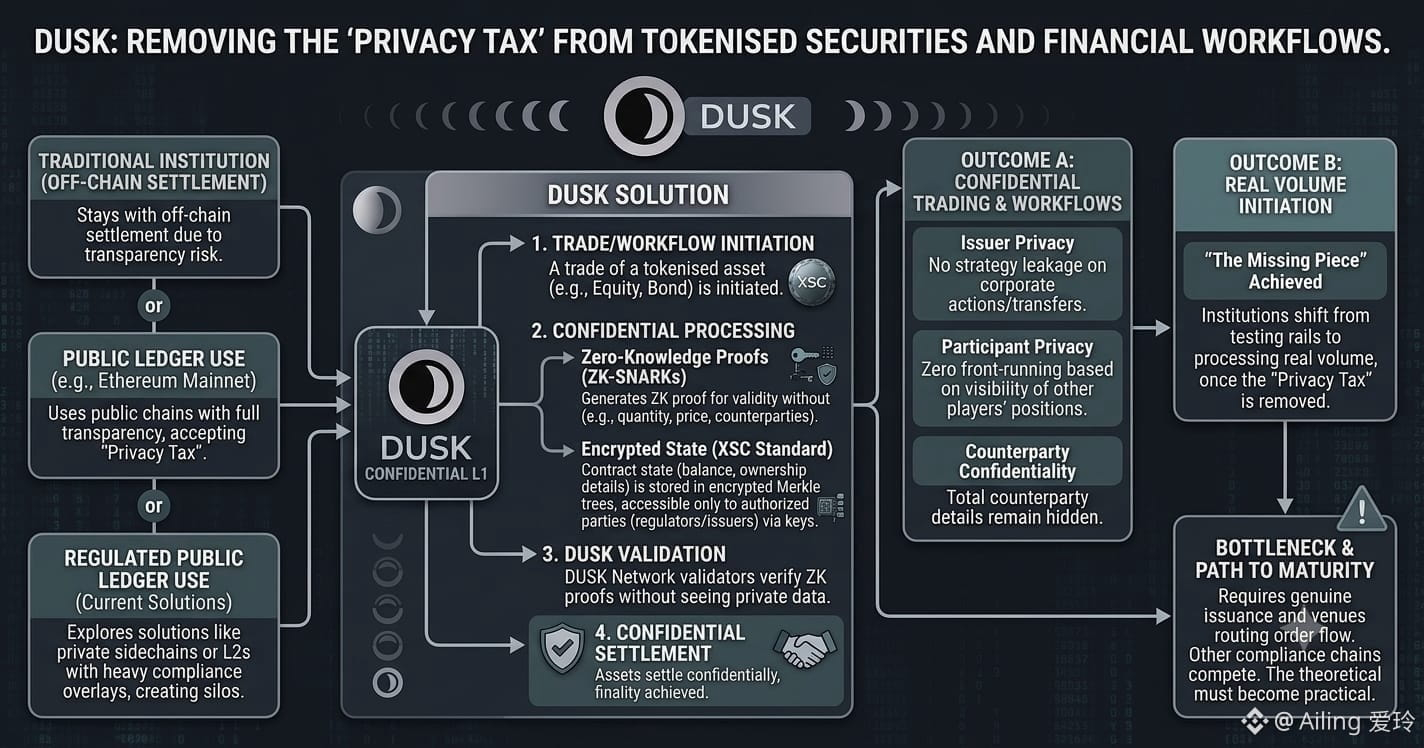
Dusk geht einen anderen Weg. Es ist ein L1, das für regulierte Finanzarbeit gebaut ist – mit vertraulichen Smart Contracts und dem XSC-Standard, damit tokenisierte Wertpapiere sich bewegen können, während nur das angezeigt wird, was wirklich angezeigt werden muss.
Wenn das funktioniert, ist der Wandel leise, aber real. Emittenten hören auf, Strategie in dem Moment auslaufen zu lassen, in dem sie eine Übertragung oder eine Corporate Action durchführen. Liquidität, die ankommt, bleibt eher, weil Teilnehmer nicht ständig von ihrer eigenen Transparenz vor dem eigentlichen Handel verdrängt werden. Der Markt bepreist Privatsphäre weiterhin wie eine Zusatzfunktion – statt wie das fehlende Puzzleteil für eine echte Wertpapierabwicklung.
Die Einführung bleibt jedoch der echte Engpass. Ohne echte Emission und ohne Routing von Transaktionsflüssen über entsprechende Plattformen bleibt die Privatsphäre-Schicht größtenteils nur theoretisch. Andere compliance-fokussierte Chains konkurrieren um dieselbe Aufmerksamkeit.
Das richtet sich vor allem an Menschen, die tokenisierte Wertpapiere oder vertrauliche Finanz-Workflows unter bestehenden Regeln aufbauen. Ob das wichtig ist, hängt davon ab, wie viele regulierte Akteure hier tatsächlich abwickeln – statt off-chain zu bleiben.
Wie viele Institutionen bewegen echtes Volumen, wenn die „Privatsphäre-Steuer“ verschwindet, statt nur die Schienen zu testen?
$BTC $ETH
Die echten Kosten öffentlicher Ledger liegen nicht im Gas. Sondern darin, dass jede Position und jeder Kontrahent für immer sichtbar bleibt.
Die meisten Institutionen behandeln das immer noch als klares „Nein“. Sie wollen Endgültigkeit der Abwicklung und Regeln, die sich selbst ausführen, aber sie werden Order-Flow- oder Eigentumsdetails nicht dort platzieren, wo sie von jedem beobachtet werden können. Ketten erzwingen meist einen Kompromiss: entweder vollständig offen und nutzbar oder privat und in einer Ecke gefangen.
Dusk geht einen anderen Weg. Es ist ein L1, das für regulierte Finanzarbeit gebaut ist – mit vertraulichen Smart Contracts und dem XSC-Standard, damit tokenisierte Wertpapiere sich bewegen können, während nur das angezeigt wird, was wirklich angezeigt werden muss.
Wenn das funktioniert, ist der Wandel leise, aber real. Emittenten hören auf, Strategie in dem Moment auslaufen zu lassen, in dem sie eine Übertragung oder eine Corporate Action durchführen. Liquidität, die ankommt, bleibt eher, weil Teilnehmer nicht ständig von ihrer eigenen Transparenz vor dem eigentlichen Handel verdrängt werden. Der Markt bepreist Privatsphäre weiterhin wie eine Zusatzfunktion – statt wie das fehlende Puzzleteil für eine echte Wertpapierabwicklung.
Die Einführung bleibt jedoch der echte Engpass. Ohne echte Emission und ohne Routing von Transaktionsflüssen über entsprechende Plattformen bleibt die Privatsphäre-Schicht größtenteils nur theoretisch. Andere compliance-fokussierte Chains konkurrieren um dieselbe Aufmerksamkeit.
Das richtet sich vor allem an Menschen, die tokenisierte Wertpapiere oder vertrauliche Finanz-Workflows unter bestehenden Regeln aufbauen. Ob das wichtig ist, hängt davon ab, wie viele regulierte Akteure hier tatsächlich abwickeln – statt off-chain zu bleiben.
Wie viele Institutionen bewegen echtes Volumen, wenn die „Privatsphäre-Steuer“ verschwindet, statt nur die Schienen zu testen?
$BTC $ETH