Die meisten Argumente zur Blockchain-Privatsphäre gehen von einer erzwungenen Entscheidung aus. Entweder du gibst deine gesamte finanzielle Historie öffentlich preis, oder du versteckst dich vollständig hinter absoluter Anonymität.
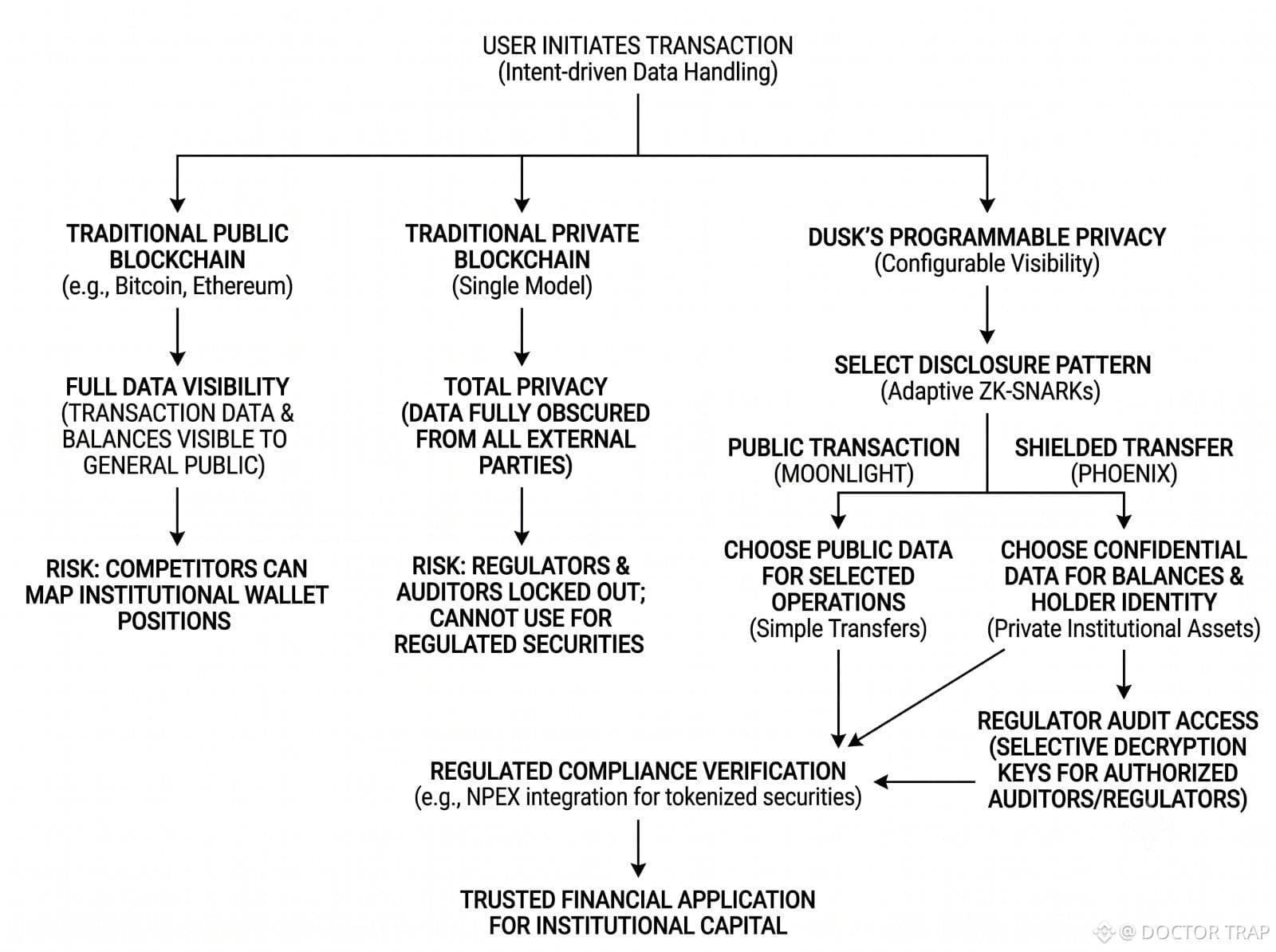
Wenn man sich die Architektur ansieht, die von @Dusk aufgebaut wird, wirkt diese Binärstruktur veraltet. Das Netzwerk trennt Transaktionsmodelle, statt einen einzelnen Ansatz zu erzwingen. Sie nutzen Moonlight für transparente, Ethereum-ähnliche öffentliche Daten – zusammen mit Phoenix, ihrem verschlüsselten Modell für vertrauliche Übertragungen.
Institutionelles Kapital macht deutlich, warum diese Trennung notwendig ist. Nimm ihre laufende Integration mit NPEX, der niederländischen Wertpapierbörse: Dort wird daran gearbeitet, über 200 Millionen Euro an regulierter Emission von Vermögenswerten in einen On-Chain-Workflow zu bringen. Eine Institution wird nicht Millionen an Wertpapieren tokenisieren, wenn Wettbewerber aus dem Retail-Bereich ihre Wallet-Positionen abbilden können. Gleichzeitig können sie aber auch nicht rechtlich auf einem Netzwerk operieren, in dem Regulierungsstellen dauerhaft ausgeschlossen sind. Dusk löst das durch selektive Offenlegung: Sie codieren verpflichtende Compliance-Prüfungen direkt in ihren Confidential Security Contract (XSC)-Standard, während Guthaben der Inhaber vor der allgemeinen Öffentlichkeit verborgen bleiben.
Auch wenn der $DUSK token bei rund 0,066 US-Dollar handelt und eine Marktkapitalisierung von nahe 40 Millionen hat, deutet die größere Infrastruktur-Erzählung auf programmierbare Sichtbarkeit hin – nicht auf totale Geheimhaltung.
Konfigurierbare Privatsphäre erzeugt für die Nutzer eine seltsame psychologische Reibung. Volle Transparenz ist leicht zu verstehen. Absolute Privatsphäre lässt sich einfach vermarkten. „Selektive Offenlegung“, bei der du weißt, dass deine Übertragung vor der Öffentlichkeit abgeschirmt ist, aber für einen autorisierten Prüfer zugänglich bleibt, erfordert ein differenziertes Verständnis darüber, wer genau die Entschlüsselungsschlüssel besitzt. Wenn die Grenzen dessen, was privat ist, für wen und unter welchen Bedingungen nicht von Natur aus klar sind, könnten Nutzer zögern, der Anwendung mit erheblichem Kapital zu vertrauen.
Die institutionelle Übernahme verlangt genau diese Art struktureller Flexibilität. Werden Nutzer konfigurierbarer Privatsphäre eher vertrauen als absoluter Privatsphäre – oder wird es für sie schwieriger sein, sie zu verstehen?
#dusk
Wenn man sich die Architektur ansieht, die von @Dusk aufgebaut wird, wirkt diese Binärstruktur veraltet. Das Netzwerk trennt Transaktionsmodelle, statt einen einzelnen Ansatz zu erzwingen. Sie nutzen Moonlight für transparente, Ethereum-ähnliche öffentliche Daten – zusammen mit Phoenix, ihrem verschlüsselten Modell für vertrauliche Übertragungen.
Institutionelles Kapital macht deutlich, warum diese Trennung notwendig ist. Nimm ihre laufende Integration mit NPEX, der niederländischen Wertpapierbörse: Dort wird daran gearbeitet, über 200 Millionen Euro an regulierter Emission von Vermögenswerten in einen On-Chain-Workflow zu bringen. Eine Institution wird nicht Millionen an Wertpapieren tokenisieren, wenn Wettbewerber aus dem Retail-Bereich ihre Wallet-Positionen abbilden können. Gleichzeitig können sie aber auch nicht rechtlich auf einem Netzwerk operieren, in dem Regulierungsstellen dauerhaft ausgeschlossen sind. Dusk löst das durch selektive Offenlegung: Sie codieren verpflichtende Compliance-Prüfungen direkt in ihren Confidential Security Contract (XSC)-Standard, während Guthaben der Inhaber vor der allgemeinen Öffentlichkeit verborgen bleiben.
Auch wenn der $DUSK token bei rund 0,066 US-Dollar handelt und eine Marktkapitalisierung von nahe 40 Millionen hat, deutet die größere Infrastruktur-Erzählung auf programmierbare Sichtbarkeit hin – nicht auf totale Geheimhaltung.
Konfigurierbare Privatsphäre erzeugt für die Nutzer eine seltsame psychologische Reibung. Volle Transparenz ist leicht zu verstehen. Absolute Privatsphäre lässt sich einfach vermarkten. „Selektive Offenlegung“, bei der du weißt, dass deine Übertragung vor der Öffentlichkeit abgeschirmt ist, aber für einen autorisierten Prüfer zugänglich bleibt, erfordert ein differenziertes Verständnis darüber, wer genau die Entschlüsselungsschlüssel besitzt. Wenn die Grenzen dessen, was privat ist, für wen und unter welchen Bedingungen nicht von Natur aus klar sind, könnten Nutzer zögern, der Anwendung mit erheblichem Kapital zu vertrauen.
Die institutionelle Übernahme verlangt genau diese Art struktureller Flexibilität. Werden Nutzer konfigurierbarer Privatsphäre eher vertrauen als absoluter Privatsphäre – oder wird es für sie schwieriger sein, sie zu verstehen?
#dusk