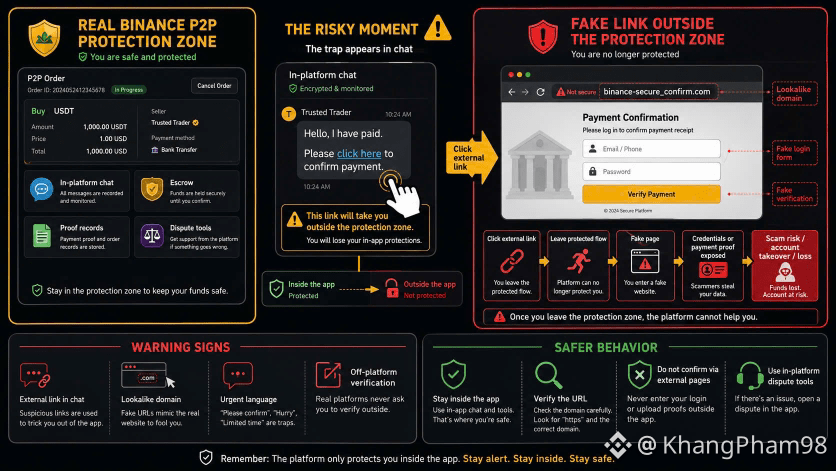
An jenem Nachmittag lief der Drucker in der Copyshop-Station noch gleichmäßig, da klingelte mein Telefon. Ein Bekannter schickte mir einen Screenshot einer USDT-Verkaufsorder, zusammen mit einer Nachricht des Vertragspartners, der ihn aufforderte, auf einen Link zu klicken, um den Status zu prüfen. Die Seite, die sich öffnete, sah ziemlich ähnlich wie Binance P2P aus – nur war die Domain länger und hatte am Ende ein paar zusätzliche Zeichen.
Was mich beunruhigte, war nicht, dass der Link äußerst raffiniert war. Es störte mich, weil er genau dann erschien, wenn der Verkäufer alles erledigen wollte. Solange noch unklar ist, ob das Geld angekommen ist, entscheidet das Gehirn oft für die schnellste Aktion.
Binance P2P verfügt über eine Order-Haltefunktion, Chatverläufe, Beweisläufe und eine Streitbeilegung, wenn nötig. Diese Schichten bedeuten jedoch nur etwas, wenn der Nutzer innerhalb des richtigen Prozesses bleibt. Eine gefälschte Seite muss das System nicht schlagen – es reicht, den Nutzer aus dem Bereich herauszulocken, der überwacht wird.
Der Widerspruch besteht darin, dass viele Menschen beim Prüfen von Kontonummern, Empfängernamen und Transaktionscodes sehr vorsichtig sind. Sie untersuchen jedes Wort in der Überweisungsnotiz, klicken aber trotzdem auf einen seltsamen Link, weil er in einer Unterhaltung auftaucht, die vernünftig wirkt. Vorsicht verschwindet nicht – sie wird nur an die falsche Stelle gesetzt.
Ich glaube nicht, dass jeder Fehler dem Nutzer gehört. Beim Handeln auf Binance P2P können Zeitdruck und das Gefühl, sanft gedrängt zu werden, dazu führen, dass die Hand sich bewegt, bevor der Kopf es merkt. Menschen, die häufig handeln, können sogar noch anfälliger für alte Reflexe werden, weil viele frühere Transaktionen reibungslos verliefen.
Meine Erkenntnis ist ganz einfach. Wenn ein Link dich von der echten App wegzieht, ist das kein zusätzlicher Bestätigungsschritt mehr. Es ist eine Einladung, die wichtigste Schutzschicht in Binance P2P hinter sich zu lassen – und die verbleibende Frage lautet, ob du gerade eine Transaktion bearbeitest oder in einen Ort gehst, an dem es keine Aufzeichnungen und keinen Schiedsrichter gibt. @Binance Vietnam #BinanceP2PAnToan
Was mich beunruhigte, war nicht, dass der Link äußerst raffiniert war. Es störte mich, weil er genau dann erschien, wenn der Verkäufer alles erledigen wollte. Solange noch unklar ist, ob das Geld angekommen ist, entscheidet das Gehirn oft für die schnellste Aktion.
Binance P2P verfügt über eine Order-Haltefunktion, Chatverläufe, Beweisläufe und eine Streitbeilegung, wenn nötig. Diese Schichten bedeuten jedoch nur etwas, wenn der Nutzer innerhalb des richtigen Prozesses bleibt. Eine gefälschte Seite muss das System nicht schlagen – es reicht, den Nutzer aus dem Bereich herauszulocken, der überwacht wird.
Der Widerspruch besteht darin, dass viele Menschen beim Prüfen von Kontonummern, Empfängernamen und Transaktionscodes sehr vorsichtig sind. Sie untersuchen jedes Wort in der Überweisungsnotiz, klicken aber trotzdem auf einen seltsamen Link, weil er in einer Unterhaltung auftaucht, die vernünftig wirkt. Vorsicht verschwindet nicht – sie wird nur an die falsche Stelle gesetzt.
Ich glaube nicht, dass jeder Fehler dem Nutzer gehört. Beim Handeln auf Binance P2P können Zeitdruck und das Gefühl, sanft gedrängt zu werden, dazu führen, dass die Hand sich bewegt, bevor der Kopf es merkt. Menschen, die häufig handeln, können sogar noch anfälliger für alte Reflexe werden, weil viele frühere Transaktionen reibungslos verliefen.
Meine Erkenntnis ist ganz einfach. Wenn ein Link dich von der echten App wegzieht, ist das kein zusätzlicher Bestätigungsschritt mehr. Es ist eine Einladung, die wichtigste Schutzschicht in Binance P2P hinter sich zu lassen – und die verbleibende Frage lautet, ob du gerade eine Transaktion bearbeitest oder in einen Ort gehst, an dem es keine Aufzeichnungen und keinen Schiedsrichter gibt. @Binance Vietnam #BinanceP2PAnToan