#dusk $DUSK @Dusk #dusk
Etwas über DuskEVM ließ mich beim Erkunden der Architektur nicht los.
Auf den ersten Blick wirkt es fast selbstverständlich, EVM-Kompatibilität hinzuzufügen. Die meisten Netzwerke wollen Solidity-Entwickler, vertraute Tools und eine einfachere Einführung.
Aber dann begann ich über eine andere Frage nachzudenken: Was passiert, wenn eine EVM nicht die Grundlage ist, sondern eine Schicht, die auf einem Abrechnungssystem aufbaut, das für einen bestimmten Zweck entwickelt wurde?
Genau dort wird Dusk’s Architektur für mich interessant.
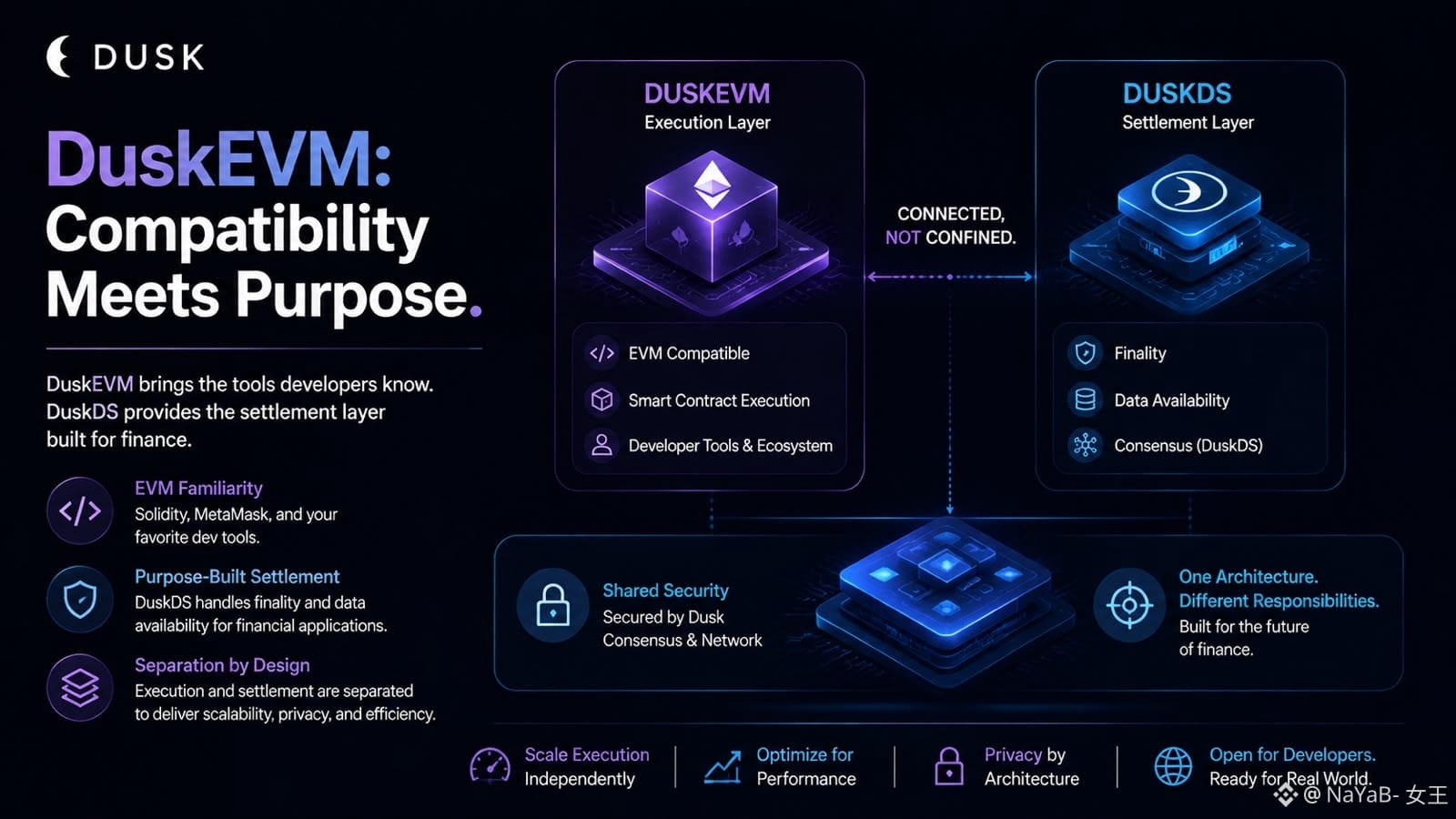
Dusk trennt Ausführung von Abrechnung. DuskEVM bietet Entwicklern eine vertraute Umgebung, während DuskDS die zugrunde liegende Abrechnungs- und Data-Availability-Schicht übernimmt.
Ich mag diese Designentscheidung tatsächlich, weil Kompatibilität nicht immer bedeuten muss, das gesamte Netzwerk rund um bestehende Standards neu aufzubauen. Manchmal kann es auch darum gehen, eine Brücke zwischen dem zu schlagen, was Entwickler bereits kennen, und dem, was ein neues System erreichen möchte.
Natürlich ist dieser Ansatz nicht ohne Herausforderungen. Mehrere Schichten können zu zusätzlichen Koordinationsproblemen, mehr Komplexität und mehr offenen Fragen zur Entwicklung des Ökosystems führen.
Aber vielleicht liegt die Zukunft der Blockchain-Infrastruktur nicht darin, einfach alles zu ersetzen, was vorher kam.
Vielleicht werden die stärksten Netzwerke diejenigen sein, die wissen, was sie vertraut halten und was sie neu gestalten sollten.
Für Finanzanwendungen könnte dieses Gleichgewicht wichtiger sein als Kompatibilität allein.
Etwas über DuskEVM ließ mich beim Erkunden der Architektur nicht los.
Auf den ersten Blick wirkt es fast selbstverständlich, EVM-Kompatibilität hinzuzufügen. Die meisten Netzwerke wollen Solidity-Entwickler, vertraute Tools und eine einfachere Einführung.
Aber dann begann ich über eine andere Frage nachzudenken: Was passiert, wenn eine EVM nicht die Grundlage ist, sondern eine Schicht, die auf einem Abrechnungssystem aufbaut, das für einen bestimmten Zweck entwickelt wurde?
Genau dort wird Dusk’s Architektur für mich interessant.
Dusk trennt Ausführung von Abrechnung. DuskEVM bietet Entwicklern eine vertraute Umgebung, während DuskDS die zugrunde liegende Abrechnungs- und Data-Availability-Schicht übernimmt.
Ich mag diese Designentscheidung tatsächlich, weil Kompatibilität nicht immer bedeuten muss, das gesamte Netzwerk rund um bestehende Standards neu aufzubauen. Manchmal kann es auch darum gehen, eine Brücke zwischen dem zu schlagen, was Entwickler bereits kennen, und dem, was ein neues System erreichen möchte.
Natürlich ist dieser Ansatz nicht ohne Herausforderungen. Mehrere Schichten können zu zusätzlichen Koordinationsproblemen, mehr Komplexität und mehr offenen Fragen zur Entwicklung des Ökosystems führen.
Aber vielleicht liegt die Zukunft der Blockchain-Infrastruktur nicht darin, einfach alles zu ersetzen, was vorher kam.
Vielleicht werden die stärksten Netzwerke diejenigen sein, die wissen, was sie vertraut halten und was sie neu gestalten sollten.
Für Finanzanwendungen könnte dieses Gleichgewicht wichtiger sein als Kompatibilität allein.