
#termmax @TermMax Ich komme immer wieder auf denselben Gedanken über TermMax:
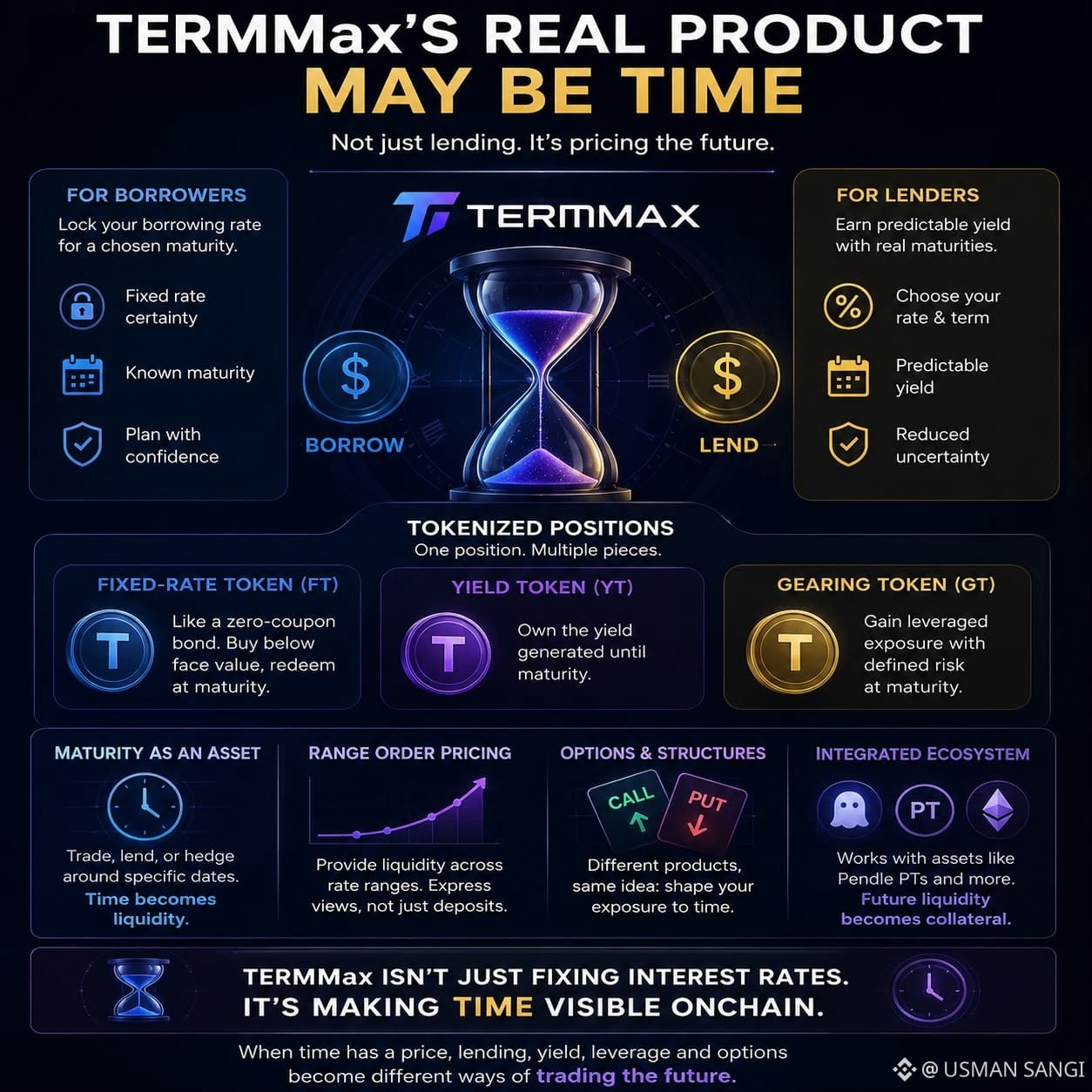
Vielleicht liegt es nicht an der Kreditvergabe des Produkts. Vielleicht ist es Zeit.
Ich habe genug DeFi-Kreditmärkte gesehen, um zu wissen, wie schnell die Zahlen zu Rauschen werden.
APR bewegt sich.
Die Auslastung springt.
Die Finanzierung wird teuer.
Dann aktualisierst du die Seite und der Handel von gestern sieht anders aus.
TermMax fühlt sich anders an, weil es eine einfachere Frage stellt:
Wie viel ist Gewissheit wert?
Du nimmst einen Kredit auf, und der Zinssatz kann für einen definierten Zeitraum festgeschrieben werden.
Du verleihst, und du weißt, dass es eine echte Laufzeit gibt.
Das klingt langweilig.
Ehrlich gesagt: Genau deshalb finde ich es interessant.
Denn eine der merkwürdigsten Dinge an DeFi ist, wie wenig davon tatsächlich um Zeit herum gebaut ist.
Wir reden ständig über den Preis.
Selten über die Dauer.
Aber die Dauer verändert alles.
Eine Rendite von 5% für 7 Tage ist nicht dasselbe wie 5% für ein Jahr.
TermMax macht diesen Unterschied explizit.
Seine Positionen lassen sich in Teile aufgliedern, die sich auf Kapital, Rendite und Hebel beziehen, sodass unterschiedliche Nutzer jeweils andere Anteile derselben zukünftigen Cashflows wollen können.
Da wird das Design interessant.
Du verschiebst nicht nur Tokens.
Du entscheidest, auf welche Version deiner Zukunft du Exposition haben willst.
Die Seite mit den Optionen passt zu derselben Idee:
Preisrisiko, eine Dauer wählen, festlegen, was passieren soll, wenn sich der Markt bewegt.
Und da ist eine Einzelheit, die ich nicht oft genug erwähnt sehe:
Märkte mit festem Zinssatz verändern, wie man denkt.
Floating-Rate-DeFi trainiert dich, ständig hinzuschauen.
Feste Laufzeit gibt dir die Möglichkeit, eine Entscheidung zu treffen und sie dann in Ruhe zu lassen.
Manchmal ist das der Vorteil.
Nicht mehr Hebel.
Nicht eine höhere APY.
Nur zu wissen, was dein Kapital in drei Monaten macht.
Vielleicht ist genau das das Spannende an TermMax.
Es versucht nicht, Zeit verschwinden zu lassen.
Es gibt Zeit einen Preis.
Vielleicht liegt es nicht an der Kreditvergabe des Produkts. Vielleicht ist es Zeit.
Ich habe genug DeFi-Kreditmärkte gesehen, um zu wissen, wie schnell die Zahlen zu Rauschen werden.
APR bewegt sich.
Die Auslastung springt.
Die Finanzierung wird teuer.
Dann aktualisierst du die Seite und der Handel von gestern sieht anders aus.
TermMax fühlt sich anders an, weil es eine einfachere Frage stellt:
Wie viel ist Gewissheit wert?
Du nimmst einen Kredit auf, und der Zinssatz kann für einen definierten Zeitraum festgeschrieben werden.
Du verleihst, und du weißt, dass es eine echte Laufzeit gibt.
Das klingt langweilig.
Ehrlich gesagt: Genau deshalb finde ich es interessant.
Denn eine der merkwürdigsten Dinge an DeFi ist, wie wenig davon tatsächlich um Zeit herum gebaut ist.
Wir reden ständig über den Preis.
Selten über die Dauer.
Aber die Dauer verändert alles.
Eine Rendite von 5% für 7 Tage ist nicht dasselbe wie 5% für ein Jahr.
TermMax macht diesen Unterschied explizit.
Seine Positionen lassen sich in Teile aufgliedern, die sich auf Kapital, Rendite und Hebel beziehen, sodass unterschiedliche Nutzer jeweils andere Anteile derselben zukünftigen Cashflows wollen können.
Da wird das Design interessant.
Du verschiebst nicht nur Tokens.
Du entscheidest, auf welche Version deiner Zukunft du Exposition haben willst.
Die Seite mit den Optionen passt zu derselben Idee:
Preisrisiko, eine Dauer wählen, festlegen, was passieren soll, wenn sich der Markt bewegt.
Und da ist eine Einzelheit, die ich nicht oft genug erwähnt sehe:
Märkte mit festem Zinssatz verändern, wie man denkt.
Floating-Rate-DeFi trainiert dich, ständig hinzuschauen.
Feste Laufzeit gibt dir die Möglichkeit, eine Entscheidung zu treffen und sie dann in Ruhe zu lassen.
Manchmal ist das der Vorteil.
Nicht mehr Hebel.
Nicht eine höhere APY.
Nur zu wissen, was dein Kapital in drei Monaten macht.
Vielleicht ist genau das das Spannende an TermMax.
Es versucht nicht, Zeit verschwinden zu lassen.
Es gibt Zeit einen Preis.