Am Anfang wirkte Web3-Compliance wie eine Wahl zwischen vertrauten Kontomodellen und stärkerem Datenschutz… aber irgendetwas fühlt sich an diesem Trade-off nicht stimmig an.
Je mehr ich Hedgers Ansatz zu $DUSK betrachte, desto mehr frage ich mich, ob der spannende Teil nicht in dem einen oder anderen Modell allein liegt, sondern darin, was passiert, wenn sie zusammenarbeiten müssen.
Es sieht dann nach einer Schleife aus:
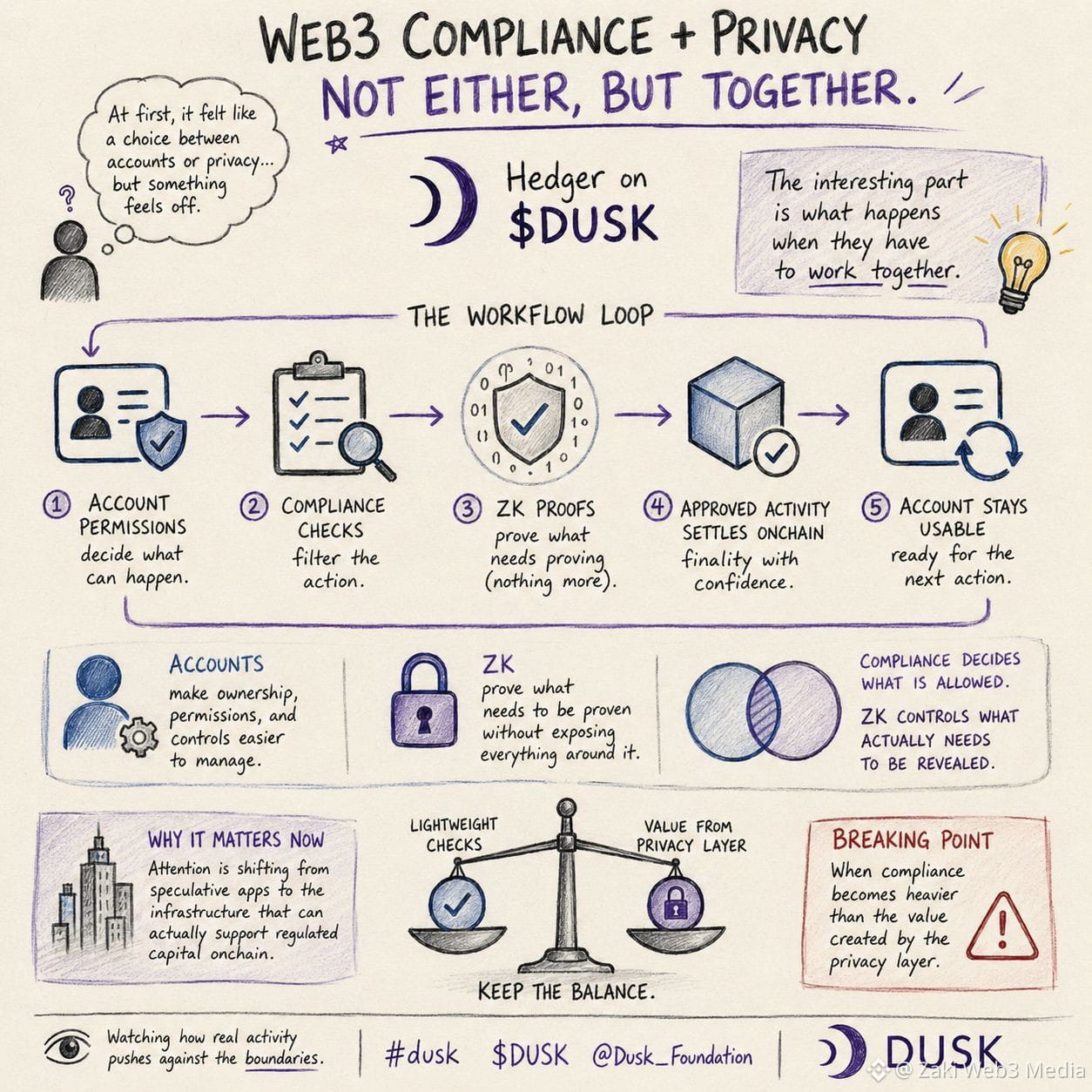
Kontoberechtigungen entscheiden, was passieren kann → Compliance-Prüfungen filtern die Aktion → ZK beweist, was bewiesen werden muss → die genehmigte Aktivität wird onchain abgesetzt → das Konto bleibt für die nächste Aktion nutzbar.
Das klingt einfach, aber in der Mitte wird es interessant.
Konten machen Eigentum, Berechtigungen und Kontrollen leichter zu verwalten.
ZK dreht die Annahme ein wenig um — beweisen, was bewiesen werden muss, ohne alles darum herum offenzulegen.
Also statt Compliance und Datenschutz als Gegensätze zu behandeln, könnte der Workflow so gestaltet sein, dass Compliance bestimmt, was erlaubt ist, während ZK kontrolliert, was tatsächlich offengelegt werden muss.
Vielleicht ist das die eigentliche Architektur, die mir gefehlt hat.
Das ist gerade besonders relevant, wenn die Aufmerksamkeit langsam von spekulativen Apps hin zu der Infrastruktur wandert, die tatsächlich reguliertes Kapital onchain unterstützen könnte.
Aber das System bricht zusammen, wenn Compliance schwerer wiegt als der Wert, den die Datenschicht schafft.
Das ist der Teil, den ich beobachte.
Wenn die Checks leicht bleiben, ergibt die Kombination plötzlich mehr Sinn.
Wenn jeder Schritt zusätzliche Reibung hinzufügt, dann könnte der hybride Ansatz einfach noch eine weitere Ebene schaffen, an der Institutionen sich wieder vorbeiarbeiten müssen.
Vielleicht lese ich auch zu viel in die Architektur hinein.
Trotzdem bin ich neugierig, was passiert, wenn echte Aktivitäten anfangen, gegen diese Grenzen zu drücken.
#dusk $DUSK @Dusk
Je mehr ich Hedgers Ansatz zu $DUSK betrachte, desto mehr frage ich mich, ob der spannende Teil nicht in dem einen oder anderen Modell allein liegt, sondern darin, was passiert, wenn sie zusammenarbeiten müssen.
Es sieht dann nach einer Schleife aus:
Kontoberechtigungen entscheiden, was passieren kann → Compliance-Prüfungen filtern die Aktion → ZK beweist, was bewiesen werden muss → die genehmigte Aktivität wird onchain abgesetzt → das Konto bleibt für die nächste Aktion nutzbar.
Das klingt einfach, aber in der Mitte wird es interessant.
Konten machen Eigentum, Berechtigungen und Kontrollen leichter zu verwalten.
ZK dreht die Annahme ein wenig um — beweisen, was bewiesen werden muss, ohne alles darum herum offenzulegen.
Also statt Compliance und Datenschutz als Gegensätze zu behandeln, könnte der Workflow so gestaltet sein, dass Compliance bestimmt, was erlaubt ist, während ZK kontrolliert, was tatsächlich offengelegt werden muss.
Vielleicht ist das die eigentliche Architektur, die mir gefehlt hat.
Das ist gerade besonders relevant, wenn die Aufmerksamkeit langsam von spekulativen Apps hin zu der Infrastruktur wandert, die tatsächlich reguliertes Kapital onchain unterstützen könnte.
Aber das System bricht zusammen, wenn Compliance schwerer wiegt als der Wert, den die Datenschicht schafft.
Das ist der Teil, den ich beobachte.
Wenn die Checks leicht bleiben, ergibt die Kombination plötzlich mehr Sinn.
Wenn jeder Schritt zusätzliche Reibung hinzufügt, dann könnte der hybride Ansatz einfach noch eine weitere Ebene schaffen, an der Institutionen sich wieder vorbeiarbeiten müssen.
Vielleicht lese ich auch zu viel in die Architektur hinein.
Trotzdem bin ich neugierig, was passiert, wenn echte Aktivitäten anfangen, gegen diese Grenzen zu drücken.
#dusk $DUSK @Dusk