Ich habe mir Dusk' Blickwinkel zur DSGVO angesehen und bin am Ende dazu gekommen, mehr über DORA nachzudenken.
Zuerst wirken sie wie getrennte Compliance-Probleme. Die DSGVO geht es um personenbezogene Daten und Privatsphäre. DORA sorgt sich viel stärker um digitale operative Resilienz. Aber durch das Lesen der Architektur von Dusk wurde die Verbindung klarer.
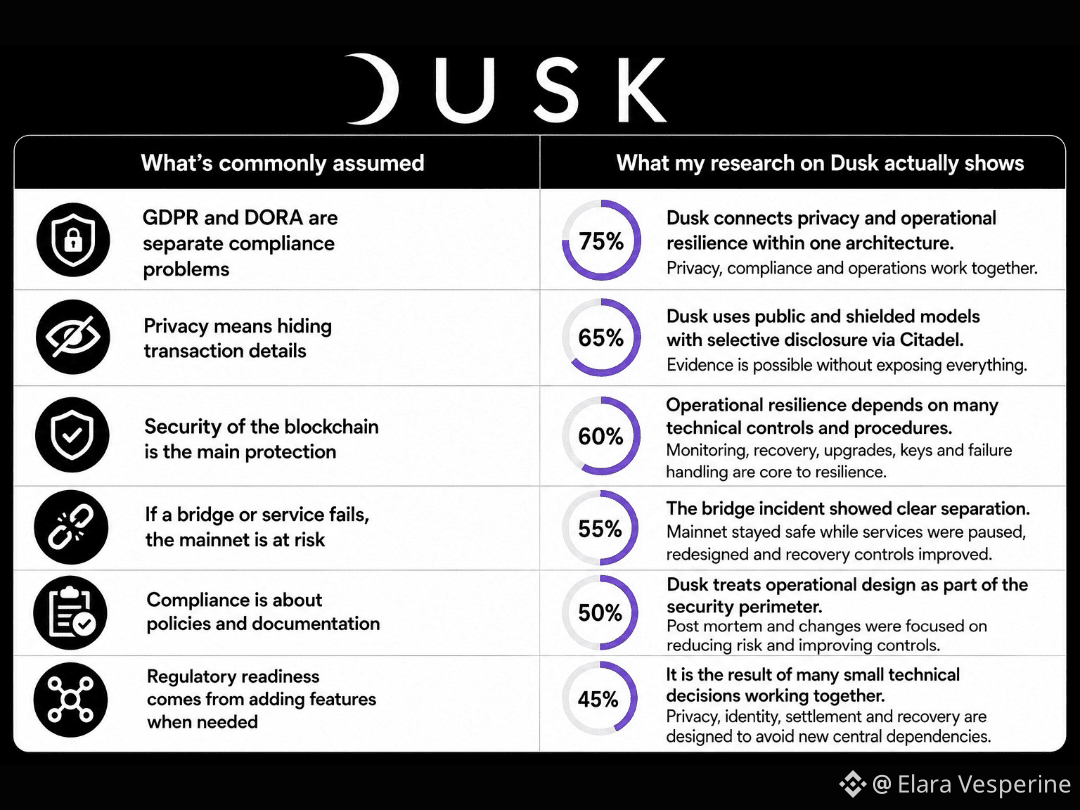
Der interessante Punkt ist, dass Dusk Privatsphäre nicht einfach als das Verbergen von Transaktionsdetails behandelt. In der Dokumentation werden öffentliche und abgeschirmte Transaktionsmodelle getrennt, während zugleich selektive Offenlegung durch Citadel ergänzt wird. Das ist wichtig, weil regulierte Finanzen Belege benötigen, ohne die vollständige finanzielle Historie jedes Teilnehmers offenzulegen.
Dann gibt es noch die operative Seite.
In der Dokumentation zu den Betreibern widmet Dusk dem Monitoring der Knotengesundheit, der Stabilität der Peers, der Wiederherstellung, Upgrades, dem Schutz von Schlüsseln und dem Umgang mit Ausfällen erhebliche Aufmerksamkeit. Das ist ein sehr anderes Gespräch als lediglich zu sagen, eine Blockchain sei sicher.
Der Bridge-Vorfall machte diese Unterscheidung noch greifbarer. Das Mainnet selbst war nicht betroffen, dennoch stoppte Dusk die Bridge-Dienste und überarbeitete die Transaktionslebenszyklen, die Aussetzung von Hot Wallets, die Zugriffskontrollen und die Wiederherstellungsverfahren. Im Post-Mortem wird das operative Design ausdrücklich als Teil des Sicherheitsperimeters behandelt.
Das hat verändert, wie ich die DSGVO- und DORA-Behauptungen gelesen habe.
Die eigentliche Infrastruktur-Herausforderung besteht nicht darin, Daten privat zu machen oder ein Netzwerk unabhängig davon resilient zu machen. Es geht darum, Privatsphäre, Offenlegung, Identität, Abwicklung und operative Wiederherstellung so zu koordinieren, dass jedes Mal, wenn eine regulatorische Anforderung auftaucht, keine neue zentrale Abhängigkeit entsteht.
Die Architektur von Dusk scheint sich von der Protokollebene aus in Richtung dieses Problems zu bewegen.
Die weniger offensichtliche Erkenntnis ist, dass regulatorische Einsatzbereitschaft kein einziges Feature ist. Sie ist die Anhäufung kleiner technischer Entscheidungen, die bestimmen, was passiert, wenn Privatsphäre, Compliance und Ausfall zusammenprallen.
#dusk $DUSK @Dusk
Zuerst wirken sie wie getrennte Compliance-Probleme. Die DSGVO geht es um personenbezogene Daten und Privatsphäre. DORA sorgt sich viel stärker um digitale operative Resilienz. Aber durch das Lesen der Architektur von Dusk wurde die Verbindung klarer.
Der interessante Punkt ist, dass Dusk Privatsphäre nicht einfach als das Verbergen von Transaktionsdetails behandelt. In der Dokumentation werden öffentliche und abgeschirmte Transaktionsmodelle getrennt, während zugleich selektive Offenlegung durch Citadel ergänzt wird. Das ist wichtig, weil regulierte Finanzen Belege benötigen, ohne die vollständige finanzielle Historie jedes Teilnehmers offenzulegen.
Dann gibt es noch die operative Seite.
In der Dokumentation zu den Betreibern widmet Dusk dem Monitoring der Knotengesundheit, der Stabilität der Peers, der Wiederherstellung, Upgrades, dem Schutz von Schlüsseln und dem Umgang mit Ausfällen erhebliche Aufmerksamkeit. Das ist ein sehr anderes Gespräch als lediglich zu sagen, eine Blockchain sei sicher.
Der Bridge-Vorfall machte diese Unterscheidung noch greifbarer. Das Mainnet selbst war nicht betroffen, dennoch stoppte Dusk die Bridge-Dienste und überarbeitete die Transaktionslebenszyklen, die Aussetzung von Hot Wallets, die Zugriffskontrollen und die Wiederherstellungsverfahren. Im Post-Mortem wird das operative Design ausdrücklich als Teil des Sicherheitsperimeters behandelt.
Das hat verändert, wie ich die DSGVO- und DORA-Behauptungen gelesen habe.
Die eigentliche Infrastruktur-Herausforderung besteht nicht darin, Daten privat zu machen oder ein Netzwerk unabhängig davon resilient zu machen. Es geht darum, Privatsphäre, Offenlegung, Identität, Abwicklung und operative Wiederherstellung so zu koordinieren, dass jedes Mal, wenn eine regulatorische Anforderung auftaucht, keine neue zentrale Abhängigkeit entsteht.
Die Architektur von Dusk scheint sich von der Protokollebene aus in Richtung dieses Problems zu bewegen.
Die weniger offensichtliche Erkenntnis ist, dass regulatorische Einsatzbereitschaft kein einziges Feature ist. Sie ist die Anhäufung kleiner technischer Entscheidungen, die bestimmen, was passiert, wenn Privatsphäre, Compliance und Ausfall zusammenprallen.
#dusk $DUSK @Dusk