#termmax @TermMax Stell dir TermMax als eine automatisierte Krypto-Pfandleihe vor💰 Sehen wir uns ein Beispiel zwischen Ivan (Kreditnehmer) und Maria (Kreditgeberin) an
Ivan hat 1 ETH im Wert von 2000 $, die er nicht verkaufen will, aber USDC braucht. Maria hat USDC und möchte darauf eine garantierte Rendite.
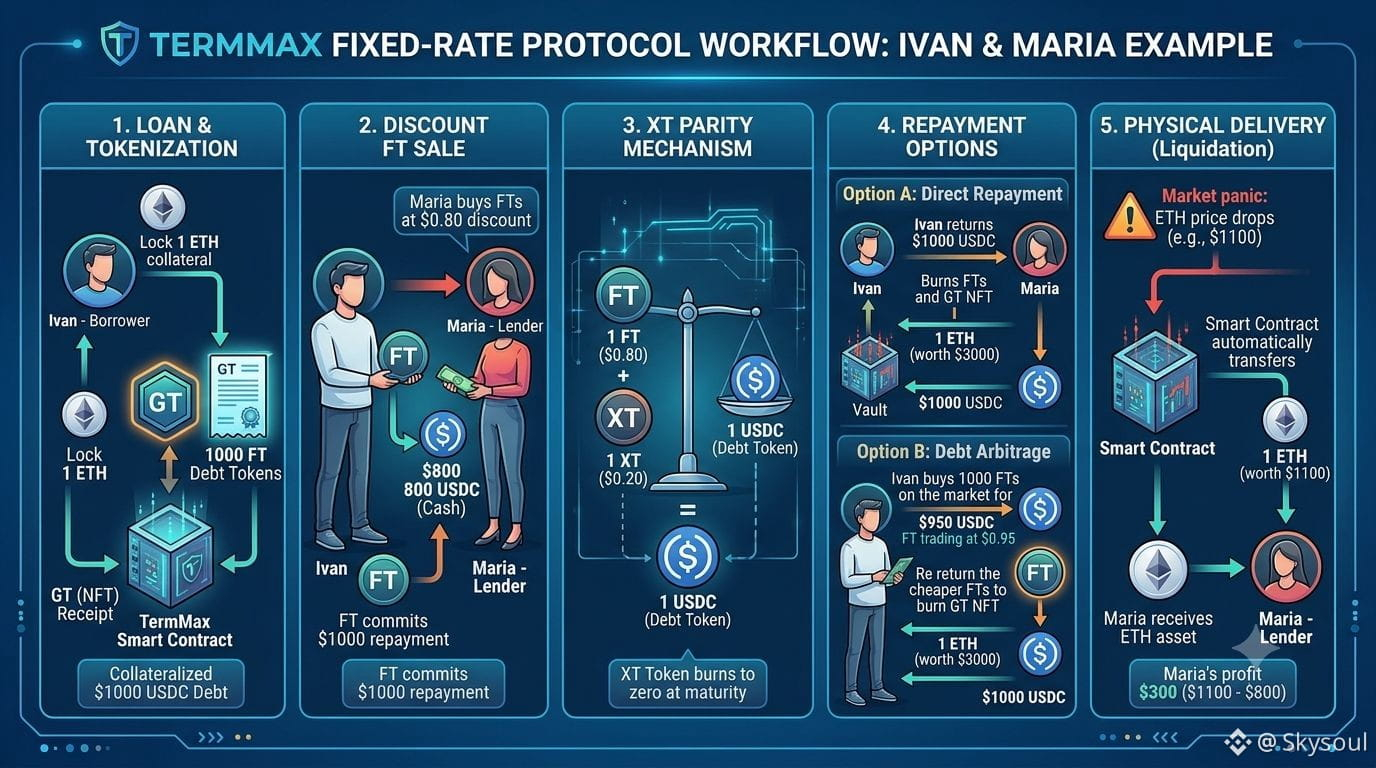
Ivan sperrt 1 ETH in den TermMax Smart Contract. Dafür erhält er ein GT (NFT) – eine einzigartige Quittung, die sein Recht auf die ETH bestätigt, nachdem die Schulden zurückgezahlt sind – sowie 1000 FT-Schuldtokens.Jeder 1 FT verpflichtet das System, nach einem Jahr 1 $ USDC auszuzahlen. Das heißt: Es wurde mit der Sicherheit ein Kredit in Höhe von 1000 USDC geschaffen. Ivan hat seine ETH gesperrt, hält die NFT-Quittung und 1000 FT-Schuldtokens
Ivan braucht Dollars, nicht Schuldtokens. Auf dem Markt bietet Maria an, seine FT-Tokens zu kaufen – allerdings mit einem Abschlag. Maria bietet 0,80 $ für 1 FT. Ivan verkauft 1000 FT an Maria. Ivan erhält 800 $ USDC. Maria verwendet diese 800 $ USDC und erhält dafür 1000 FT. Ivan hat 800 $ bekommen, aber in einem Jahr muss er 1000 $ zurückzahlen (fester Zinssatz – 200). Maria hat 800 $ investiert und wird garantiert 1000 $ in einem Jahr erhalten (fester Gewinn + 200)🤝
Damit das System den Wert der Schuld immer korrekt versteht, verwendet TermMax einen technischen Token XT. Die Formel lautet: 1 FT + 1 XT = 1 USDC, immer. Als Ivan die FT für 0,80 $ verkauft hat, begann XT automatisch 0,20 $ zu kosten. XT gleicht den Abschlag aus und ermöglicht Smart Contracts, den Wert des Kredits und der Sicherheit einfach zu berechnen. Das ist eine automatische Mechanik „unter der Haube“.
Nach einem Jahr kommt der Fälligkeitstermin. Ivan möchte seine 1 ETH zurückholen, die jetzt 3000 $ kostet. Er hat zwei Optionen.
Option A direkte Rückzahlung: Ivan bringt 1000 USDC ein, das Protokoll verbrennt seine Schuld und das NFT und übergibt ihm seine 1 ETH. Maria erhält ihre 1000 $.
Option B Schuld-Arbitrage: Ivan sieht auf dem Markt, dass FT-Tokens bei 0,95 $ gehandelt werden. Statt 1000 USDC in das Protokoll einzuzahlen, kauft er 1000 FT auf dem Markt für 950 $. Er bringt diese 1000 FT zum Protokoll, schließt die Schuld und holt seine 1 ETH zurück. Ivan hat eine Schuld über 1000 $ geschlossen und dafür nur 950 $ ausgegeben👍
Ivan hat 1 ETH im Wert von 2000 $, die er nicht verkaufen will, aber USDC braucht. Maria hat USDC und möchte darauf eine garantierte Rendite.
Ivan sperrt 1 ETH in den TermMax Smart Contract. Dafür erhält er ein GT (NFT) – eine einzigartige Quittung, die sein Recht auf die ETH bestätigt, nachdem die Schulden zurückgezahlt sind – sowie 1000 FT-Schuldtokens.Jeder 1 FT verpflichtet das System, nach einem Jahr 1 $ USDC auszuzahlen. Das heißt: Es wurde mit der Sicherheit ein Kredit in Höhe von 1000 USDC geschaffen. Ivan hat seine ETH gesperrt, hält die NFT-Quittung und 1000 FT-Schuldtokens
Ivan braucht Dollars, nicht Schuldtokens. Auf dem Markt bietet Maria an, seine FT-Tokens zu kaufen – allerdings mit einem Abschlag. Maria bietet 0,80 $ für 1 FT. Ivan verkauft 1000 FT an Maria. Ivan erhält 800 $ USDC. Maria verwendet diese 800 $ USDC und erhält dafür 1000 FT. Ivan hat 800 $ bekommen, aber in einem Jahr muss er 1000 $ zurückzahlen (fester Zinssatz – 200). Maria hat 800 $ investiert und wird garantiert 1000 $ in einem Jahr erhalten (fester Gewinn + 200)🤝
Damit das System den Wert der Schuld immer korrekt versteht, verwendet TermMax einen technischen Token XT. Die Formel lautet: 1 FT + 1 XT = 1 USDC, immer. Als Ivan die FT für 0,80 $ verkauft hat, begann XT automatisch 0,20 $ zu kosten. XT gleicht den Abschlag aus und ermöglicht Smart Contracts, den Wert des Kredits und der Sicherheit einfach zu berechnen. Das ist eine automatische Mechanik „unter der Haube“.
Nach einem Jahr kommt der Fälligkeitstermin. Ivan möchte seine 1 ETH zurückholen, die jetzt 3000 $ kostet. Er hat zwei Optionen.
Option A direkte Rückzahlung: Ivan bringt 1000 USDC ein, das Protokoll verbrennt seine Schuld und das NFT und übergibt ihm seine 1 ETH. Maria erhält ihre 1000 $.
Option B Schuld-Arbitrage: Ivan sieht auf dem Markt, dass FT-Tokens bei 0,95 $ gehandelt werden. Statt 1000 USDC in das Protokoll einzuzahlen, kauft er 1000 FT auf dem Markt für 950 $. Er bringt diese 1000 FT zum Protokoll, schließt die Schuld und holt seine 1 ETH zurück. Ivan hat eine Schuld über 1000 $ geschlossen und dafür nur 950 $ ausgegeben👍