#dusk $DUSK @Dusk Dämmerung: Wohin wandert die Komplexität?
Ich habe mir heute meine kleine $DUSK Test-Position angesehen und ertappte mich dabei, weniger über den Preis nachzudenken und mehr darüber, wie Dämmerung die Einzigartigkeit von Transaktionen handhabt.
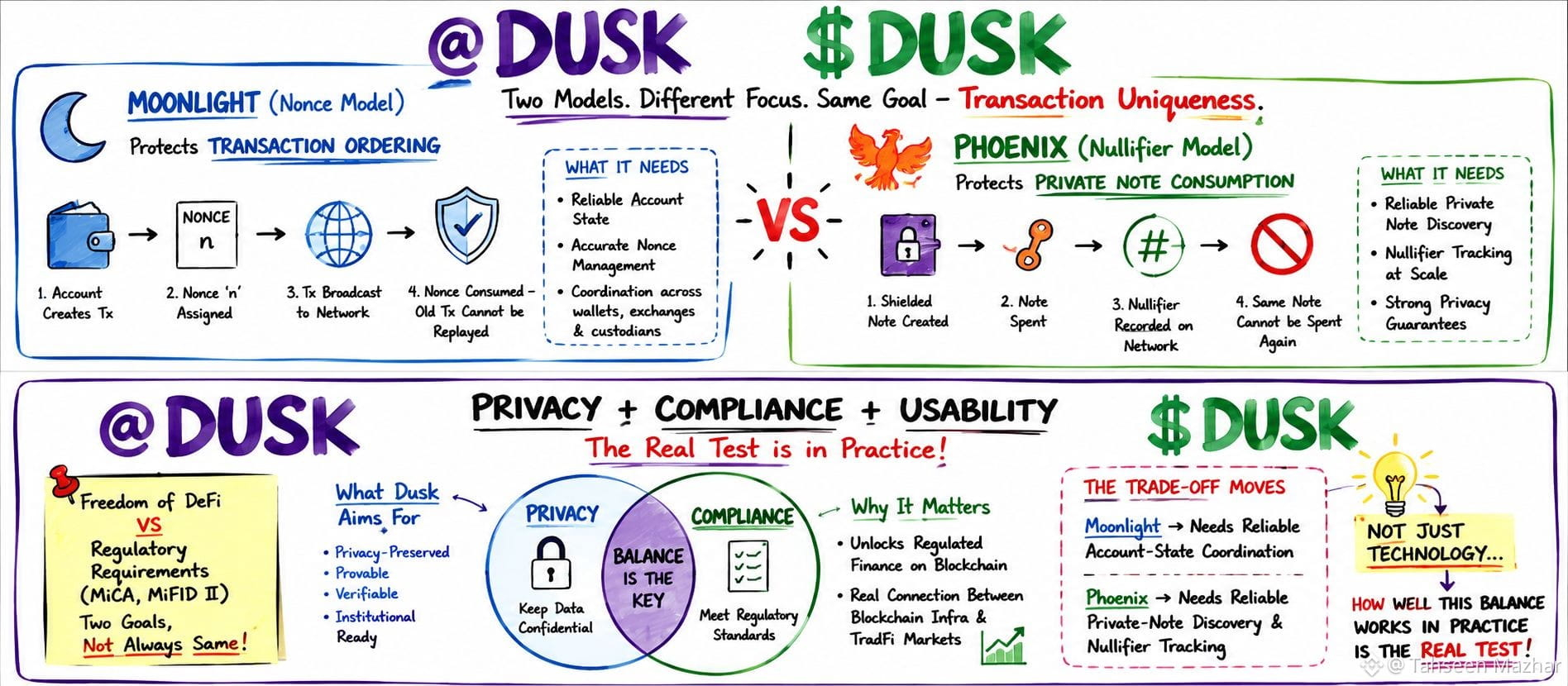
Moonlight verwendet Nonces. Ein Konto durchläuft eine geordnete Sequenz, und sobald ein Nonce verbraucht ist, kann diese Transaktion nicht einfach erneut abgespielt werden. Recht klar, aber Wallets, Börsen und Custodians müssen dennoch den Nonce-Status korrekt abstimmen, wenn mehrere Transaktionen signiert oder gesendet werden.
Phoenix geht einen anderen Weg mit verschlüsselten Notizen und Nullifiern. Sobald eine private Notiz ausgegeben wird, wird ihr Nullifier gespeichert, sodass dieselbe Notiz nicht noch einmal ausgegeben werden kann, ohne die zugrunde liegende private Notiz offenzulegen.
Diese Unterscheidung ist mir tatsächlich hängen geblieben:
Moonlight schützt die Transaktionsreihenfolge.
Phoenix schützt den Verbrauch privater Notizen.
Keines ist wirklich „besser“. Beide lösen dasselbe Einzigartigkeitsproblem unter unterschiedlichen Annahmen über die verfügbare Information.
Und hier denke ich, dass Dämmerung für regulierte Finanzen interessanter wird.
Wenn Privatsphäre mit Frameworks wie MiCA und MiFID II koexistieren muss, besteht die Herausforderung nicht einfach darin, Daten zu verbergen. Das System muss die richtigen Compliance-Eigenschaften bewahren und dabei trotzdem für Nutzer, Custodians und Institutionen praktikabel bleiben.
Der Ausgleich kann sich einfach verlagern – statt ganz zu verschwinden.
Moonlight braucht eine zuverlässige Abstimmung des Kontostands. Phoenix braucht eine zuverlässige Auffindbarkeit privater Notizen und ein zuverlässiges Tracking von Nullifiern.
Meine Frage ist also nicht, ob Dämmerung technisch gesehen Privatsphäre und Compliance liefern kann.
Sondern ob Nutzer dieses System tatsächlich einfach bedienen können, ohne dass die Privatsphärenebene zu einer operativen Belastung wird.
Das ist für mich der eigentliche Test, den ich mit @Dusk und $DUSK #dusk
@Dusk
$BTW
$APR
$TUT
Ich habe mir heute meine kleine $DUSK Test-Position angesehen und ertappte mich dabei, weniger über den Preis nachzudenken und mehr darüber, wie Dämmerung die Einzigartigkeit von Transaktionen handhabt.
Moonlight verwendet Nonces. Ein Konto durchläuft eine geordnete Sequenz, und sobald ein Nonce verbraucht ist, kann diese Transaktion nicht einfach erneut abgespielt werden. Recht klar, aber Wallets, Börsen und Custodians müssen dennoch den Nonce-Status korrekt abstimmen, wenn mehrere Transaktionen signiert oder gesendet werden.
Phoenix geht einen anderen Weg mit verschlüsselten Notizen und Nullifiern. Sobald eine private Notiz ausgegeben wird, wird ihr Nullifier gespeichert, sodass dieselbe Notiz nicht noch einmal ausgegeben werden kann, ohne die zugrunde liegende private Notiz offenzulegen.
Diese Unterscheidung ist mir tatsächlich hängen geblieben:
Moonlight schützt die Transaktionsreihenfolge.
Phoenix schützt den Verbrauch privater Notizen.
Keines ist wirklich „besser“. Beide lösen dasselbe Einzigartigkeitsproblem unter unterschiedlichen Annahmen über die verfügbare Information.
Und hier denke ich, dass Dämmerung für regulierte Finanzen interessanter wird.
Wenn Privatsphäre mit Frameworks wie MiCA und MiFID II koexistieren muss, besteht die Herausforderung nicht einfach darin, Daten zu verbergen. Das System muss die richtigen Compliance-Eigenschaften bewahren und dabei trotzdem für Nutzer, Custodians und Institutionen praktikabel bleiben.
Der Ausgleich kann sich einfach verlagern – statt ganz zu verschwinden.
Moonlight braucht eine zuverlässige Abstimmung des Kontostands. Phoenix braucht eine zuverlässige Auffindbarkeit privater Notizen und ein zuverlässiges Tracking von Nullifiern.
Meine Frage ist also nicht, ob Dämmerung technisch gesehen Privatsphäre und Compliance liefern kann.
Sondern ob Nutzer dieses System tatsächlich einfach bedienen können, ohne dass die Privatsphärenebene zu einer operativen Belastung wird.
Das ist für mich der eigentliche Test, den ich mit @Dusk und $DUSK #dusk
@Dusk
$BTW
$APR
$TUT