#dusk $DUSK @Dusk
Ich komme immer wieder zu einer einfachen Frage mit Dusk: Was passiert mit den Menschen, die das Netzwerk betreiben, wenn vertrauliche Aktivitäten ernst werden? XSC kann sensible Ausführung schützen, aber Datenschutz macht Verifikation nicht kostenlos.
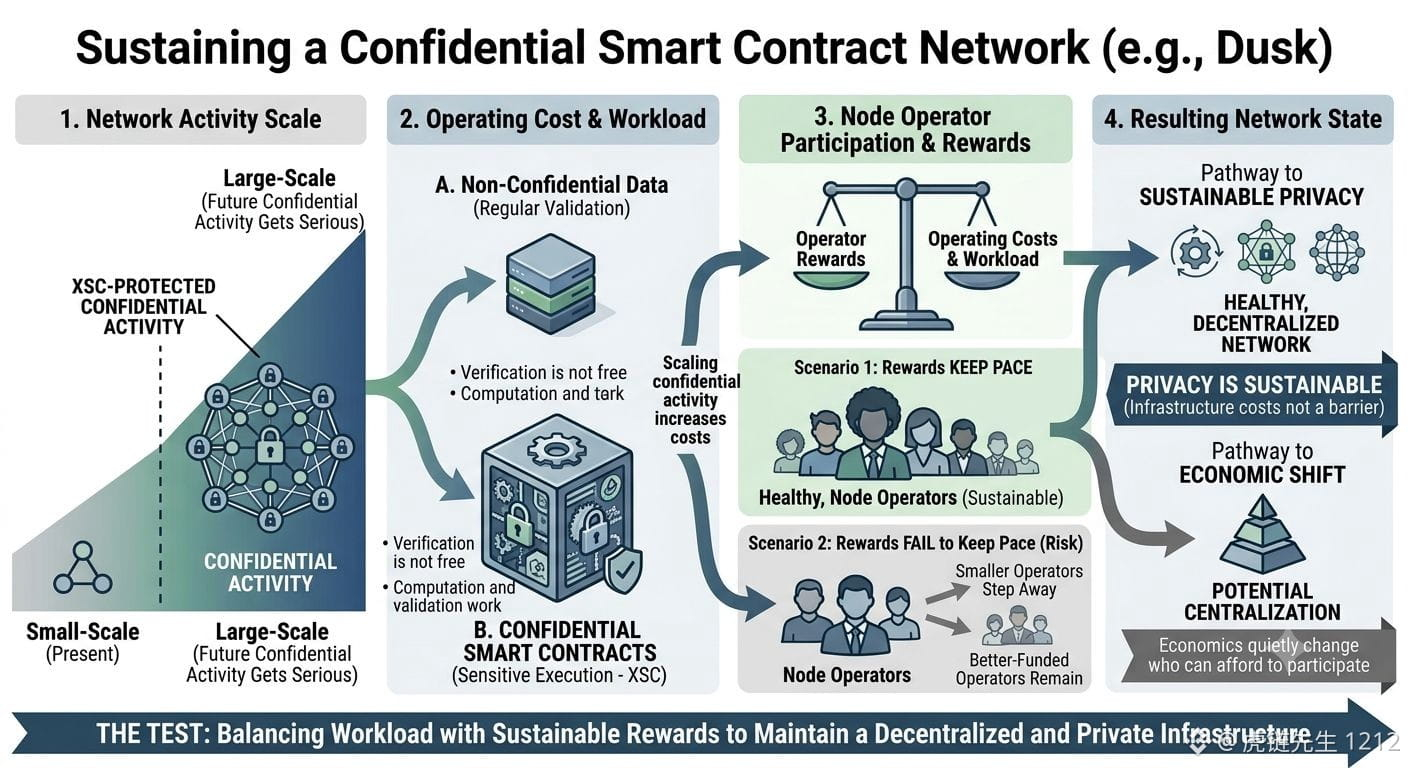
Wenn die Aktivität gering ist, spielen zusätzliche Rechenleistung und Validierungsaufwand vielleicht keine große Rolle. In großem Maßstab wird das zu echten Betriebskosten. Wenn die Belohnungen nicht mit der Entwicklung Schritt halten, können sich kleinere Betreiber nach und nach zurückziehen, während besser finanzierte bestehen bleiben. Dafür muss nichts kaputtgehen. Das Netzwerk kann weiterlaufen, während sich die Wirtschaftlichkeit still verändert, wer es sich leisten kann, teilzunehmen.
Das ist der Teil, auf den ich mit Dusk achten würde. Der eigentliche Test für vertrauliche Smart Contracts ist nicht nur, ob sie Finanzdaten privat halten können. Entscheidend ist, ob die Betreiber die Arbeitslast bewältigen können, ohne dass die Infrastrukturkosten zur Hürde für die Teilnahme werden. Wenn Dusk diese Balance richtig hinbekommt, wird Datenschutz viel mehr als nur eine Funktion. Er wird etwas, das das Netzwerk tatsächlich tragen kann.
Ich komme immer wieder zu einer einfachen Frage mit Dusk: Was passiert mit den Menschen, die das Netzwerk betreiben, wenn vertrauliche Aktivitäten ernst werden? XSC kann sensible Ausführung schützen, aber Datenschutz macht Verifikation nicht kostenlos.
Wenn die Aktivität gering ist, spielen zusätzliche Rechenleistung und Validierungsaufwand vielleicht keine große Rolle. In großem Maßstab wird das zu echten Betriebskosten. Wenn die Belohnungen nicht mit der Entwicklung Schritt halten, können sich kleinere Betreiber nach und nach zurückziehen, während besser finanzierte bestehen bleiben. Dafür muss nichts kaputtgehen. Das Netzwerk kann weiterlaufen, während sich die Wirtschaftlichkeit still verändert, wer es sich leisten kann, teilzunehmen.
Das ist der Teil, auf den ich mit Dusk achten würde. Der eigentliche Test für vertrauliche Smart Contracts ist nicht nur, ob sie Finanzdaten privat halten können. Entscheidend ist, ob die Betreiber die Arbeitslast bewältigen können, ohne dass die Infrastrukturkosten zur Hürde für die Teilnahme werden. Wenn Dusk diese Balance richtig hinbekommt, wird Datenschutz viel mehr als nur eine Funktion. Er wird etwas, das das Netzwerk tatsächlich tragen kann.