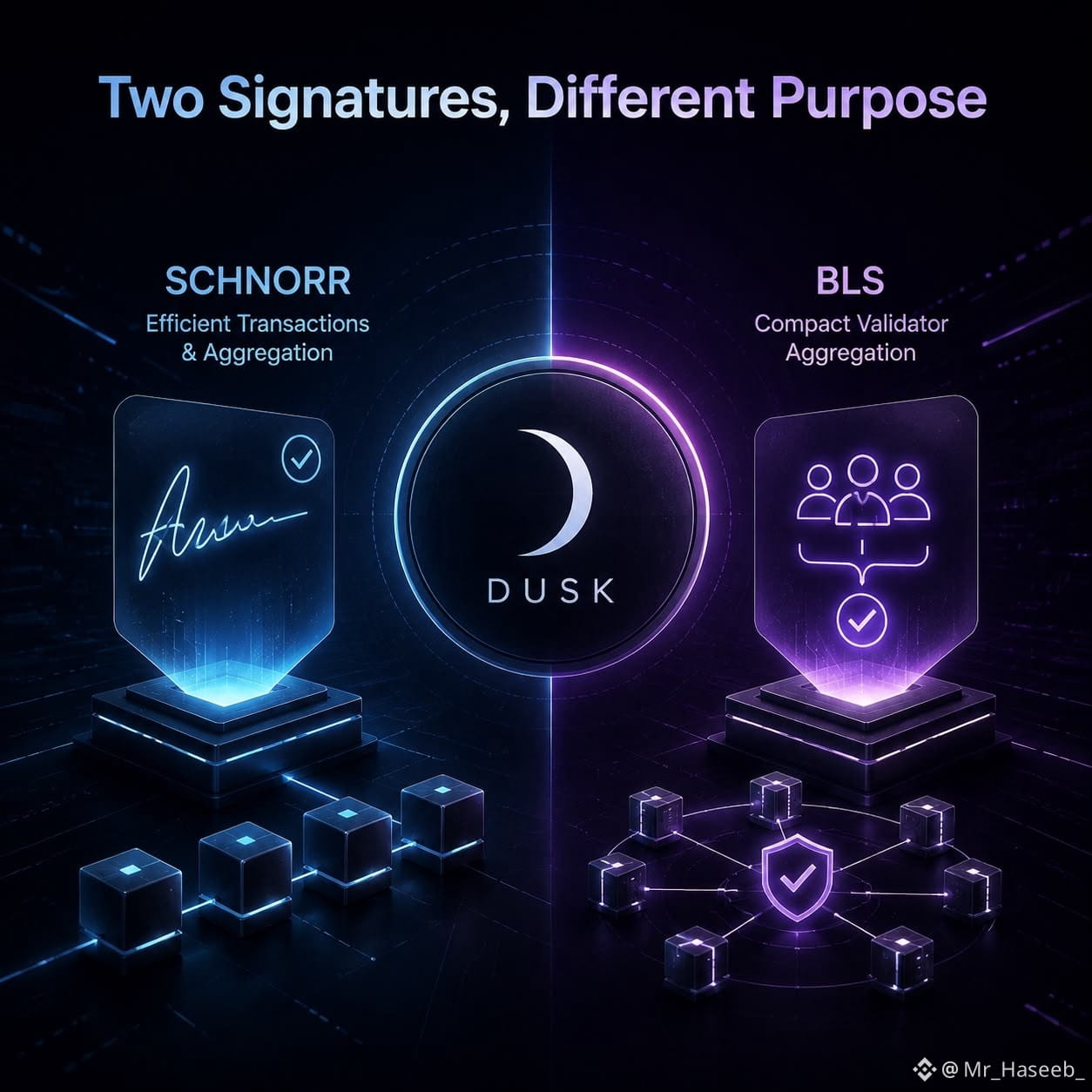
#dusk $DUSK @Dusk Die meisten Blockchains versuchen, alles mit einem einzigen Signatursystem zu vereinfachen. Dusk geht einen anderen Weg: Es nutzt sowohl Schnorr- als auch BLS-Signaturen.
Der Grund ist keine Duplikation, sondern Spezialisierung. Schnorr-Signaturen sind für eine effiziente Transaktionssignierung ausgelegt, während BLS-Signaturen das Aggregieren mehrerer Signaturen ermöglichen. Dadurch eignen sie sich besonders für validatorbezogene Prozesse, bei denen viele Zustimmungen zu einer Kombination zusammengeführt werden müssen.
Diese Trennung zeigt eine wichtige Designentscheidung von @Dusk: Kryptografische Werkzeuge sollten danach ausgewählt werden, welches Problem sie lösen, und nicht weil eine Lösung auf dem Papier einfacher aussieht.
Die Folge ist eine stärker zweckorientierte Architektur, in der verschiedene Teile des Protokolls Primitiven verwenden können, die für ihre jeweilige Rolle optimiert sind.
Der Trade-off besteht darin, dass die Nutzung mehrerer kryptografischer Systeme die Implementierungskomplexität erhöht und eine sorgfältige Sicherheitsprüfung erfordert.
Für mich zeigt das einen tieferen Punkt: Gutes Blockchain-Design besteht oft darin, präzise technische Entscheidungen im Hintergrund zu treffen – nicht nur darin, mehr Funktionen hinzuzufügen.
Der Grund ist keine Duplikation, sondern Spezialisierung. Schnorr-Signaturen sind für eine effiziente Transaktionssignierung ausgelegt, während BLS-Signaturen das Aggregieren mehrerer Signaturen ermöglichen. Dadurch eignen sie sich besonders für validatorbezogene Prozesse, bei denen viele Zustimmungen zu einer Kombination zusammengeführt werden müssen.
Diese Trennung zeigt eine wichtige Designentscheidung von @Dusk: Kryptografische Werkzeuge sollten danach ausgewählt werden, welches Problem sie lösen, und nicht weil eine Lösung auf dem Papier einfacher aussieht.
Die Folge ist eine stärker zweckorientierte Architektur, in der verschiedene Teile des Protokolls Primitiven verwenden können, die für ihre jeweilige Rolle optimiert sind.
Der Trade-off besteht darin, dass die Nutzung mehrerer kryptografischer Systeme die Implementierungskomplexität erhöht und eine sorgfältige Sicherheitsprüfung erfordert.
Für mich zeigt das einen tieferen Punkt: Gutes Blockchain-Design besteht oft darin, präzise technische Entscheidungen im Hintergrund zu treffen – nicht nur darin, mehr Funktionen hinzuzufügen.