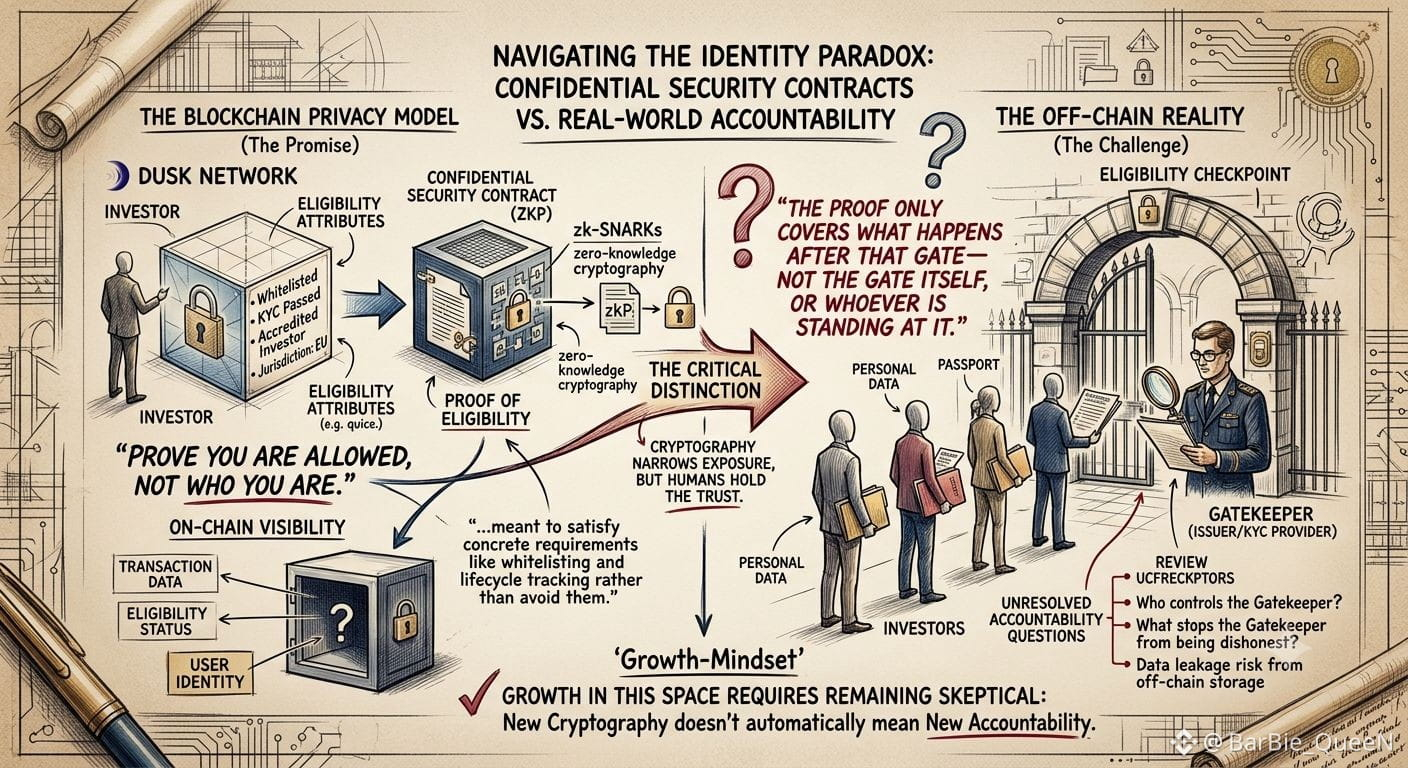
Ich habe gerade ein Blockchain-Paper gelesen, das für Security Tokens entwickelt wurde, und eine Sache hat mich innehalten lassen: Das System ist so ausgelegt, dass man nachweisen kann, dass man berechtigt ist, einen Vermögenswert zu halten, ohne zu beweisen, wer man ist. Man versteckt nicht die Berechtigung – man versteckt alles andere über dich, während die Berechtigung selbst weiterhin überprüft wird.
Dieser Unterschied wirkt größer, als er klingt. Die meisten Datenschutz-Diskussionen in Krypto drehen sich darum, Transaktionen vor Fremden zu verbergen. Hier geht es um etwas Spezifischeres – echtes Wertpapierrecht. Das Projekt Dusk Network baut sein Datenschutzmodell auf einem Standard für „Confidential Security Contracts“ auf, der darauf ausgelegt ist, konkrete Anforderungen wie Whitelisting und Lifecycle-Tracking zu erfüllen, statt sie zu umgehen. Das ist es, was es weniger wie einen Datenschutz-Trick und mehr wie etwas wirken lässt, das mit Blick auf Regulierungsbehörden entworfen wurde.
Trotzdem bleibe ich bei einer Lücke hängen. Irgendjemand muss entscheiden, wer überhaupt ins Whitelist aufgenommen wird, und diese Partei braucht dafür weiterhin deine persönlichen Informationen, um diese Entscheidung zu treffen. Die Chain verbirgt deine Identität vor anderen Nutzern, aber sie entfernt nicht den Checkpoint, an dem ein Mensch bestätigt, dass du eine legitime, berechtigte Person bist. Der Nachweis betrifft nur das, was nach diesem Tor passiert – nicht das Tor selbst oder die Person, die dort steht.
Daher lese ich das nicht als gelöstes Problem. Ich lese es als eine sinnvolle Einschränkung dessen, was offengelegt werden muss, während die schwierigere Frage – wer das Tor verwaltet und was sie ehrlich hält – weiterhin außerhalb des Codes liegt. Neue Kryptografie bedeutet nicht automatisch neue Verantwortlichkeit.
Lesenswert, langsam und mit einer gewissen Skepsis – diese Gewohnheit, mehr als jedes einzelne Whitepaper, ist es, die dich in diesem Bereich tatsächlich wachsen lässt.
@Dusk #dusk $DUSK
Dieser Unterschied wirkt größer, als er klingt. Die meisten Datenschutz-Diskussionen in Krypto drehen sich darum, Transaktionen vor Fremden zu verbergen. Hier geht es um etwas Spezifischeres – echtes Wertpapierrecht. Das Projekt Dusk Network baut sein Datenschutzmodell auf einem Standard für „Confidential Security Contracts“ auf, der darauf ausgelegt ist, konkrete Anforderungen wie Whitelisting und Lifecycle-Tracking zu erfüllen, statt sie zu umgehen. Das ist es, was es weniger wie einen Datenschutz-Trick und mehr wie etwas wirken lässt, das mit Blick auf Regulierungsbehörden entworfen wurde.
Trotzdem bleibe ich bei einer Lücke hängen. Irgendjemand muss entscheiden, wer überhaupt ins Whitelist aufgenommen wird, und diese Partei braucht dafür weiterhin deine persönlichen Informationen, um diese Entscheidung zu treffen. Die Chain verbirgt deine Identität vor anderen Nutzern, aber sie entfernt nicht den Checkpoint, an dem ein Mensch bestätigt, dass du eine legitime, berechtigte Person bist. Der Nachweis betrifft nur das, was nach diesem Tor passiert – nicht das Tor selbst oder die Person, die dort steht.
Daher lese ich das nicht als gelöstes Problem. Ich lese es als eine sinnvolle Einschränkung dessen, was offengelegt werden muss, während die schwierigere Frage – wer das Tor verwaltet und was sie ehrlich hält – weiterhin außerhalb des Codes liegt. Neue Kryptografie bedeutet nicht automatisch neue Verantwortlichkeit.
Lesenswert, langsam und mit einer gewissen Skepsis – diese Gewohnheit, mehr als jedes einzelne Whitepaper, ist es, die dich in diesem Bereich tatsächlich wachsen lässt.
@Dusk #dusk $DUSK