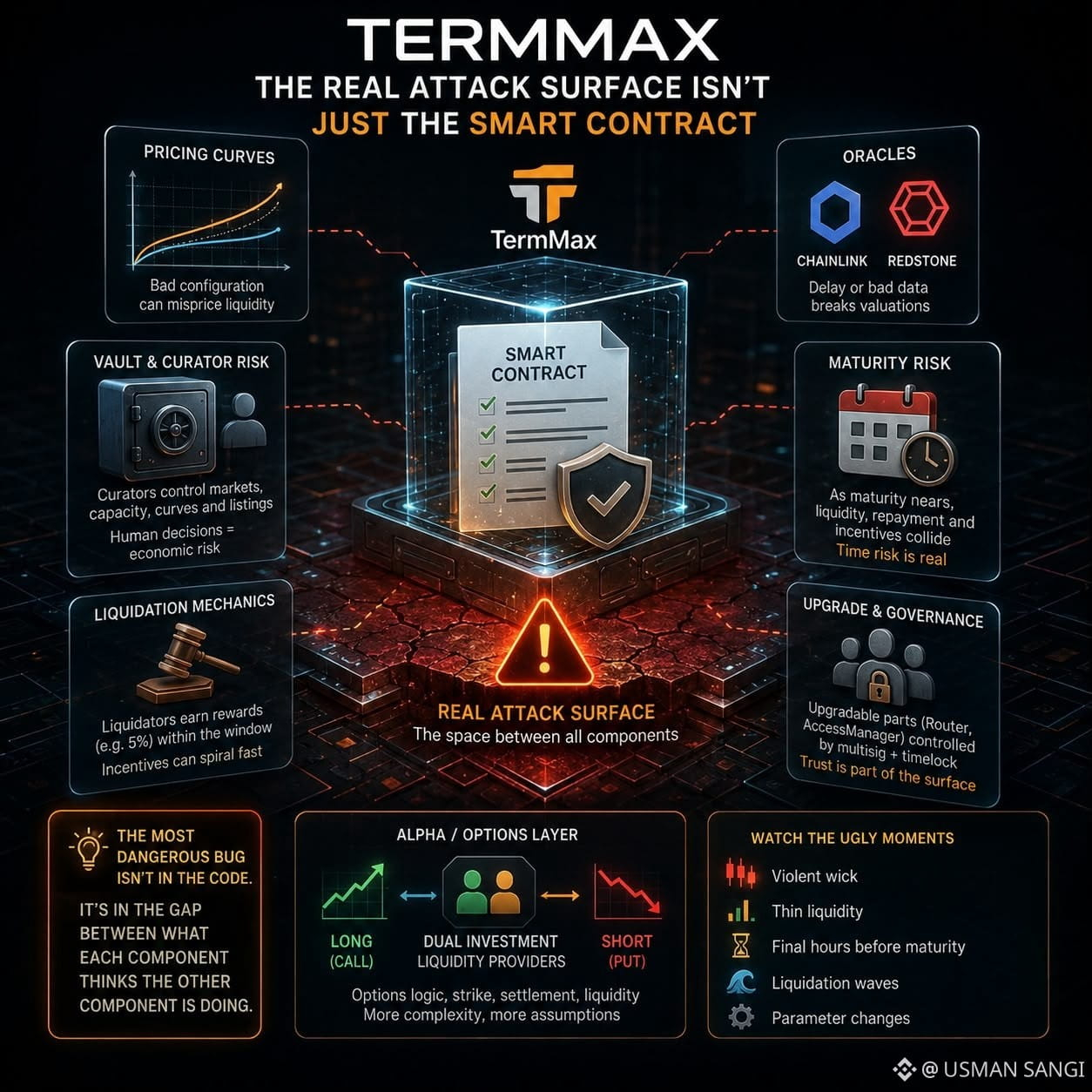

#termmax @TermMax TermMax: Die echte Angriffsfläche ist nicht nur der Smart Contract
Je mehr ich mir TermMax anschaue, desto weniger interessiert mich die Frage:
„Kann jemand den Vertrag hacken?“
Das ist nur ein Teil.
Spannender ist die Frage, was passiert, wenn mehrere ganz normale Dinge gleichzeitig geschehen.
Ein Preis bewegt sich stark.
Die Liquidität wird dünn.
Die Fälligkeit rückt näher.
Ein Orakel wird aktualisiert.
Ein Kurator hat den Markt auf eine bestimmte Weise konfiguriert.
Ein Liquidator beginnt, dem Trade nachzujagen.
Keines davon allein klingt beängstigend.
Zusammen?
Da wird es interessant.
TermMax hat festlaufende Märkte, FT/XT-Positionen, Gearing Tokens, Preis-Kurven, Vaults, Liquidationsmechaniken, Orakel und den Alpha-Optionsbereich.
Menschen konzentrieren sich natürlich auf die Verträge.
Das leisere Risiko ist der Raum zwischen ihnen.
Nimm die Preis-Kurve.
Es ist nicht einfach „Das Protokoll erhebt X%“.
Wie die Liquidität geformt ist, kann genauso wichtig sein wie der Code.
Eine vollständig gültige Konfiguration kann trotzdem einen schrecklichen Markt erzeugen.
Genauso bei Orakeln.
Alle fragen nach Manipulation.
Mich interessiert eher, was passiert, wenn das Orakel eine vernünftige Zahl liefert, während sich der Markt bereits viel schneller bewegt.
Diese Lücke zwischen der Realität und dem, was das Protokoll für die Realität hält
das lohnt sich zu beobachten.
Die Fälligkeit fügt noch eine weitere Ebene hinzu.
Im Gegensatz zu Perpetuals kannst du die Uhr nicht ignorieren.
Wenn das Verfallsdatum näher rückt, beginnen Liquidität, Rückzahlung, Sicherheiten und Liquidationsanreize sich gegenseitig zu drücken
Das System hat nicht nur Preisrisiko.
Es hat Zeitrisiko
Dann gibt es noch die menschliche Ebene.
Kuratoren und Vault-Einstellungen sind entscheidend.
Wer bekommt Exposure?
Wie viel Kapazität ist verfügbar?
Wie ist die Kurve konfiguriert?
Was ändert sich – und wann?
Das ist der Teil, den ich bei TermMax im Blick hätte.
Nicht nur die offensichtlichen Exploits
Beobachte die hässlichen Momente
Ein gewalttätiger Wick
Dünne Liquidität
Die letzten Stunden vor der Fälligkeit
Eine Liquidationswelle.
Eine „kleine“ Änderung eines Parameters
Diese Momente zeigen viel mehr als ein ruhiges Dashboard.
Denn manchmal ist der gefährlichste Bug nicht im Code
sondern in der Lücke zwischen dem, was jede Komponente glaubt, was die andere Komponente tut
Je mehr ich mir TermMax anschaue, desto weniger interessiert mich die Frage:
„Kann jemand den Vertrag hacken?“
Das ist nur ein Teil.
Spannender ist die Frage, was passiert, wenn mehrere ganz normale Dinge gleichzeitig geschehen.
Ein Preis bewegt sich stark.
Die Liquidität wird dünn.
Die Fälligkeit rückt näher.
Ein Orakel wird aktualisiert.
Ein Kurator hat den Markt auf eine bestimmte Weise konfiguriert.
Ein Liquidator beginnt, dem Trade nachzujagen.
Keines davon allein klingt beängstigend.
Zusammen?
Da wird es interessant.
TermMax hat festlaufende Märkte, FT/XT-Positionen, Gearing Tokens, Preis-Kurven, Vaults, Liquidationsmechaniken, Orakel und den Alpha-Optionsbereich.
Menschen konzentrieren sich natürlich auf die Verträge.
Das leisere Risiko ist der Raum zwischen ihnen.
Nimm die Preis-Kurve.
Es ist nicht einfach „Das Protokoll erhebt X%“.
Wie die Liquidität geformt ist, kann genauso wichtig sein wie der Code.
Eine vollständig gültige Konfiguration kann trotzdem einen schrecklichen Markt erzeugen.
Genauso bei Orakeln.
Alle fragen nach Manipulation.
Mich interessiert eher, was passiert, wenn das Orakel eine vernünftige Zahl liefert, während sich der Markt bereits viel schneller bewegt.
Diese Lücke zwischen der Realität und dem, was das Protokoll für die Realität hält
das lohnt sich zu beobachten.
Die Fälligkeit fügt noch eine weitere Ebene hinzu.
Im Gegensatz zu Perpetuals kannst du die Uhr nicht ignorieren.
Wenn das Verfallsdatum näher rückt, beginnen Liquidität, Rückzahlung, Sicherheiten und Liquidationsanreize sich gegenseitig zu drücken
Das System hat nicht nur Preisrisiko.
Es hat Zeitrisiko
Dann gibt es noch die menschliche Ebene.
Kuratoren und Vault-Einstellungen sind entscheidend.
Wer bekommt Exposure?
Wie viel Kapazität ist verfügbar?
Wie ist die Kurve konfiguriert?
Was ändert sich – und wann?
Das ist der Teil, den ich bei TermMax im Blick hätte.
Nicht nur die offensichtlichen Exploits
Beobachte die hässlichen Momente
Ein gewalttätiger Wick
Dünne Liquidität
Die letzten Stunden vor der Fälligkeit
Eine Liquidationswelle.
Eine „kleine“ Änderung eines Parameters
Diese Momente zeigen viel mehr als ein ruhiges Dashboard.
Denn manchmal ist der gefährlichste Bug nicht im Code
sondern in der Lücke zwischen dem, was jede Komponente glaubt, was die andere Komponente tut