Die Future-of-Memory-and-Storage-Konferenz 2026 hat gerade offengelegt, was bei diesem KI-Ausbau wirklich hinter den Kulissen passiert – und es ist nicht subtil.
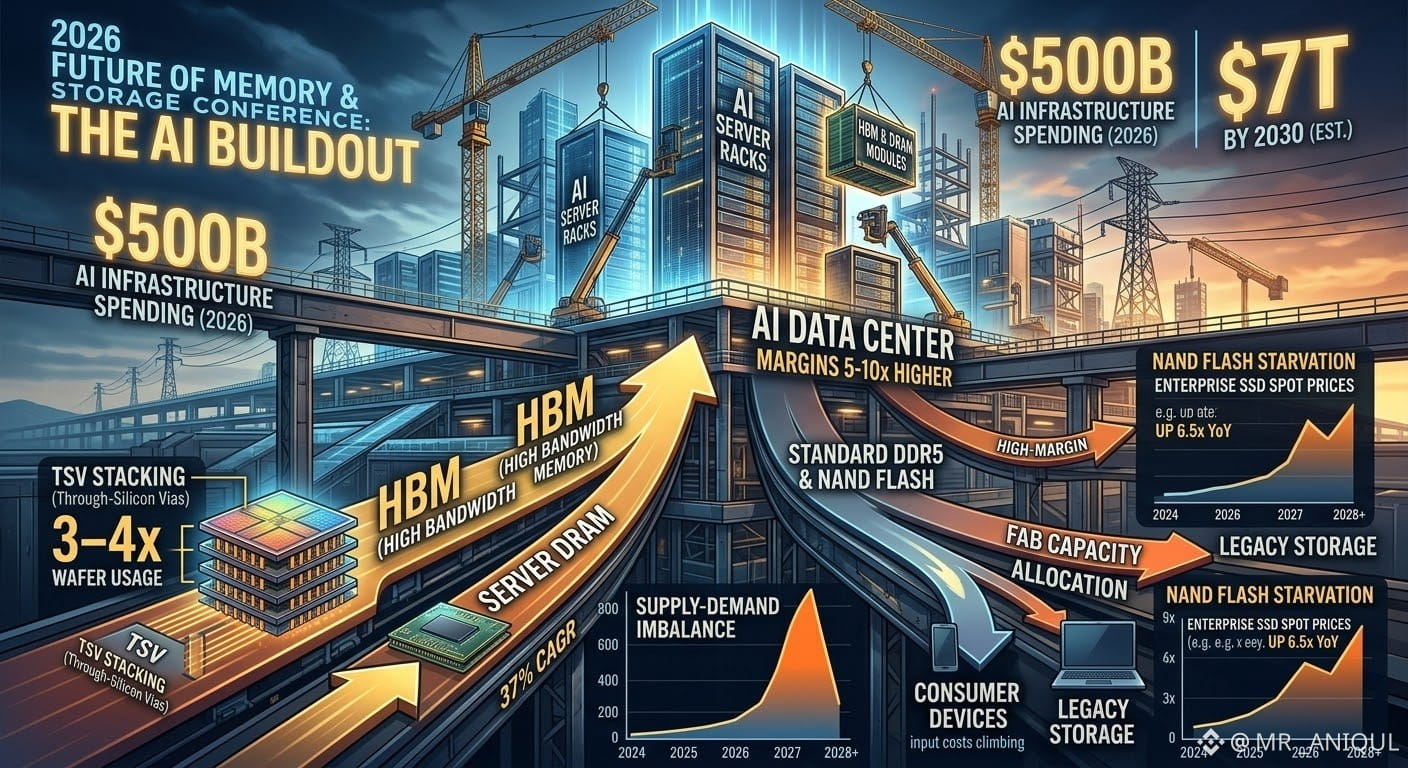
Die Ausgaben für KI-Infrastruktur steuern 2026 auf 500 Mrd. US-Dollar zu, möglicherweise 7 Bio. US-Dollar bis 2030. Das ist kein Hype. Das sind Stahl, Silizium und Strombezugsverträge, die gerade jetzt unterschrieben werden.
Das Ungleichgewicht zwischen Angebot und Nachfrage? Voraussichtlich mindestens bis 2028. Das ist keine Schönwetter-Panne über zwei Quartale.
Was besonders interessant ist:
• Server-DRAM und HBM verzeichnen bis 2028 ein jährliches Bit-Wachstum von 37% (Trendforce)
• HBM-Lieferungen um ~60% im Jahresvergleich gestiegen, mit Gewinnmargen, die 5–10x höher sind als bei Standard-DDR5
• HBM benötigt 3–4x mehr Wafer pro Einheit, bedingt durch die Chipgröße und das TSV-Stacking – das heißt, Gießereien ziehen Kapazität von allem anderen ab
Die Auswirkungen sind real. NAND-Flash wird ausgehungert. Die Spot-Preise für Enterprise-SSDs sind um 6,5x gegenüber dem Vorjahr gestiegen. Consumer-Geräte (PCs, Handys) spüren den Druck, weil der Speicher in höhermargige KI-Infrastruktur umverteilt wird.
Das ist klassisches Supply-Chain-Rotieren unter Zwang. Das Geld jagt die Marge – und die Marge liegt gerade bei KI-Speicher.
Wenn du im KI-Lieferketten- oder Memory-Bereich investiert bist, dann ist das die Art struktureller Engpässe, die sich nicht schnell auflöst. Wenn du im Consumer-Hardware- oder im Bereich Legacy-Storage unterwegs bist, siehst du, wie deine Input-Kosten steigen, während deine Kunden beim Preis zurückrudern.
Der Zyklus ist laut. Die Frage ist, ob du dafür positioniert bist.#Write2Earn $NVDAB
$BTC
$AAPL.US
Die Ausgaben für KI-Infrastruktur steuern 2026 auf 500 Mrd. US-Dollar zu, möglicherweise 7 Bio. US-Dollar bis 2030. Das ist kein Hype. Das sind Stahl, Silizium und Strombezugsverträge, die gerade jetzt unterschrieben werden.
Das Ungleichgewicht zwischen Angebot und Nachfrage? Voraussichtlich mindestens bis 2028. Das ist keine Schönwetter-Panne über zwei Quartale.
Was besonders interessant ist:
• Server-DRAM und HBM verzeichnen bis 2028 ein jährliches Bit-Wachstum von 37% (Trendforce)
• HBM-Lieferungen um ~60% im Jahresvergleich gestiegen, mit Gewinnmargen, die 5–10x höher sind als bei Standard-DDR5
• HBM benötigt 3–4x mehr Wafer pro Einheit, bedingt durch die Chipgröße und das TSV-Stacking – das heißt, Gießereien ziehen Kapazität von allem anderen ab
Die Auswirkungen sind real. NAND-Flash wird ausgehungert. Die Spot-Preise für Enterprise-SSDs sind um 6,5x gegenüber dem Vorjahr gestiegen. Consumer-Geräte (PCs, Handys) spüren den Druck, weil der Speicher in höhermargige KI-Infrastruktur umverteilt wird.
Das ist klassisches Supply-Chain-Rotieren unter Zwang. Das Geld jagt die Marge – und die Marge liegt gerade bei KI-Speicher.
Wenn du im KI-Lieferketten- oder Memory-Bereich investiert bist, dann ist das die Art struktureller Engpässe, die sich nicht schnell auflöst. Wenn du im Consumer-Hardware- oder im Bereich Legacy-Storage unterwegs bist, siehst du, wie deine Input-Kosten steigen, während deine Kunden beim Preis zurückrudern.
Der Zyklus ist laut. Die Frage ist, ob du dafür positioniert bist.#Write2Earn $NVDAB
$BTC
$AAPL.US