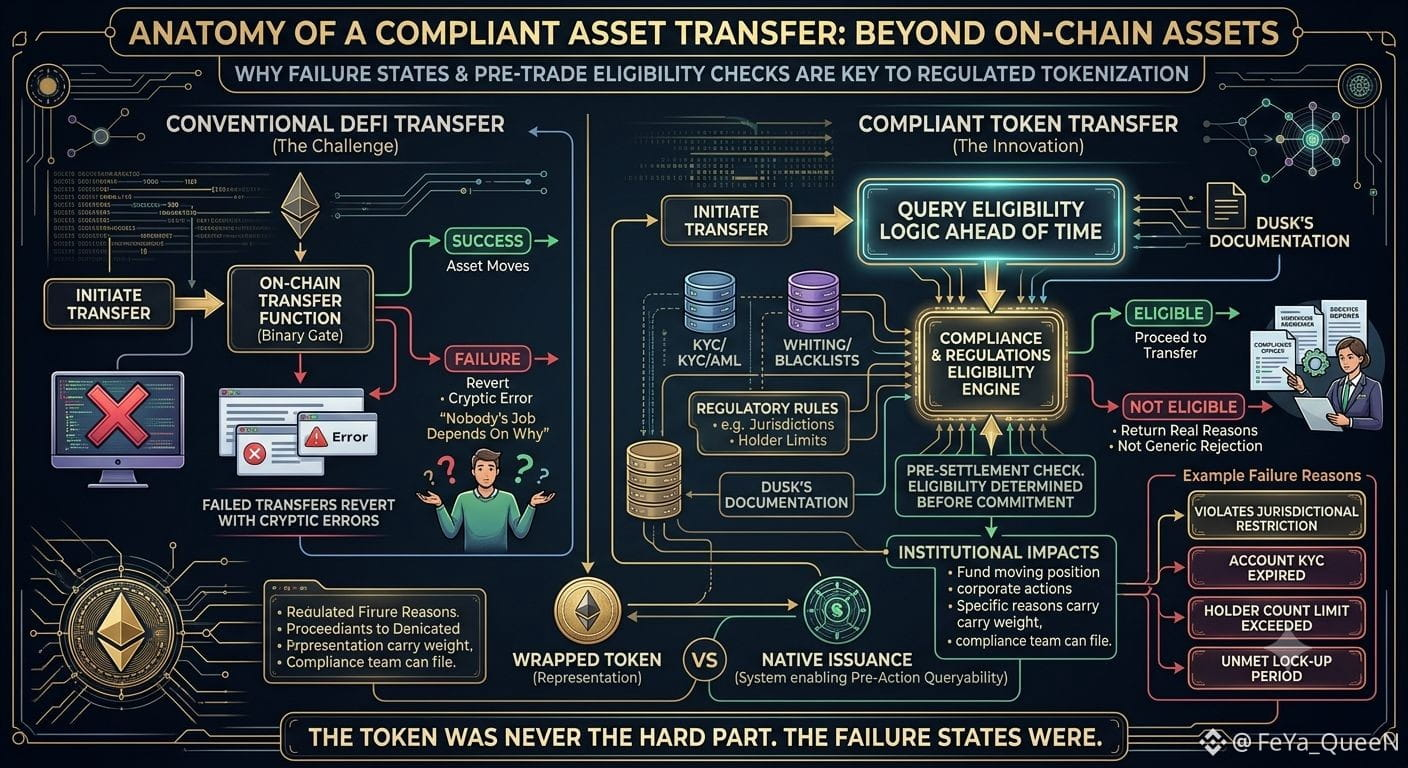
Die meisten Threads zur Tokenisierung bleiben bei einer Idee stehen: Das Asset lebt jetzt auf der Blockchain. Was mich in der Dokumentation zu #dusk jedoch besonders aufgefallen ist, ist etwas Kleineres, das unter „Assets & Regulations“ versteckt ist: Ein konformer Transfer ist nicht einfach nur genehmigt oder blockiert. Man soll in der Lage sein zu testen, ob er durchgehen würde, bevor man ihn sendet – und wenn nicht, eine echte Begründung zurückbekommen, statt einer generischen Ablehnung.
Zunächst klingt das wie eine kleine Implementierungsdetails. Aber bleib dabei.
In den meisten DeFi-Umgebungen lässt ein fehlgeschlagener Transaktionsversuch einfach alles zurückrollen (revert). Kryptische Fehlermeldung, du zuckst mit den Schultern und versuchst es erneut. Niemandes Aufgabe hängt davon ab, warum.
Ein regulierter Transfer kann nicht so funktionieren – die Ablehnung selbst hat Gewicht. Ein Fonds, der eine Position bewegt, oder ein Handelsplatz, der eine Corporate-Action abwickelt, muss im Voraus wissen, ob ein Transfer zulässig ist, und nicht erst feststellen, nachdem er bereits festgeschrieben wurde. Und „es ist fehlgeschlagen“ ist nichts, womit ein Compliance-Team irgendwo sinnvoll arbeiten könnte.
Das leitet still etwas ab: Die Logik zur Berechtigung kann nicht einfach am Rand einer Transferfunktion als simples Ja/Nein-Gate sitzen. Sie muss im Voraus abfragbar sein – näher an einer Pre-Trade-Prüfung, die aus dem traditionellen Settlement-Umfeld stammt, als an einem typischen Blockchain-Primitiv.@Dusk
Das ist vermutlich auch der Grund, warum die Dokumentation immer wieder darauf beharrt, dass Tokenisierung und Native-Issuance nicht dasselbe sind. Ein „wrapped token“ liefert dir eine Repräsentation. Aber es liefert dir kein System, das einer Institution vor ihrem Handeln sagen kann, ob die Aktion überhaupt erlaubt ist – und warum.
Das Token war nie der harte Teil. Die Fehlerzustände waren es.
$DUSK
Zunächst klingt das wie eine kleine Implementierungsdetails. Aber bleib dabei.
In den meisten DeFi-Umgebungen lässt ein fehlgeschlagener Transaktionsversuch einfach alles zurückrollen (revert). Kryptische Fehlermeldung, du zuckst mit den Schultern und versuchst es erneut. Niemandes Aufgabe hängt davon ab, warum.
Ein regulierter Transfer kann nicht so funktionieren – die Ablehnung selbst hat Gewicht. Ein Fonds, der eine Position bewegt, oder ein Handelsplatz, der eine Corporate-Action abwickelt, muss im Voraus wissen, ob ein Transfer zulässig ist, und nicht erst feststellen, nachdem er bereits festgeschrieben wurde. Und „es ist fehlgeschlagen“ ist nichts, womit ein Compliance-Team irgendwo sinnvoll arbeiten könnte.
Das leitet still etwas ab: Die Logik zur Berechtigung kann nicht einfach am Rand einer Transferfunktion als simples Ja/Nein-Gate sitzen. Sie muss im Voraus abfragbar sein – näher an einer Pre-Trade-Prüfung, die aus dem traditionellen Settlement-Umfeld stammt, als an einem typischen Blockchain-Primitiv.@Dusk
Das ist vermutlich auch der Grund, warum die Dokumentation immer wieder darauf beharrt, dass Tokenisierung und Native-Issuance nicht dasselbe sind. Ein „wrapped token“ liefert dir eine Repräsentation. Aber es liefert dir kein System, das einer Institution vor ihrem Handeln sagen kann, ob die Aktion überhaupt erlaubt ist – und warum.
Das Token war nie der harte Teil. Die Fehlerzustände waren es.
$DUSK