Habe heute über die andere Seite des Tisches nachgedacht.
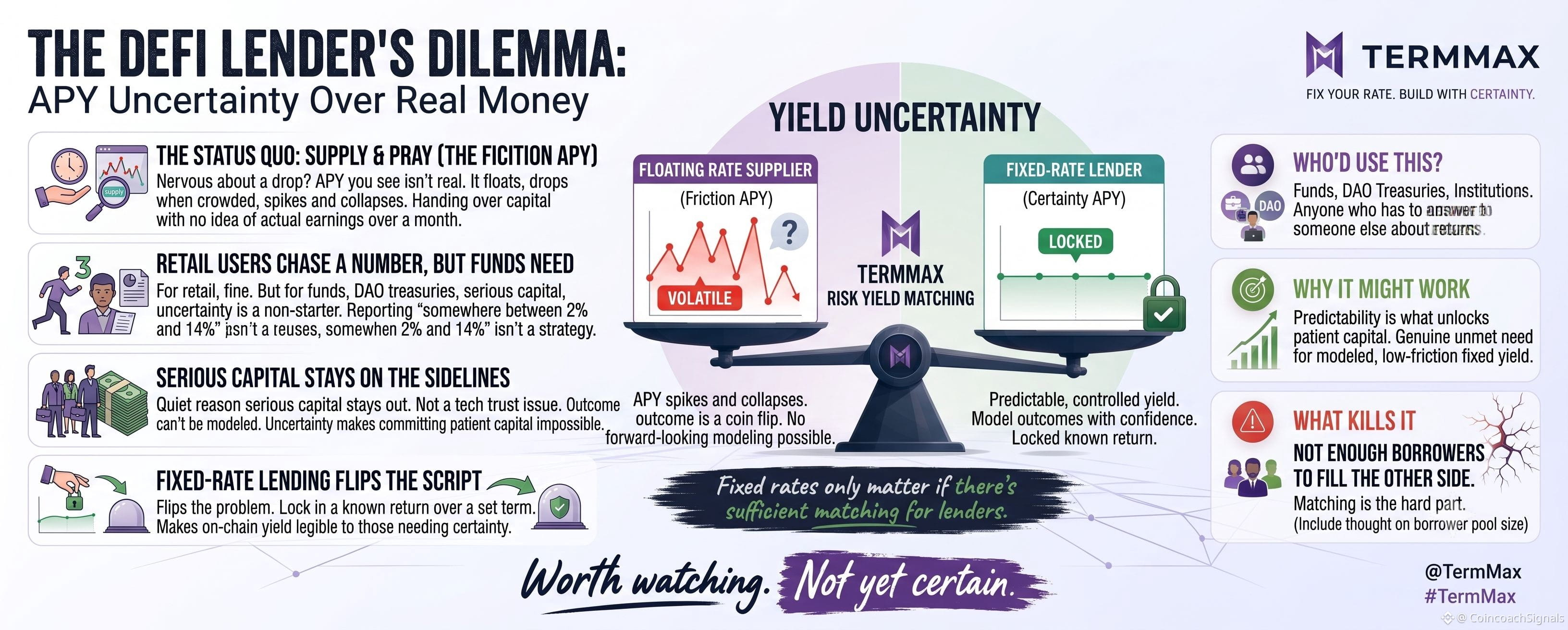
Die meisten DeFi-Kreditangebote drehen sich um den Kreditnehmer – günstiger Leverage, unkomplizierte Kredite. Aber versetz dich kurz in die Lage des Kreditgebers. Du zahlst in einen Pool ein, um Rendite zu erzielen, und die APY, die du gesehen hast, als du „supply“ geklickt hast, ist im Grunde Fiktion. Sie schwebt. Sie sinkt, wenn alle anderen zusätzlich reinkommen. Sie schießt nach oben und bricht dann ein. Du gibst Kapital ab, ohne zu wissen, was du in den nächsten Monat tatsächlich verdienen wirst.
Für einen Retail-User, der einer Zahl hinterherjagt, ist das okay, na gut. Aber für jeden, der echtes Geld verwaltet – einen Fonds, ein DAO-Treasury, jemanden, der Renditen melden muss – ist diese Unsicherheit ein No-Go. Du kannst deinen Stakeholdern nicht sagen: „Wir werden irgendwo zwischen 2 % und 14 % verdienen, mal sehen.“ Das ist keine Yield-Strategie, das ist eine Münzwurf-Entscheidung.
Das ist der stille Grund, warum ein großer Teil ernsthaften Kapitals in DeFi oft einfach abseits bleibt. Nicht, weil sie der Technik nicht vertrauen. Sondern weil sie den Ausgang nicht modellieren können.
Festzins-Kredite drehen das um. Wenn TermMax es einem Kreditgeber wirklich erlaubt, eine bekannte Rendite über eine festgelegte Laufzeit zu sichern, dann ist genau das der Faktor, der On-Chain-Yield für Menschen verständlich macht, die vor ihrem Commitment Sicherheit brauchen.
Wer würde es nutzen? Jeder, der gegenüber jemand anderem Renditen rechtfertigen muss. Warum es funktionieren könnte: Planbarkeit öffnet Geduldiges Kapital. Was es zerstört: zu wenige Kreditnehmer, um die andere Seite auszufüllen.
Die Nachfrage ist real. Das Matching ist der harte Teil.
@TermMax #TermMax
Die meisten DeFi-Kreditangebote drehen sich um den Kreditnehmer – günstiger Leverage, unkomplizierte Kredite. Aber versetz dich kurz in die Lage des Kreditgebers. Du zahlst in einen Pool ein, um Rendite zu erzielen, und die APY, die du gesehen hast, als du „supply“ geklickt hast, ist im Grunde Fiktion. Sie schwebt. Sie sinkt, wenn alle anderen zusätzlich reinkommen. Sie schießt nach oben und bricht dann ein. Du gibst Kapital ab, ohne zu wissen, was du in den nächsten Monat tatsächlich verdienen wirst.
Für einen Retail-User, der einer Zahl hinterherjagt, ist das okay, na gut. Aber für jeden, der echtes Geld verwaltet – einen Fonds, ein DAO-Treasury, jemanden, der Renditen melden muss – ist diese Unsicherheit ein No-Go. Du kannst deinen Stakeholdern nicht sagen: „Wir werden irgendwo zwischen 2 % und 14 % verdienen, mal sehen.“ Das ist keine Yield-Strategie, das ist eine Münzwurf-Entscheidung.
Das ist der stille Grund, warum ein großer Teil ernsthaften Kapitals in DeFi oft einfach abseits bleibt. Nicht, weil sie der Technik nicht vertrauen. Sondern weil sie den Ausgang nicht modellieren können.
Festzins-Kredite drehen das um. Wenn TermMax es einem Kreditgeber wirklich erlaubt, eine bekannte Rendite über eine festgelegte Laufzeit zu sichern, dann ist genau das der Faktor, der On-Chain-Yield für Menschen verständlich macht, die vor ihrem Commitment Sicherheit brauchen.
Wer würde es nutzen? Jeder, der gegenüber jemand anderem Renditen rechtfertigen muss. Warum es funktionieren könnte: Planbarkeit öffnet Geduldiges Kapital. Was es zerstört: zu wenige Kreditnehmer, um die andere Seite auszufüllen.
Die Nachfrage ist real. Das Matching ist der harte Teil.
@TermMax #TermMax