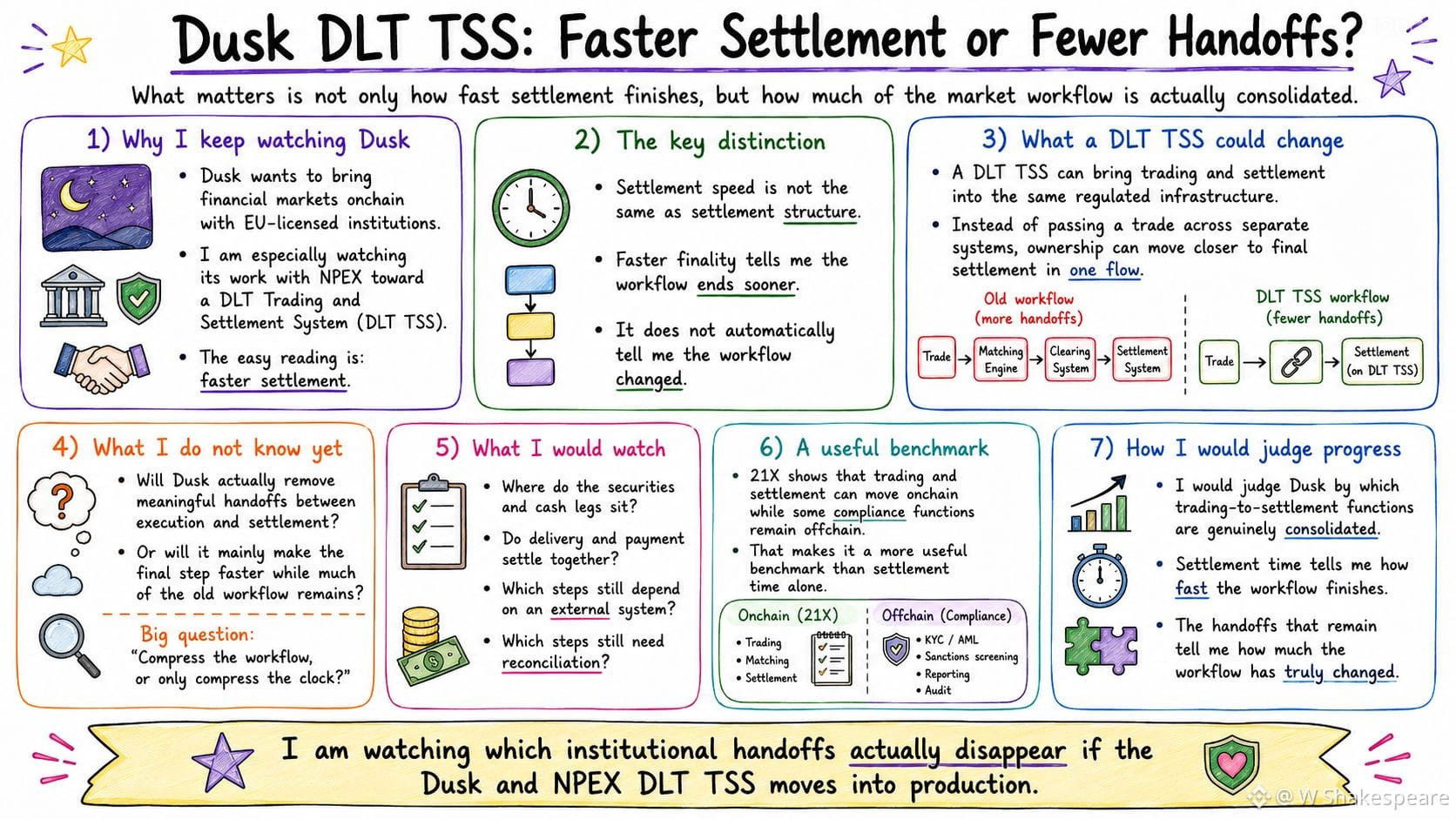
Ich komme immer wieder auf Dusk’ Bestreben zurück, Finanzmärkte mit EU-lizenzierten Institutionen auf die Blockchain zu bringen – insbesondere auf seine Arbeit mit NPEX hin zu einem DLT Trading- und Settlement-System (DLT TSS). Es ist leicht, das vor allem als Story über eine schnellere Abwicklung zu lesen.
Doch die Geschwindigkeit der Abwicklung und die Struktur der Abwicklung sind nicht dasselbe. Ein DLT TSS kann Handels- und Abwicklungsfunktionen in derselben regulierten Infrastruktur zusammenführen, statt einen Trade über getrennte Systeme hinweg weiterzugeben, bevor das Eigentum final feststeht.
Was ich noch nicht weiß, ist, ob Dusk’ Weg zum DLT TSS tatsächlich bedeutsame Übergaben zwischen Ausführung und Abwicklung abschafft – oder ob er nur den letzten Schritt beschleunigt, während ein Großteil des alten Workflows unverändert bleibt. Die Mechanik, die man im Blick behalten sollte, ist: Wo liegen die Wertpapier- und die Geldkomponente? Ob Lieferung und Zahlung gemeinsam abrechnen, und welche Schritte weiterhin ein externes System oder eine Abstimmung erfordern. Live-DLT-TSS-Infrastrukturen wie 21X zeigen, dass Handel und Abwicklung auf die Blockchain verlagert werden können, während einige Compliance-Funktionen weiterhin außerhalb der Kette bleiben. Das ist ein nützlicherer Maßstab für Dusk als nur die reine Settlement-Zeit. Die Settlement-Zeit sagt mir, wie schnell der Workflow abgeschlossen wird. Die verbleibenden Übergaben sagen mir, wie viel vom Workflow ein DLT TSS tatsächlich verändert hat.
Ich würde Dusk’ Fortschritt daran messen, welche Trading-zu-Settlement-Funktionen wirklich konsolidiert werden – nicht nur daran, wie schnell die finale Transaktion abgeschlossen ist.
Die Frage ist, ob Dusk den Markt-Workflow selbst komprimieren kann oder nur die Uhr. Ich beobachte, welche institutionellen Übergaben tatsächlich verschwinden, wenn die Dusk- und NPEX-DLT-TSS in den Produktionsbetrieb gehen.
#dusk $DUSK @Dusk ✨
Doch die Geschwindigkeit der Abwicklung und die Struktur der Abwicklung sind nicht dasselbe. Ein DLT TSS kann Handels- und Abwicklungsfunktionen in derselben regulierten Infrastruktur zusammenführen, statt einen Trade über getrennte Systeme hinweg weiterzugeben, bevor das Eigentum final feststeht.
Was ich noch nicht weiß, ist, ob Dusk’ Weg zum DLT TSS tatsächlich bedeutsame Übergaben zwischen Ausführung und Abwicklung abschafft – oder ob er nur den letzten Schritt beschleunigt, während ein Großteil des alten Workflows unverändert bleibt. Die Mechanik, die man im Blick behalten sollte, ist: Wo liegen die Wertpapier- und die Geldkomponente? Ob Lieferung und Zahlung gemeinsam abrechnen, und welche Schritte weiterhin ein externes System oder eine Abstimmung erfordern. Live-DLT-TSS-Infrastrukturen wie 21X zeigen, dass Handel und Abwicklung auf die Blockchain verlagert werden können, während einige Compliance-Funktionen weiterhin außerhalb der Kette bleiben. Das ist ein nützlicherer Maßstab für Dusk als nur die reine Settlement-Zeit. Die Settlement-Zeit sagt mir, wie schnell der Workflow abgeschlossen wird. Die verbleibenden Übergaben sagen mir, wie viel vom Workflow ein DLT TSS tatsächlich verändert hat.
Ich würde Dusk’ Fortschritt daran messen, welche Trading-zu-Settlement-Funktionen wirklich konsolidiert werden – nicht nur daran, wie schnell die finale Transaktion abgeschlossen ist.
Die Frage ist, ob Dusk den Markt-Workflow selbst komprimieren kann oder nur die Uhr. Ich beobachte, welche institutionellen Übergaben tatsächlich verschwinden, wenn die Dusk- und NPEX-DLT-TSS in den Produktionsbetrieb gehen.
#dusk $DUSK @Dusk ✨