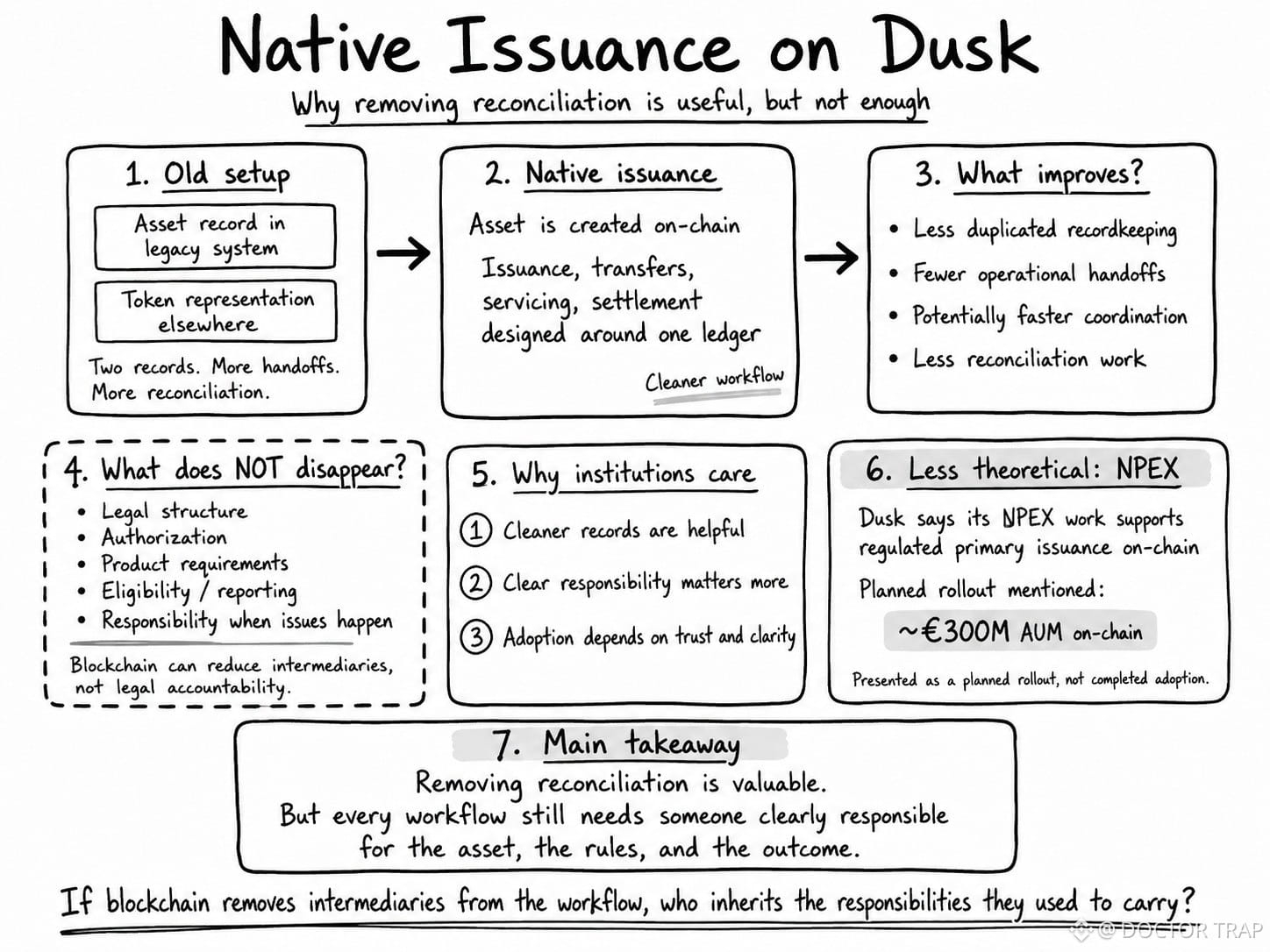
Reconciliation ist ein Finanzbegriff, der zunächst langweilig wirken mag, aber interessant wird, wenn man die umfangreichen Systeme bedenkt, die dafür sorgen, dass zwei Datensätze zueinander passen. Deshalb hat mich die Darstellung von @Dusk zur „native issuance“ aufmerksam gemacht. Anstatt einen Blockchain-Token zu erstellen, der einen Vermögenswert repräsentiert, der irgendwo anders erfasst wurde, bedeutet „native issuance“, dass der Vermögenswert selbst direkt auf der Blockchain erstellt und verwaltet werden kann. Ausgabe, Übertragungen, Betreuung und Abwicklung können dann rund um dasselbe Ledger gestaltet werden.
Weniger doppelte Datensätze. Weniger Übergaben. Möglicherweise weniger Abstimmungen. Doch das Löschen einer operativen Ebene löscht nicht die Verantwortung, die diese Ebene getragen hat. Bei regulierten Vermögenswerten bestimmen weiterhin rechtliche Struktur, Genehmigungen und Produktanforderungen, wie das System funktioniert.
Die Arbeit von NPEX in der realen Welt macht das weniger theoretisch und mehr praktisch. Dusk sagt, dass die Partnerschaft mit der niederländischen SME-Börse NPEX dazu beiträgt, regulierte Primäremissionen On-Chain zu unterstützen. Im Oktober 2025 sagte Dusk außerdem, es bereite sich zusammen mit NPEX darauf vor, €300 Millionen an Vermögenswerten unter Verwaltung On-Chain zu bringen. Das wurde als geplanter Rollout vorgestellt; nicht als etwas, das man bereits als abgeschlossene Einführung zählen würde.
Das ist die Prüfung, die ich spannend finde.
Institutionen werden wahrscheinlich nicht darum kümmern, dass die Architektur „aufgeräumter“ aussieht, wenn es schwieriger wird, die Verantwortung eindeutig zuzuordnen. Irgendjemand muss weiterhin klare Befugnisse haben, wenn das Eigentum umstritten ist, sich die Anspruchsberechtigung ändert, Berichterstattung erforderlich ist oder ein Vermögenswert betreut werden muss.
Für den Markt-Kontext: $DUSK handelt zum Zeitpunkt dieser Veröffentlichung etwa bei $0.0626. CoinGecko zeigt derzeit ungefähr eine Marktkapitalisierung von $37,36 Millionen, etwa $2,99 Millionen an 24-Stunden-Volumen und rund 599,4 Millionen DUSK im Umlauf.
Blockchain kann die Aufzeichnungen vereinfachen. Sie kann aber nicht die Verantwortlichkeit optional machen. Wenn Blockchain also Intermediäre aus dem Workflow entfernt: Wer übernimmt dann die Verantwortlichkeiten, die diese Intermediäre zuvor getragen haben? Was ist deine Meinung?
#dusk
Weniger doppelte Datensätze. Weniger Übergaben. Möglicherweise weniger Abstimmungen. Doch das Löschen einer operativen Ebene löscht nicht die Verantwortung, die diese Ebene getragen hat. Bei regulierten Vermögenswerten bestimmen weiterhin rechtliche Struktur, Genehmigungen und Produktanforderungen, wie das System funktioniert.
Die Arbeit von NPEX in der realen Welt macht das weniger theoretisch und mehr praktisch. Dusk sagt, dass die Partnerschaft mit der niederländischen SME-Börse NPEX dazu beiträgt, regulierte Primäremissionen On-Chain zu unterstützen. Im Oktober 2025 sagte Dusk außerdem, es bereite sich zusammen mit NPEX darauf vor, €300 Millionen an Vermögenswerten unter Verwaltung On-Chain zu bringen. Das wurde als geplanter Rollout vorgestellt; nicht als etwas, das man bereits als abgeschlossene Einführung zählen würde.
Das ist die Prüfung, die ich spannend finde.
Institutionen werden wahrscheinlich nicht darum kümmern, dass die Architektur „aufgeräumter“ aussieht, wenn es schwieriger wird, die Verantwortung eindeutig zuzuordnen. Irgendjemand muss weiterhin klare Befugnisse haben, wenn das Eigentum umstritten ist, sich die Anspruchsberechtigung ändert, Berichterstattung erforderlich ist oder ein Vermögenswert betreut werden muss.
Für den Markt-Kontext: $DUSK handelt zum Zeitpunkt dieser Veröffentlichung etwa bei $0.0626. CoinGecko zeigt derzeit ungefähr eine Marktkapitalisierung von $37,36 Millionen, etwa $2,99 Millionen an 24-Stunden-Volumen und rund 599,4 Millionen DUSK im Umlauf.
Blockchain kann die Aufzeichnungen vereinfachen. Sie kann aber nicht die Verantwortlichkeit optional machen. Wenn Blockchain also Intermediäre aus dem Workflow entfernt: Wer übernimmt dann die Verantwortlichkeiten, die diese Intermediäre zuvor getragen haben? Was ist deine Meinung?
#dusk