I’m going to describe Vanar the way it looks when you stop thinking like a crypto insider and start thinking like a builder who wants real people to stay because the project story is not only about another Layer 1 existing in a crowded market but about a team that grew up close to games entertainment and digital fandom where trust is fragile and attention is expensive and one bad moment can erase weeks of excitement and that history matters because it explains why Vanar keeps pushing the same message which is that adoption is not a marketing event it is a daily experience that must feel smooth predictable and emotionally safe. What came first was the consumer world that Virtua built around digital collectibles and metaverse style ownership and that is where the pressure shows up because a marketplace or a game economy cannot keep asking users to wait or pay surprise costs or learn technical rituals just to enjoy something they love and that pressure eventually forces a deeper decision which is whether you keep relying on infrastructure that was not shaped for consumer scale or whether you build rails that match the product promise and this is where Vanar becomes a Layer 1 designed to carry consumer apps without breaking the feeling of flow. The official documentation describes an architecture where the execution layer is built on a GETH implementation and the network pairs that with a hybrid model described as Proof of Authority governed by Proof of Reputation which is their way of saying that early reliability matters while the validator set is meant to expand through a reputation driven process that rewards known trusted entities and community voting over time.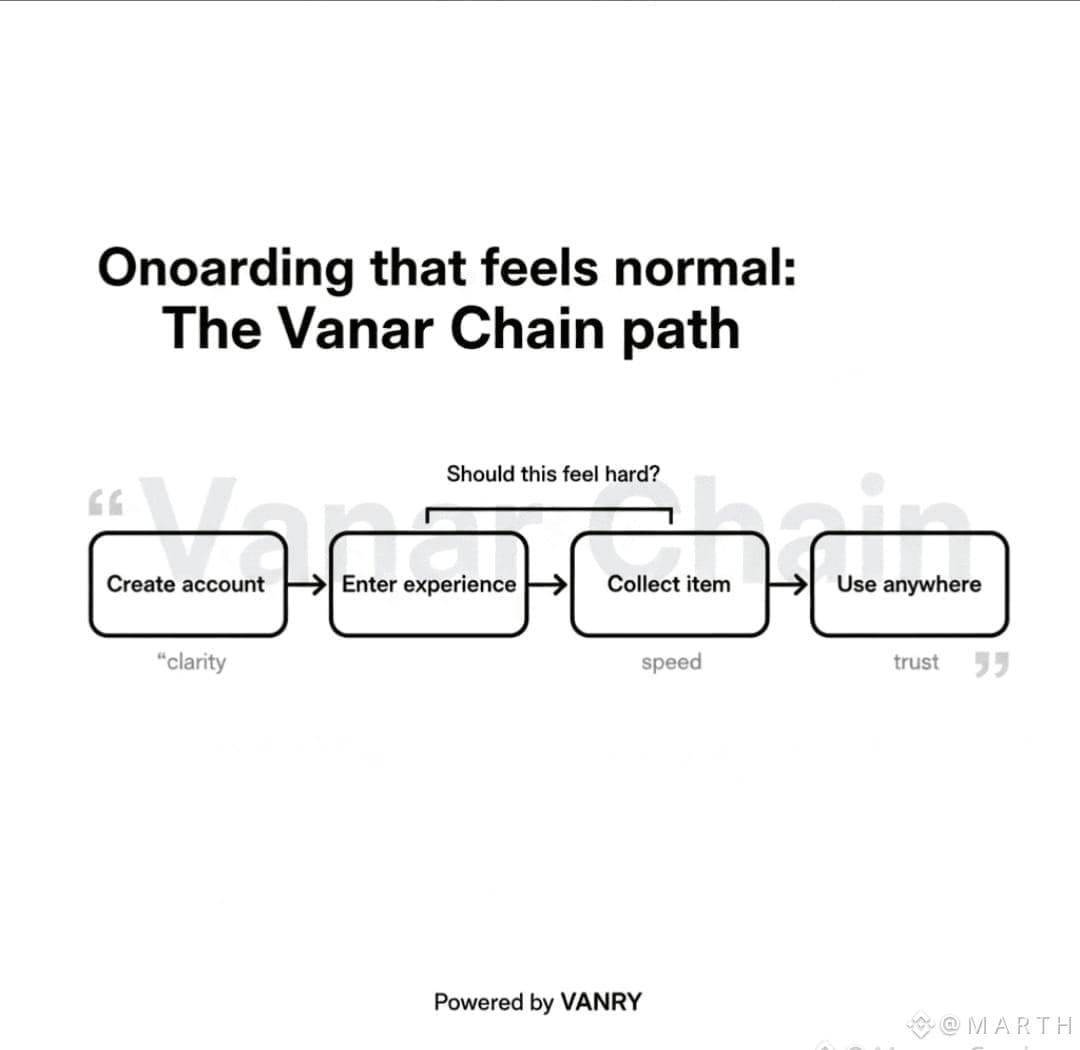
Under the hood the whitepaper makes the performance goals feel concrete rather than vague because it describes block time capped at a maximum of 3 seconds and it links throughput to a gas limit of 30 million per block which is positioned as a design choice for fast confirmation and high capacity under consumer style demand. It also describes a fixed fee model and a first come first serve transaction ordering approach which is meant to keep fees predictable and keep ordering rules simple so users and builders can rely on fairness without feeling like the system changes its mood during congestion. If it becomes normal for players to claim an item during a live event or for a marketplace to process thousands of small actions during a drop then these choices matter because user trust is built on consistency not on peak numbers that only appear in perfect conditions and the chain is trying to behave like a stable utility rather than a thrilling experiment. They’re also positioning Vanar as more than a fast chain because the public stack vision leans into intelligence and data as native features where Neutron is described as a semantic compression and memory layer that restructures data into programmable Seeds that are fully onchain and verifiable and it even claims an example compression of 25MB into 50KB using semantic heuristic and algorithmic layers which signals an ambition to make data feel active rather than stored and forgotten. Kayon is then positioned as the reasoning layer that can query and interpret Neutron Seeds and other data through natural language and it describes a compliance by design direction with monitoring and automation language which tells you the long game is not only consumer entertainment but also systems that need auditability and rules without slowing everything down.
The ecosystem side becomes believable when you connect it to real products instead of only roadmaps because Virtua presents its Bazaa marketplace as a fully decentralized marketplace built on the Vanar blockchain and that is the kind of integration that turns a chain from a concept into a living environment where activity can be measured by real usage and real return behavior. Vanar also highlights VGN as part of its consumer story in multiple third party summaries and that fits the same pattern which is that gaming networks succeed when onboarding feels familiar and when ownership appears as a benefit rather than a burden even though the details of each product evolve as the ecosystem ships. In the middle of all of this sits VANRY which the documentation describes as the native gas token used to pay transaction fees while also framing it as the core asset for staking and validator support and ecosystem apps which matters because security and participation have to be funded in a way that does not punish users for simply existing. The staking documentation explains a delegated proof of stake approach where the community stakes VANRY to validator nodes to strengthen the network and earn rewards while noting that the Vanar Foundation selects validators based on reputation which is a deliberate tradeoff aimed at trusted operations during growth while still inviting broader participation through delegation. The token transition story also matters emotionally because migrations are a trust test and Vanar has published swap language around the TVK to VANRY shift while major exchanges have separately confirmed a one to one ratio which helps anchor continuity for holders and builders who lived through that change. 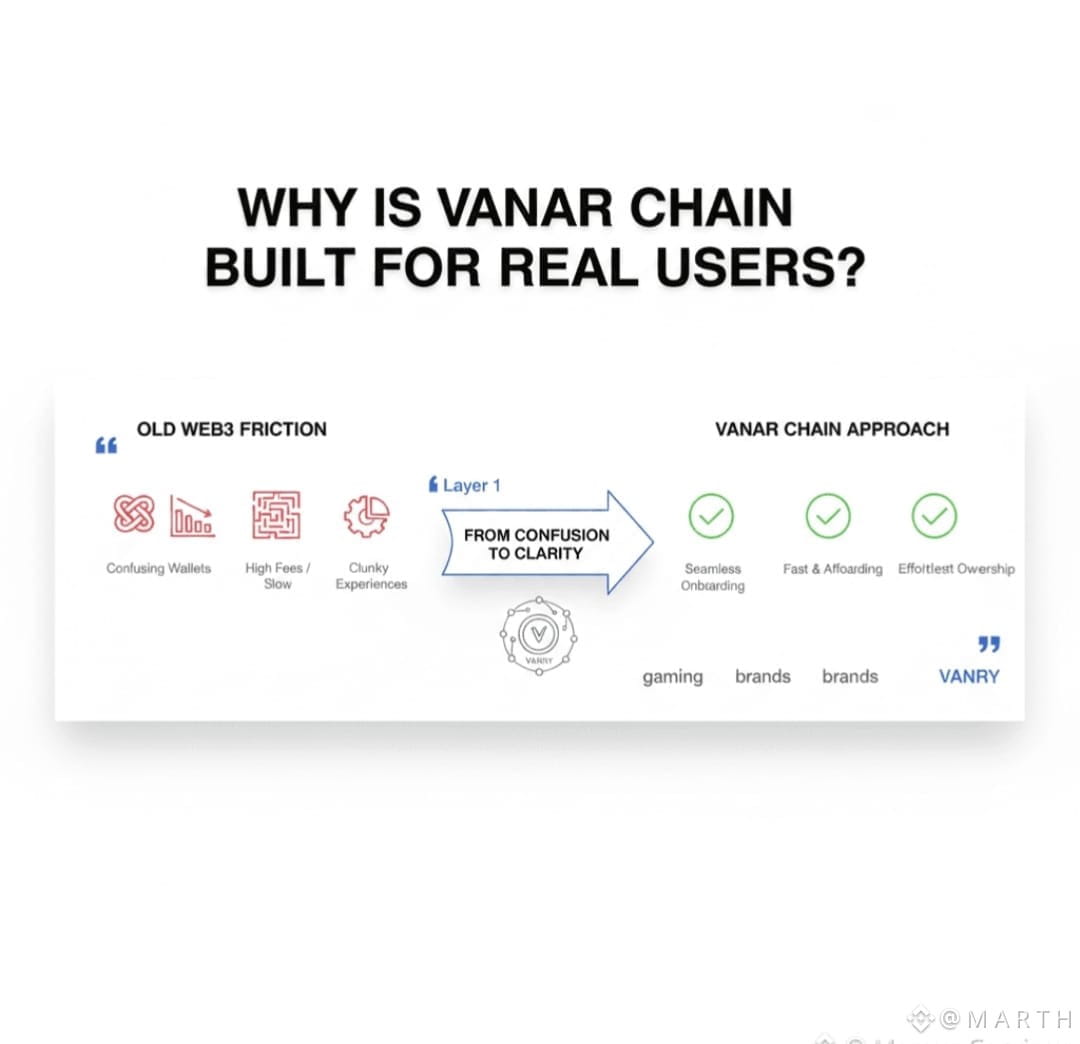
When you measure Vanar in a way that respects what mainstream adoption actually demands you focus less on hype and more on the moments where users decide whether to stay because the most important metric is time from intent to completion which in practice is block time plus finality plus reliability and the whitepaper emphasis on sub three second confirmation targets directly speaks to that feeling. The next metric is failure rate because failed actions create fear and fear kills consumer behavior faster than any bear market and then you watch fee stability because the fixed fee framing is trying to remove the emotional shock of sudden costs in the middle of an experience. You also watch staking participation and validator diversity over time because the network credibility depends on whether reputation based selection stays transparent and whether the delegation model actually spreads influence across the community. Beyond that you track real product activity like marketplace usage and retention because a chain that feels fast but cannot keep users engaged is still not reaching the next billions.
The risks are real and they should be spoken in plain language because any Proof of Authority style foundation can trigger concerns about centralization and censorship resistance and that concern will not disappear unless the validator path and governance remain credible and visible as the network grows. The reputation model can become a strength when it prevents unknown bad actors from running critical infrastructure but it can also become a weakness if it feels like a closed club or if selection rules are unclear and the AI stack brings another layer of risk because compression and reasoning systems increase complexity and complexity increases the chance of misunderstandings and security gaps and on top of that any bridge and wrapped token design expands surface area even when it improves interoperability. There is also ecosystem concentration risk because if too much usage depends on a small number of flagship consumer products then one product cycle can distort the whole network story and there is market risk because token volatility can attract the wrong kind of attention that drowns out real building.
Still the forward vision is easy to understand when you strip it down to a human promise because Vanar is trying to make Web3 feel natural by combining fast predictable infrastructure with a stack that treats data and reasoning as part of the chain rather than external add ons and the official site language frames this as a chain designed for intelligent applications including PayFi and real world infrastructure which suggests a longer arc beyond entertainment into financial and enterprise workflows that need verification and memory and rules. We’re seeing a project that is chasing a future where users do not have to study wallets and jargon before they are allowed to enjoy digital ownership and where builders can ship experiences that feel like normal apps while the chain quietly guarantees trust underneath and I believe the most powerful outcome here is not that people talk about Vanar every day but that people use products built on it without fear and without friction and then one day they realize they already crossed into Web3 without even noticing