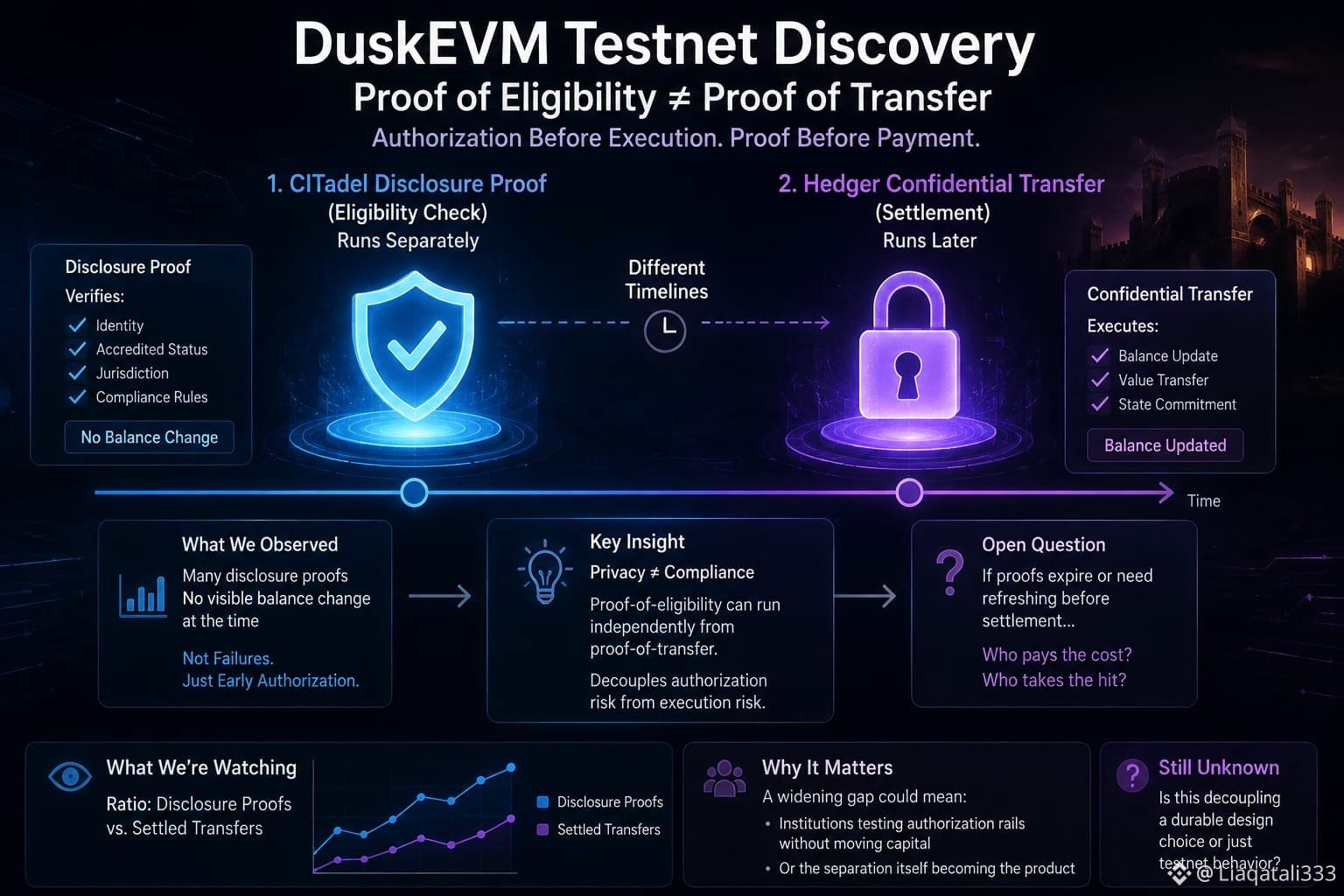
@Dusk EMV Testnet-Transaktionen: Ein kleines Cluster von Vertragsaufrufen löste immer wieder Offenlegungsbeweise aus, ohne dass im Explorer eine sichtbare Veränderung des Kontostands zu erkennen war. Meine erste Annahme war, dass es sich um fehlgeschlagene Transaktionen handelt, die erneut versucht werden, weil auf der Oberfläche nichts wie „abgeschlossen“ wirkte.
Beim tieferen Nachforschen merkte ich jedoch: Das waren keine Fehler. Es waren Citadel-Beweise, die unabhängig von der eigentlichen Übertragung erzeugt wurden und bereits die Anspruchsberechtigung verifizieren, bevor Hedger überhaupt den vertraulichen Kontostand berührt. Der Beweis und die Abwicklung waren zwei getrennte Ereignisse, die auf unterschiedlichen Zeitlinien stattfanden – nicht eine gebündelte Aktion, wie ich erwartet hatte.
#dusk
Diese Trennung hat meine Sicht darauf verändert, was hier mit „Privatsphäre“ gemeint ist. Die meisten betrachten Vertraulichkeit und Compliance als denselben Mechanismus, der nur unterschiedliche Etiketten trägt. Aber das, was ich beobachtete, war eine eigenständig laufende Nachweisführung zur Anspruchsberechtigung (Proof-of-Eligibility), unabhängig vom Nachweis der Übertragung (Proof-of-Transfer). Das bedeutet: Ein Teilnehmer kann als berechtigt verifiziert werden, lange bevor sich irgendein Wert bewegt. Diese „Zweitordnungs“-Wirkung lohnt es sich, genauer zu betrachten, weil sie das Risiko der Autorisierung vom Risiko der Ausführung entkoppelt.
$DUSK
Was ich noch nicht auflösen kann, ist die Kostenseite. Wenn Berechtigungsprüfungen bereits vor der Abwicklung stattfinden, wer übernimmt dann den Aufwand, wenn Beweise ablaufen oder vor Abschluss der Ausführung erneuert werden müssen? Das ist eine Anreizfrage für Betreiber, die ich nirgendwo adressiert gesehen habe – und sie wird umso relevanter, je weiter das Volumen über Testnet-Bedingungen hinaus skaliert.
In der Folge beobachte ich das Verhältnis von Offenlegungsbeweisen zu tatsächlich abgerechneten Übertragungen – nicht nur die Rohanzahl an Transaktionen. Eine sich vergrößernde Lücke zwischen beiden würde mir zeigen, ob Institutionen Autorisierungs-„Rails“ testen, ohne Kapital zu binden, oder ob die Trennung selbst zum Produkt wird.
Ich weiß immer noch nicht, ob das Entkoppeln des Beweises von der Abwicklung eine robuste Designentscheidung ist oder nur ein Artefakt des frühen Testnet-Verhaltens. Wie auch immer: Es ist nichts, womit ich zufällig gerechnet hätte.$CLO
$ACE
Beim tieferen Nachforschen merkte ich jedoch: Das waren keine Fehler. Es waren Citadel-Beweise, die unabhängig von der eigentlichen Übertragung erzeugt wurden und bereits die Anspruchsberechtigung verifizieren, bevor Hedger überhaupt den vertraulichen Kontostand berührt. Der Beweis und die Abwicklung waren zwei getrennte Ereignisse, die auf unterschiedlichen Zeitlinien stattfanden – nicht eine gebündelte Aktion, wie ich erwartet hatte.
#dusk
Diese Trennung hat meine Sicht darauf verändert, was hier mit „Privatsphäre“ gemeint ist. Die meisten betrachten Vertraulichkeit und Compliance als denselben Mechanismus, der nur unterschiedliche Etiketten trägt. Aber das, was ich beobachtete, war eine eigenständig laufende Nachweisführung zur Anspruchsberechtigung (Proof-of-Eligibility), unabhängig vom Nachweis der Übertragung (Proof-of-Transfer). Das bedeutet: Ein Teilnehmer kann als berechtigt verifiziert werden, lange bevor sich irgendein Wert bewegt. Diese „Zweitordnungs“-Wirkung lohnt es sich, genauer zu betrachten, weil sie das Risiko der Autorisierung vom Risiko der Ausführung entkoppelt.
$DUSK
Was ich noch nicht auflösen kann, ist die Kostenseite. Wenn Berechtigungsprüfungen bereits vor der Abwicklung stattfinden, wer übernimmt dann den Aufwand, wenn Beweise ablaufen oder vor Abschluss der Ausführung erneuert werden müssen? Das ist eine Anreizfrage für Betreiber, die ich nirgendwo adressiert gesehen habe – und sie wird umso relevanter, je weiter das Volumen über Testnet-Bedingungen hinaus skaliert.
In der Folge beobachte ich das Verhältnis von Offenlegungsbeweisen zu tatsächlich abgerechneten Übertragungen – nicht nur die Rohanzahl an Transaktionen. Eine sich vergrößernde Lücke zwischen beiden würde mir zeigen, ob Institutionen Autorisierungs-„Rails“ testen, ohne Kapital zu binden, oder ob die Trennung selbst zum Produkt wird.
Ich weiß immer noch nicht, ob das Entkoppeln des Beweises von der Abwicklung eine robuste Designentscheidung ist oder nur ein Artefakt des frühen Testnet-Verhaltens. Wie auch immer: Es ist nichts, womit ich zufällig gerechnet hätte.$CLO
$ACE