@Dusk
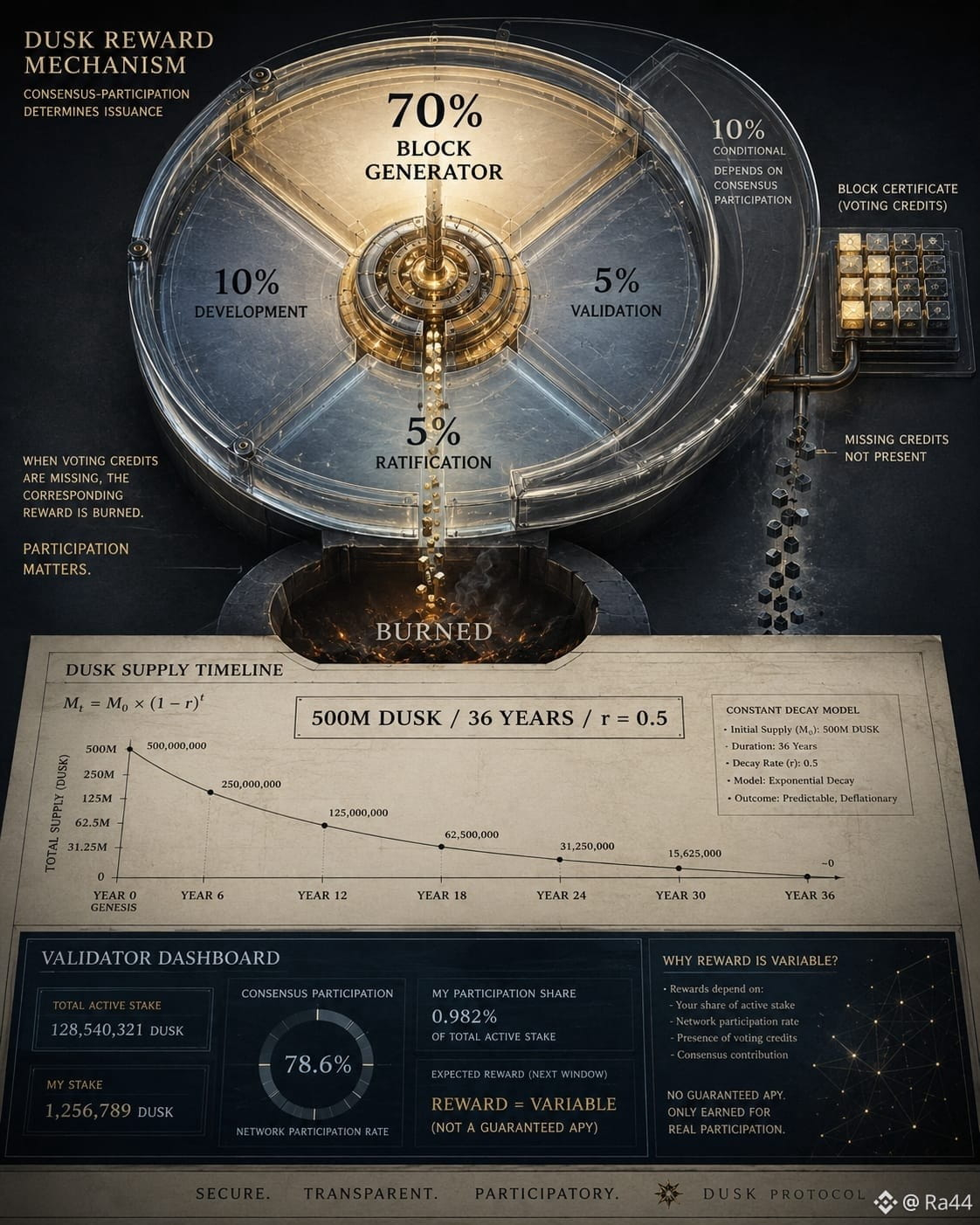
Ich habe die Aufteilung der Block-Belohnung von Dusk addiert, in der Erwartung, dass sie bei 100% landet. Blockgenerator 70%, Entwicklungsfonds 10%, Validierungskomitee 5%, Ratifizierungskomitee 5%. Das sind 90%. Die fehlenden 10% sind der Anteil, den ich als fest angenommen hatte. Dem ist nicht so.
Dieser letzte Abschnitt geht ebenfalls an den Blockgenerator — aber nur bis zu 10%, basierend auf den im Blockzertifikat enthaltenen Guthaben. Ein nicht ausgezahlter Teil wird verbrannt.
Die Emission von Dusk ist also teilweise leistungsabhängig. Ein Block, dessen Zertifikat eine vollständige Reihe von Stimmen der Ausschüsse trägt, zahlt die volle Belohnung. Ein Block, der weniger Guthaben sammelt, zahlt weniger, und die Lücke wird nicht mitgenommen oder umgeleitet — sie wird zerstört. Jeder Block ist ein kleines Referendum über die Teilnahme der Ausschüsse, ausgetragen über das Angebot.
Darum sind die Emissions-Überschrift und die für Staker sichtbare Zahl zwei unterschiedliche Fragen. Dusk emittiert 500.000.000 DUSK über 36 Jahre mit geometrischem Zerfall, r = 0.5, Halbierung alle vier Jahre. Zeitraum eins: 19,8574 DUSK pro Block über 12.614.400 Blöcke, insgesamt 250,48 Mio. DUSK. Das ist die Ausgabe. Aber 10% jeder Blockbelohnung fließen in den Entwicklungsfonds, und ein unbekannter Anteil der bedingten 10% wird verbrannt. "Wie viel emittiert die Chain pro Block" und "was erreicht einen Staker" werden unterschiedlich beantwortet — und das zweite hängt davon ab, wie gut das Netzwerk diesen spezifischen Block bezeugt hat.
Ich finde, das ist ehrlicher als ein fester APY-Versprechen. Es bewertet tatsächliche Konsensbeteiligung, statt eine Zahl zu bewerben und darauf zu hoffen, dass das Netzwerk liefert. Aber Ehrlichkeit und Modellierbarkeit sind nicht dasselbe. Das Planen eines Validator-Geschäfts erfordert jetzt eine Annahme über die durchschnittliche Vollständigkeit des Zertifikats — eine Variable ohne Marketingseite.
Dusk wirbt bei institutionellen Validatoren für regulierte Märkte. Ist eine leistungsabhängige, teilweise verbrannte Belohnung der richtige Anreiz für dieses Publikum, oder brauchen Institutionen mehr Vorhersehbarkeit als Eleganz?
#dusk $DUSK
Ich habe die Aufteilung der Block-Belohnung von Dusk addiert, in der Erwartung, dass sie bei 100% landet. Blockgenerator 70%, Entwicklungsfonds 10%, Validierungskomitee 5%, Ratifizierungskomitee 5%. Das sind 90%. Die fehlenden 10% sind der Anteil, den ich als fest angenommen hatte. Dem ist nicht so.
Dieser letzte Abschnitt geht ebenfalls an den Blockgenerator — aber nur bis zu 10%, basierend auf den im Blockzertifikat enthaltenen Guthaben. Ein nicht ausgezahlter Teil wird verbrannt.
Die Emission von Dusk ist also teilweise leistungsabhängig. Ein Block, dessen Zertifikat eine vollständige Reihe von Stimmen der Ausschüsse trägt, zahlt die volle Belohnung. Ein Block, der weniger Guthaben sammelt, zahlt weniger, und die Lücke wird nicht mitgenommen oder umgeleitet — sie wird zerstört. Jeder Block ist ein kleines Referendum über die Teilnahme der Ausschüsse, ausgetragen über das Angebot.
Darum sind die Emissions-Überschrift und die für Staker sichtbare Zahl zwei unterschiedliche Fragen. Dusk emittiert 500.000.000 DUSK über 36 Jahre mit geometrischem Zerfall, r = 0.5, Halbierung alle vier Jahre. Zeitraum eins: 19,8574 DUSK pro Block über 12.614.400 Blöcke, insgesamt 250,48 Mio. DUSK. Das ist die Ausgabe. Aber 10% jeder Blockbelohnung fließen in den Entwicklungsfonds, und ein unbekannter Anteil der bedingten 10% wird verbrannt. "Wie viel emittiert die Chain pro Block" und "was erreicht einen Staker" werden unterschiedlich beantwortet — und das zweite hängt davon ab, wie gut das Netzwerk diesen spezifischen Block bezeugt hat.
Ich finde, das ist ehrlicher als ein fester APY-Versprechen. Es bewertet tatsächliche Konsensbeteiligung, statt eine Zahl zu bewerben und darauf zu hoffen, dass das Netzwerk liefert. Aber Ehrlichkeit und Modellierbarkeit sind nicht dasselbe. Das Planen eines Validator-Geschäfts erfordert jetzt eine Annahme über die durchschnittliche Vollständigkeit des Zertifikats — eine Variable ohne Marketingseite.
Dusk wirbt bei institutionellen Validatoren für regulierte Märkte. Ist eine leistungsabhängige, teilweise verbrannte Belohnung der richtige Anreiz für dieses Publikum, oder brauchen Institutionen mehr Vorhersehbarkeit als Eleganz?
#dusk $DUSK