#dusk $DUSK @Dusk Dein Beweis verlässt dein Gerät nicht. Deinem Vertrauen musst du auch nicht."
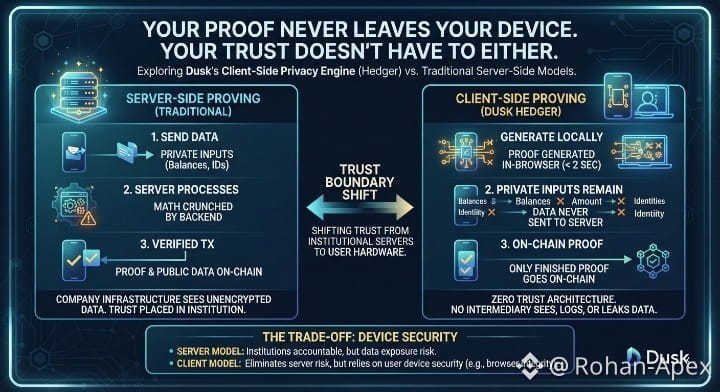
Früher ging ich davon aus, dass Zero-Knowledge-Beweise etwas sind, das ein Server für dich erzeugt — du sendest Daten, ein Backend rechnet die Mathematik aus, und du erhältst eine verifizierte Transaktion zurück. Praktisch, aber das bedeutet, dass du dem vertraust, was die Maschine rechnet.
Hedger, Dusk's Privacy-Engine für DuskEVM, funktioniert nicht so. Der Beweis selbst wird direkt im Browser erzeugt — auf dem eigenen Gerät des Nutzers — in unter zwei Sekunden. Nichts über die privaten Eingaben — Salden, Beträge, Identitäten — wird jemals an einen Server gesendet, um damit bewiesen zu werden. Die Mathematik passiert lokal, und nur der fertige Beweis, nicht die zugrunde liegenden Daten, kommt auf die Blockchain.
Zunächst klang das nach einer Leistungskennzahl. Bei genauerem Hinsehen wird daraus aber eine Vertrauensgrenze. Serverseitiges Erzeugen bedeutet, dass die Infrastruktur eines Unternehmens technisch gesehen deine unverschlüsselten Daten irgendwann — wenn auch nur kurz — zu sehen bekommt, selbst wenn sie versprechen, sie nicht zu protokollieren. Client-seitiges Erzeugen entfernt diesen Schritt vollständig — es gibt keinen Server mehr im Ablauf, der es sehen, protokollieren oder preisgeben könnte, weil er es nie hatte.
Auch der Kompromiss ist real: Client-seitiges Beweisen hängt davon ab, dass das Gerät und der Browser des Nutzers leistungsfähig und nicht beeinträchtigt sind. Eine bösartige Browser-Erweiterung oder ein kompromittiertes Gerät wird zum schwachen Punkt anstelle eines Servers. Dusk hat das Vertrauensproblem verlagert — nicht gelöscht — und es lediglich von den Servern eines Unternehmens hin zu der Hardware einzelner Nutzer umgesetzt, die auch nicht vollständig unter Kontrolle ist.
Vielleicht lautet die eigentliche Frage für reguliertes Finanzwesen nicht „Server oder Gerät“, sondern welche Seite Institutionen tatsächlich eher bereit sind, zur Verantwortung zu ziehen
$EVAA
Früher ging ich davon aus, dass Zero-Knowledge-Beweise etwas sind, das ein Server für dich erzeugt — du sendest Daten, ein Backend rechnet die Mathematik aus, und du erhältst eine verifizierte Transaktion zurück. Praktisch, aber das bedeutet, dass du dem vertraust, was die Maschine rechnet.
Hedger, Dusk's Privacy-Engine für DuskEVM, funktioniert nicht so. Der Beweis selbst wird direkt im Browser erzeugt — auf dem eigenen Gerät des Nutzers — in unter zwei Sekunden. Nichts über die privaten Eingaben — Salden, Beträge, Identitäten — wird jemals an einen Server gesendet, um damit bewiesen zu werden. Die Mathematik passiert lokal, und nur der fertige Beweis, nicht die zugrunde liegenden Daten, kommt auf die Blockchain.
Zunächst klang das nach einer Leistungskennzahl. Bei genauerem Hinsehen wird daraus aber eine Vertrauensgrenze. Serverseitiges Erzeugen bedeutet, dass die Infrastruktur eines Unternehmens technisch gesehen deine unverschlüsselten Daten irgendwann — wenn auch nur kurz — zu sehen bekommt, selbst wenn sie versprechen, sie nicht zu protokollieren. Client-seitiges Erzeugen entfernt diesen Schritt vollständig — es gibt keinen Server mehr im Ablauf, der es sehen, protokollieren oder preisgeben könnte, weil er es nie hatte.
Auch der Kompromiss ist real: Client-seitiges Beweisen hängt davon ab, dass das Gerät und der Browser des Nutzers leistungsfähig und nicht beeinträchtigt sind. Eine bösartige Browser-Erweiterung oder ein kompromittiertes Gerät wird zum schwachen Punkt anstelle eines Servers. Dusk hat das Vertrauensproblem verlagert — nicht gelöscht — und es lediglich von den Servern eines Unternehmens hin zu der Hardware einzelner Nutzer umgesetzt, die auch nicht vollständig unter Kontrolle ist.
Vielleicht lautet die eigentliche Frage für reguliertes Finanzwesen nicht „Server oder Gerät“, sondern welche Seite Institutionen tatsächlich eher bereit sind, zur Verantwortung zu ziehen
$EVAA