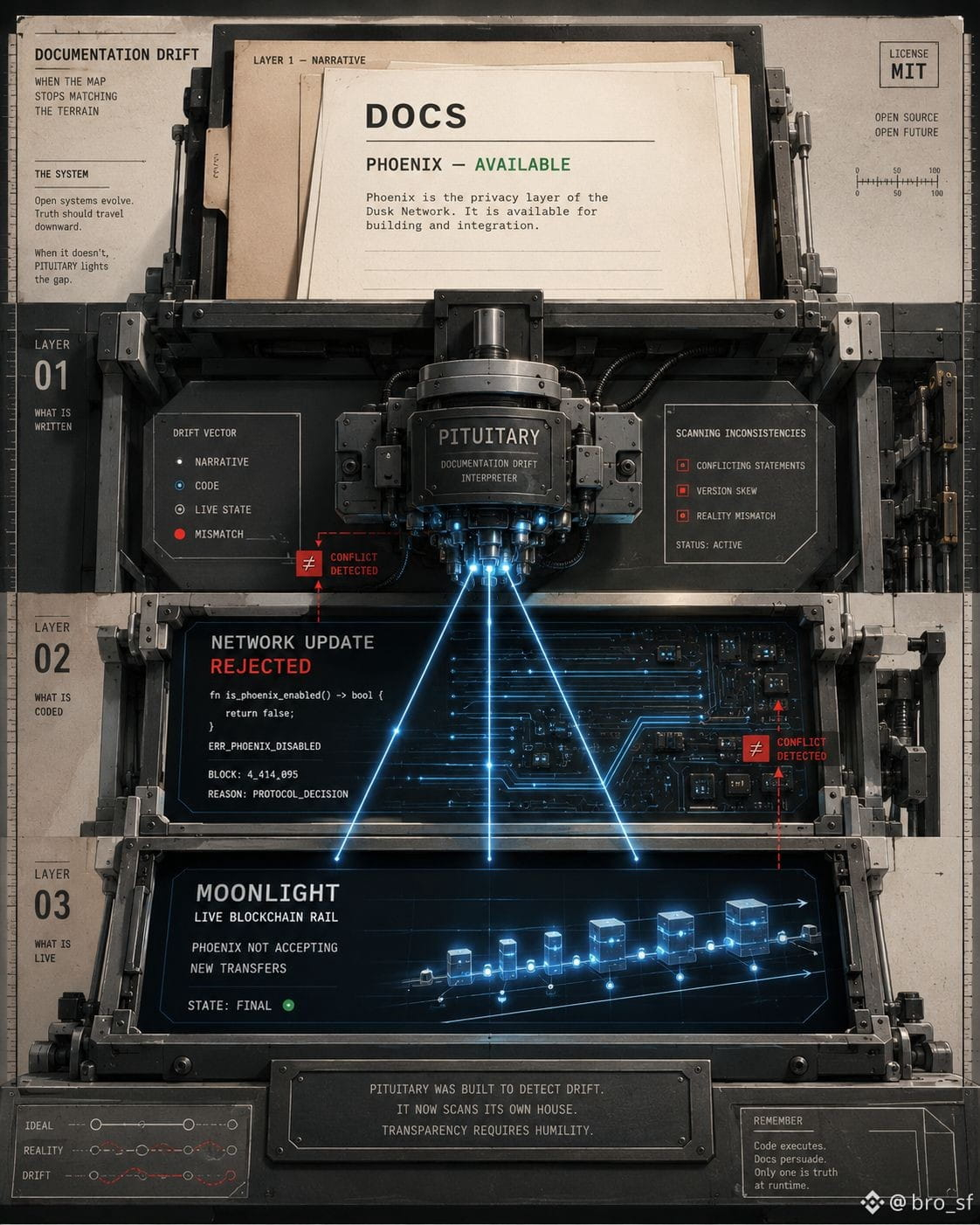
Ich habe gerade über ein Open-Source-Tool @Dusk gelesen, das dafür gebaut ist, Dokumentationen zu finden, die still und heimlich nicht mehr mit dem Code übereinstimmen. Natürlich habe ich die Idee an dem bequemsten verfügbaren Ziel getestet: Dusk-eigene Dokus.
Das Tool heißt Pituitary. MIT-lizenziert, eine einzelne Binary, kein Docker und keine API-Keys. Es indexiert deine Spezifikationen, Dokumentationen und Decision Records und markiert dann überlappende Entscheidungen, veraltete Dokumente, Code, der der Spezifikation widerspricht, Terminologie-Drift und die Impact Chain, wenn sich eine Spezifikation ändert. Außerdem bringt es einen MCP-Server mit, sodass ein KI-Coding-Agent während der Sitzung Spezifikationsbewusstsein bekommt – statt selbstbewusst auf einer Entscheidung aufzubauen, die vor Monaten wieder verworfen wurde. Ein Blockchain-Team, das allgemeine Entwicklerinfrastruktur baut und sie unter MIT herausgibt, ist nicht etwas, das ich oft sehe. Anerkennung, wo sie hingehört.
Dann habe ich die Dokus gelesen. Der Eintrag „Network Updates“ von Dusk sagt ganz unverblümt, dass neue Phoenix-Transaktionen im Mainnet nach dem Boreas-Restart abgelehnt werden und dass Moonlight das unterstützte Transaktionsmodell für die Zukunft ist. Die Seite „Transaction Models“ („Learn“) beschreibt Phoenix weiterhin in der Gegenwartsform – als eine von zwei nativen Arten, wie sich Werte auf DuskDS bewegen – und schließt damit, dass du frei wählen kannst, welches davon du nutzt. Kein Hinweis auf die Deaktivierung auf der Seite.
Lehrbuchmäßiger Spec-Drift – direkt in der Dokumentation des Teams, das den Drift-Detector ausgeliefert hat.
Fairerweise: Dokumentation hinkt auf jeder Kette der Realität hinterher. Was Dusk jedoch ungewöhnlich macht, ist, dass sie überhaupt ein präzises, quellenbasiertes Hard-Fork-Register veröffentlichen – und genau deshalb ist die Lücke für mich sichtbar. Es geht nicht darum, dass sie versagt haben. Es geht darum, dass selbst ein Team, das den Detector gebaut hat, das Problem nicht vollständig ausbremsen kann.
Also: Welche Dokumentation vertraust du tatsächlich für eine Kette – die Learn-Seiten, das Changelog oder den Quellcode? Und was tust du, wenn die drei nicht übereinstimmen?
#dusk $DUSK
Das Tool heißt Pituitary. MIT-lizenziert, eine einzelne Binary, kein Docker und keine API-Keys. Es indexiert deine Spezifikationen, Dokumentationen und Decision Records und markiert dann überlappende Entscheidungen, veraltete Dokumente, Code, der der Spezifikation widerspricht, Terminologie-Drift und die Impact Chain, wenn sich eine Spezifikation ändert. Außerdem bringt es einen MCP-Server mit, sodass ein KI-Coding-Agent während der Sitzung Spezifikationsbewusstsein bekommt – statt selbstbewusst auf einer Entscheidung aufzubauen, die vor Monaten wieder verworfen wurde. Ein Blockchain-Team, das allgemeine Entwicklerinfrastruktur baut und sie unter MIT herausgibt, ist nicht etwas, das ich oft sehe. Anerkennung, wo sie hingehört.
Dann habe ich die Dokus gelesen. Der Eintrag „Network Updates“ von Dusk sagt ganz unverblümt, dass neue Phoenix-Transaktionen im Mainnet nach dem Boreas-Restart abgelehnt werden und dass Moonlight das unterstützte Transaktionsmodell für die Zukunft ist. Die Seite „Transaction Models“ („Learn“) beschreibt Phoenix weiterhin in der Gegenwartsform – als eine von zwei nativen Arten, wie sich Werte auf DuskDS bewegen – und schließt damit, dass du frei wählen kannst, welches davon du nutzt. Kein Hinweis auf die Deaktivierung auf der Seite.
Lehrbuchmäßiger Spec-Drift – direkt in der Dokumentation des Teams, das den Drift-Detector ausgeliefert hat.
Fairerweise: Dokumentation hinkt auf jeder Kette der Realität hinterher. Was Dusk jedoch ungewöhnlich macht, ist, dass sie überhaupt ein präzises, quellenbasiertes Hard-Fork-Register veröffentlichen – und genau deshalb ist die Lücke für mich sichtbar. Es geht nicht darum, dass sie versagt haben. Es geht darum, dass selbst ein Team, das den Detector gebaut hat, das Problem nicht vollständig ausbremsen kann.
Also: Welche Dokumentation vertraust du tatsächlich für eine Kette – die Learn-Seiten, das Changelog oder den Quellcode? Und was tust du, wenn die drei nicht übereinstimmen?
#dusk $DUSK