
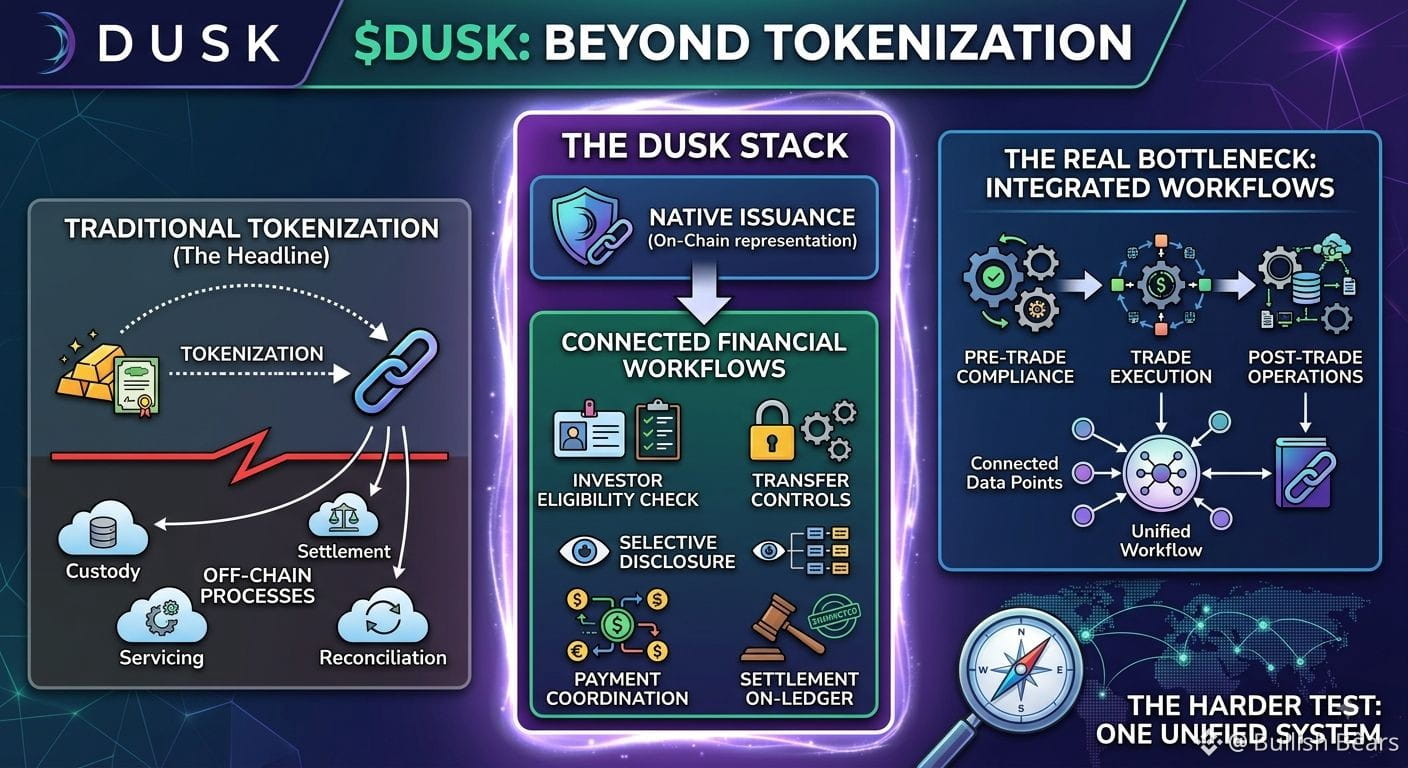
What made me pause while looking into Dusk $DUSK was the difference between tokenization and actually running a financial workflow. @Dusk #dusk doesn’t seem to stop at putting a representation of an asset on-chain; the stack is designed around what happens around that asset too. Dusk’s own documentation separates tokenization from native issuance, noting that tokenization can still leave custody, settlement, servicing, and reconciliation outside the ledger. The interesting part is how Dusk approaches the surrounding workflow: investor eligibility, transfer controls, selective disclosure, payment coordination, and settlement can all sit around the same infrastructure. That changes the question for me from “can this asset be tokenized?” to “how much of the financial process can actually stay connected once it is?” I found that distinction more meaningful than the tokenization headline itself. If the real bottleneck is everything that happens before and after a token changes hands, then the harder test for Dusk may not be issuance at all, but whether those connected workflows can eventually feel like one system.

Veröffentlichen
Haftungsausschluss: Enthält Meinungen von Drittanbietern. Keine Beratung. Binance AI wird ohne Gewähr bereitgestellt. Siehe AGB.