Nachdem ich verstanden hatte, dass Dusk zwei entgegengesetzte Transaktionsmodelle hat – eines vollständig öffentlich und eines vollständig abgeschirmt – war die naheliegende Frage die, die niemand zu beantworten schien: Wie können sie auf demselben Ledger leben, ohne einander in die Quere zu kommen? Die Antwort stellte sich als ein einzelner Vertrag heraus, der etwas still und clever macht.
Sowohl Moonlight (öffentlich) als auch Phoenix (privat) laufen über denselben Transfer-Vertrag. Er ist der Einstiegspunkt für jede Transaktion auf Dusk. Aber hier ist der Teil, der bei mir klick gemacht hat: Er muss zwei völlig unterschiedliche Arten von Wahrheit verifizieren.
#dusk
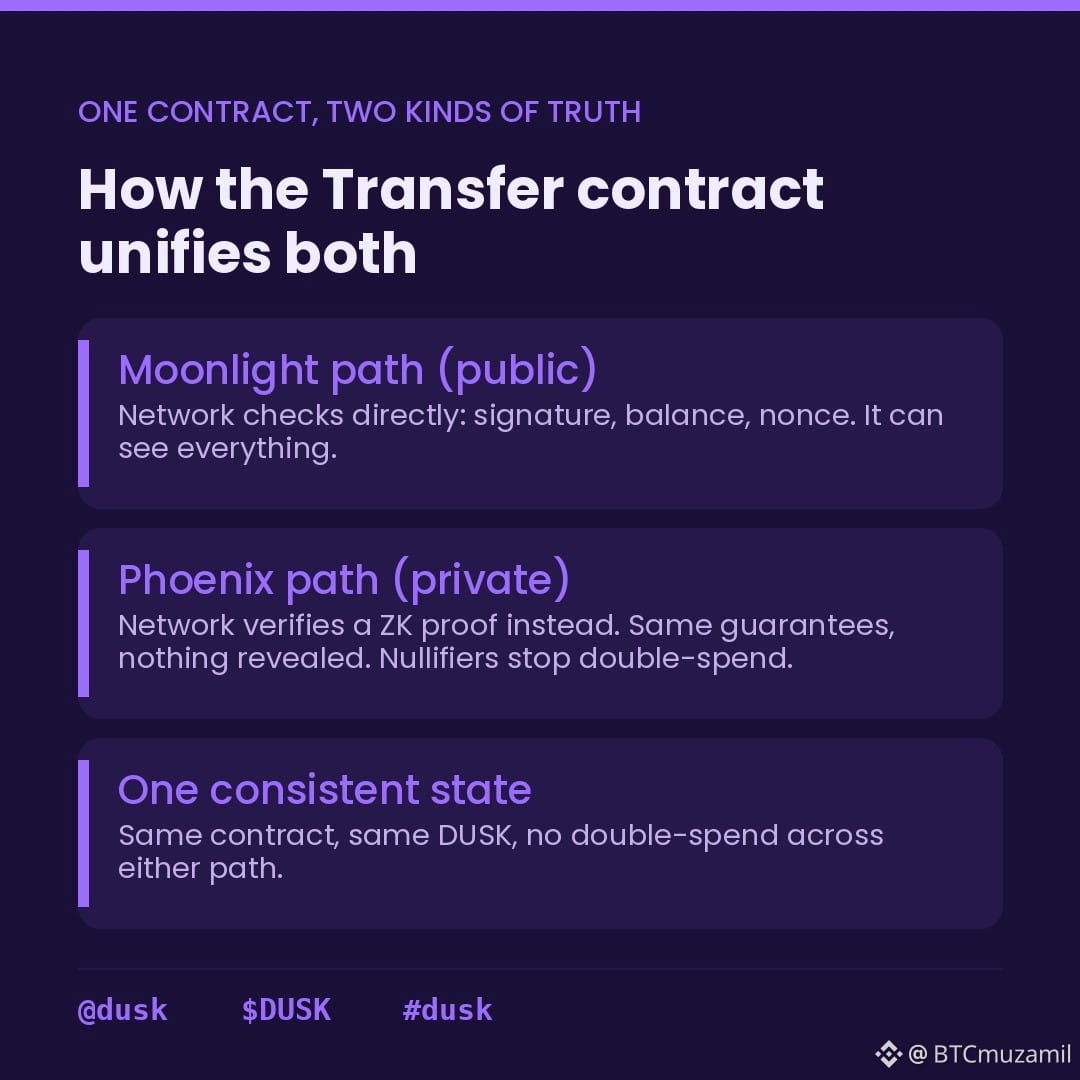
Für eine Moonlight-Transaktion prüft das Netzwerk die Dinge direkt. Es sieht das Konto, sodass es die Signaturprüfung verifizieren, sicherstellen kann, dass das Guthaben ausreicht, und mithilfe eines Nonce Wiederholungen verhindert. Alles ist offen.
Für eine Phoenix-Transaktion kann das Netzwerk all das nicht sehen – genau das ist der Sinn dahinter. Also prüft es statt Details einen Zero-Knowledge-Beweis. Der Beweis garantiert dieselben Eigenschaften: richtiger Inhaber, genug Guthaben, kein doppelter Ausgabenbetrug (Double Spend), ohne die Beträge oder die Parteien offenzulegen. Doppelausgaben werden mithilfe von Nullifiers erkannt – statt über sichtbare Guthaben.
Also verifiziert derselbe Vertrag eine Transaktion, die er vollständig sehen kann, und eine Transaktion, die er absichtlich nicht sehen darf – und er muss dabei einen konsistenten globalen Zustand über beides hinweg aufrechterhalten. Ein öffentlicher Transfer und ein abgeschirmter Transfer ziehen beide aus demselben DUSK, und keiner kann doppelt ausgeben, obwohl das Netzwerk über das eine alles weiß und über das andere fast nichts.
@Dusk
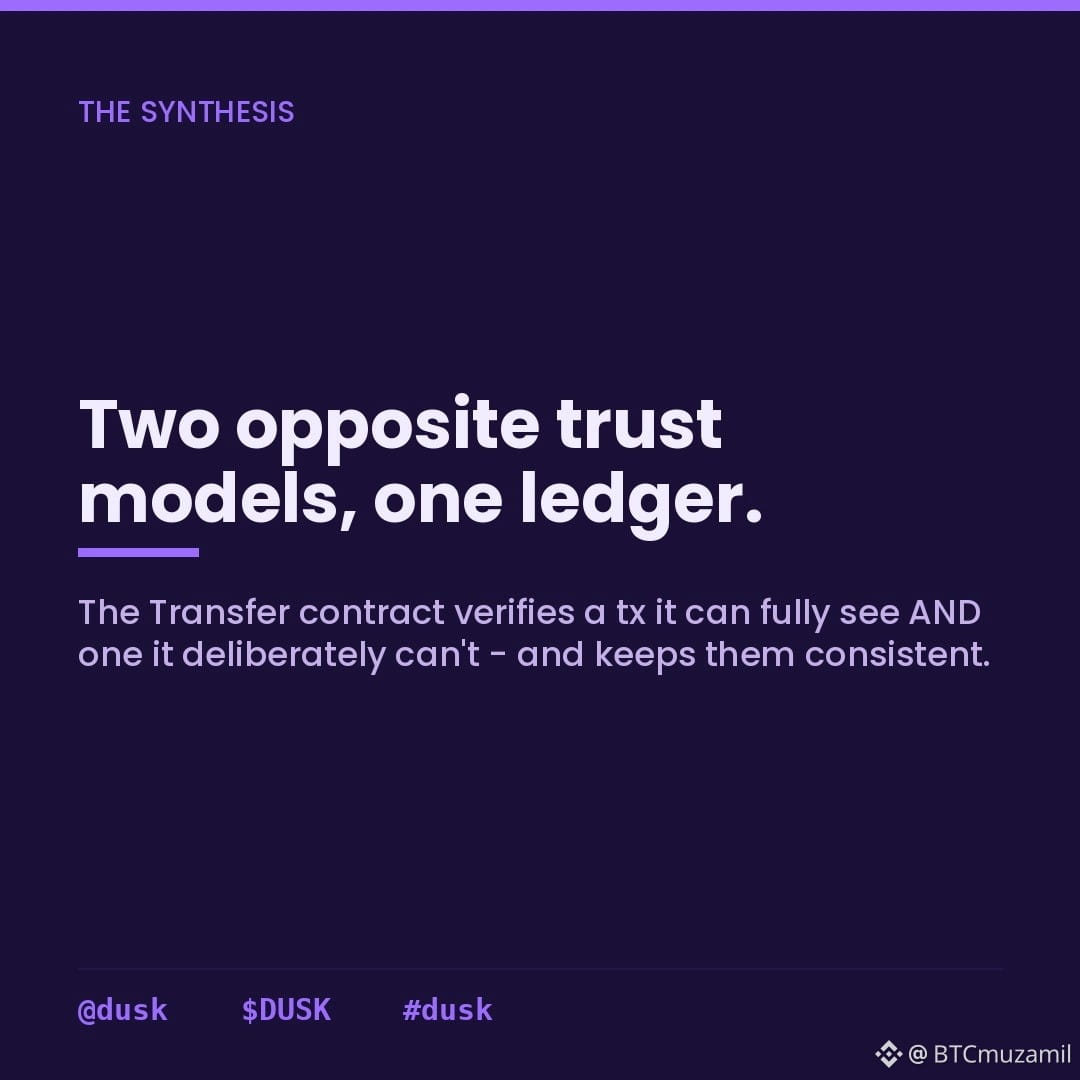
Das ist die Synthese, zu der ich immer wieder zurückkehre. Es ist nicht „öffentliche Chain plus ein Privacy-Feature“. Es ist eine einzige Settlement-Engine, die zwei entgegengesetzte Vertrauensmodelle in einem einzigen konsistenten Ledger zusammenhält.
Das eine, was mir trotzdem im Kopf bleibt: Diese Eleganz. Sie bündelt sehr viel Korrektheit in einem einzigen Vertrag. Wie sicher können wir sein, dass der öffentliche Pfad und der private Pfad sich niemals darüber einig werden müssen, ob derselbe DUSK korrekt ist – wenn sie doch so unterschiedlich validiert werden?
$DUSK
Sowohl Moonlight (öffentlich) als auch Phoenix (privat) laufen über denselben Transfer-Vertrag. Er ist der Einstiegspunkt für jede Transaktion auf Dusk. Aber hier ist der Teil, der bei mir klick gemacht hat: Er muss zwei völlig unterschiedliche Arten von Wahrheit verifizieren.
#dusk
Für eine Moonlight-Transaktion prüft das Netzwerk die Dinge direkt. Es sieht das Konto, sodass es die Signaturprüfung verifizieren, sicherstellen kann, dass das Guthaben ausreicht, und mithilfe eines Nonce Wiederholungen verhindert. Alles ist offen.
Für eine Phoenix-Transaktion kann das Netzwerk all das nicht sehen – genau das ist der Sinn dahinter. Also prüft es statt Details einen Zero-Knowledge-Beweis. Der Beweis garantiert dieselben Eigenschaften: richtiger Inhaber, genug Guthaben, kein doppelter Ausgabenbetrug (Double Spend), ohne die Beträge oder die Parteien offenzulegen. Doppelausgaben werden mithilfe von Nullifiers erkannt – statt über sichtbare Guthaben.
Also verifiziert derselbe Vertrag eine Transaktion, die er vollständig sehen kann, und eine Transaktion, die er absichtlich nicht sehen darf – und er muss dabei einen konsistenten globalen Zustand über beides hinweg aufrechterhalten. Ein öffentlicher Transfer und ein abgeschirmter Transfer ziehen beide aus demselben DUSK, und keiner kann doppelt ausgeben, obwohl das Netzwerk über das eine alles weiß und über das andere fast nichts.
@Dusk
Das ist die Synthese, zu der ich immer wieder zurückkehre. Es ist nicht „öffentliche Chain plus ein Privacy-Feature“. Es ist eine einzige Settlement-Engine, die zwei entgegengesetzte Vertrauensmodelle in einem einzigen konsistenten Ledger zusammenhält.
Das eine, was mir trotzdem im Kopf bleibt: Diese Eleganz. Sie bündelt sehr viel Korrektheit in einem einzigen Vertrag. Wie sicher können wir sein, dass der öffentliche Pfad und der private Pfad sich niemals darüber einig werden müssen, ob derselbe DUSK korrekt ist – wenn sie doch so unterschiedlich validiert werden?
$DUSK