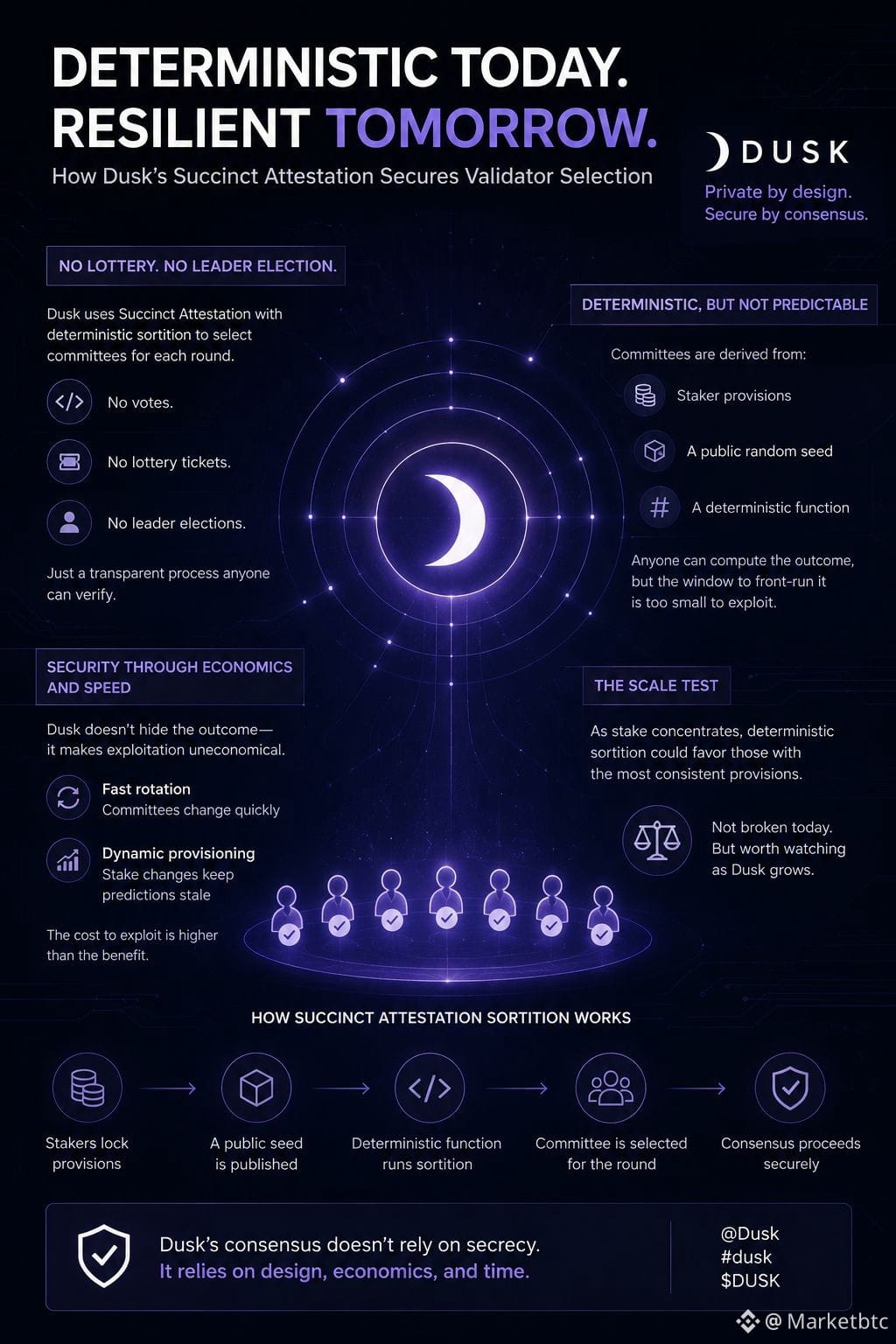
Ich habe ausgearbeitet, wie die Auswahl der Validatoren auf Dusk tatsächlich funktioniert, und dabei erwartet, etwas in der Nähe einer standardmäßigen PoS-Blockvorschlagslogik zu finden. Stattdessen fand ich Succinct Attestation mit deterministischer Sortition: keine Wahl des Anführers, keine Ausspielung von Los-Tickets per Broadcast. Die Zuteilungen jedes Stakers und ein öffentlicher Seed werden durch eine Funktion laufen gelassen, die deterministisch für diese Runde ein Komitee ausgibt.
Warte—deterministisch? Genau das hat mich kurz innehalten lassen. Wenn es deterministisch ist, könnte theoretisch jeder vor Rundenbeginn ausrechnen, wer zur Teilnahme berechtigt ist.
Wie sich herausstellt, wird das durch den Zeitpunkt gemildert, nicht durch Geheimhaltung—die Komitees rotieren schnell genug, und die Provisioning-Änderungen erfolgen häufig genug, sodass Vorkalkulation nur begrenzten praktischen Vorteil bringt. Die Sicherheit ist nicht „das Ergebnis verbergen“, sondern „das Ergebnis in dem Zeitfenster, das man zum Ausnutzen hat, teuer machen“.
Das ist ein anderes Vertrauensmodell, als ich erwartet hatte. Es ist nicht Unklarheit, die das Komitee schützt. Es sind die wirtschaftlichen Kosten plus die Rotationsgeschwindigkeit, die die Arbeit übernimmt, die anderswo die Geheimhaltung leistet.
Damit stellt sich die eigentliche Frage: Wenn sich der Einsatz im Laufe der Zeit stärker konzentriert, verteilt die Sortition dann weiterhin die Mitgliedschaft in den Komitees gleichmäßig, oder begünstigt die deterministische Auswahl stillschweigend denjenigen, der die meisten Provisionen am konstantesten hält?
Ich glaube nicht, dass das heute kaputt ist. Aber es ist der Teil des Dusk-Konsenses, der sich daran zeigt, ob er skaliert.
@Dusk #dusk $DUSK
Warte—deterministisch? Genau das hat mich kurz innehalten lassen. Wenn es deterministisch ist, könnte theoretisch jeder vor Rundenbeginn ausrechnen, wer zur Teilnahme berechtigt ist.
Wie sich herausstellt, wird das durch den Zeitpunkt gemildert, nicht durch Geheimhaltung—die Komitees rotieren schnell genug, und die Provisioning-Änderungen erfolgen häufig genug, sodass Vorkalkulation nur begrenzten praktischen Vorteil bringt. Die Sicherheit ist nicht „das Ergebnis verbergen“, sondern „das Ergebnis in dem Zeitfenster, das man zum Ausnutzen hat, teuer machen“.
Das ist ein anderes Vertrauensmodell, als ich erwartet hatte. Es ist nicht Unklarheit, die das Komitee schützt. Es sind die wirtschaftlichen Kosten plus die Rotationsgeschwindigkeit, die die Arbeit übernimmt, die anderswo die Geheimhaltung leistet.
Damit stellt sich die eigentliche Frage: Wenn sich der Einsatz im Laufe der Zeit stärker konzentriert, verteilt die Sortition dann weiterhin die Mitgliedschaft in den Komitees gleichmäßig, oder begünstigt die deterministische Auswahl stillschweigend denjenigen, der die meisten Provisionen am konstantesten hält?
Ich glaube nicht, dass das heute kaputt ist. Aber es ist der Teil des Dusk-Konsenses, der sich daran zeigt, ob er skaliert.
@Dusk #dusk $DUSK