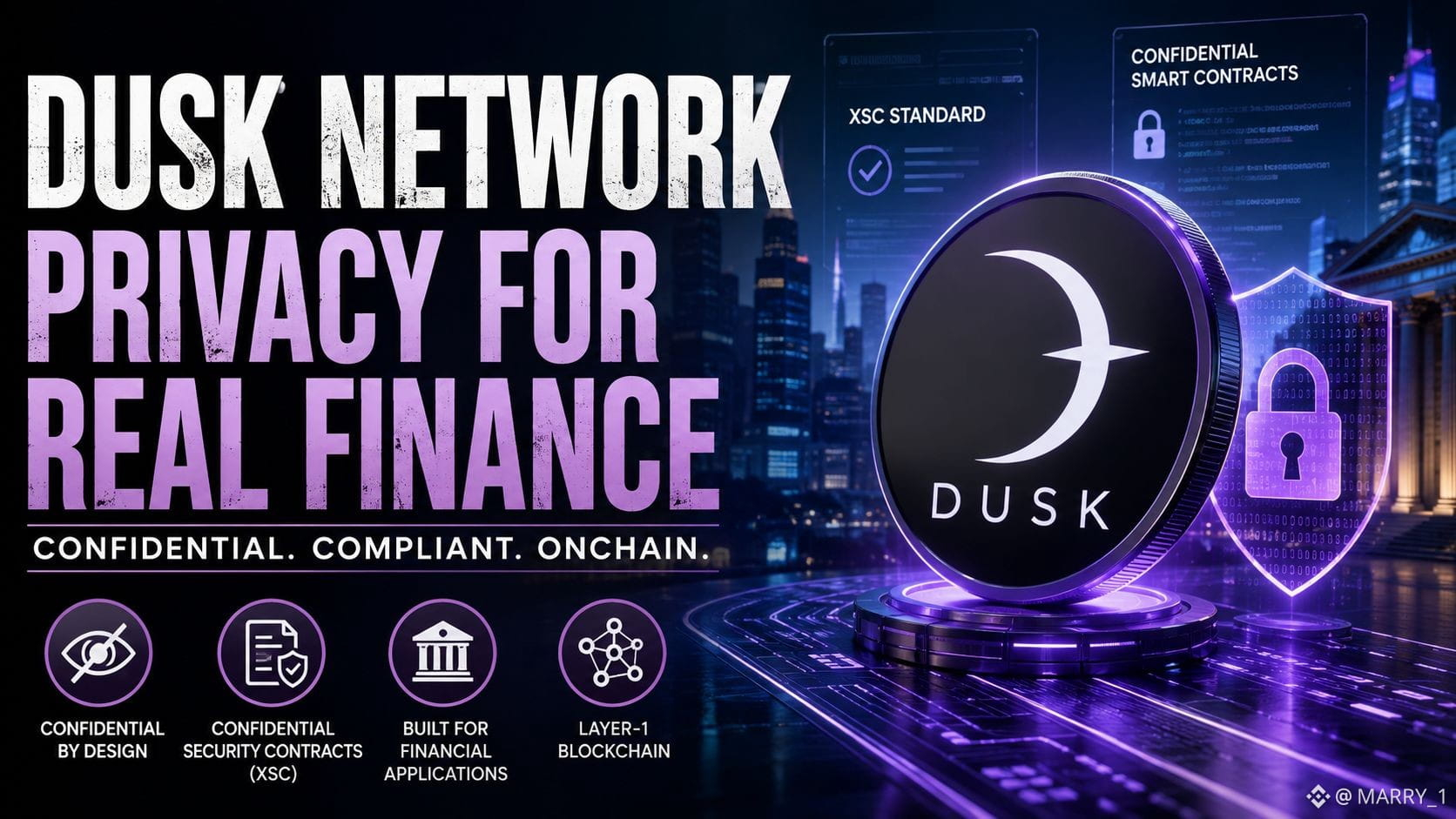
@Dusk I've been reading about Dusk Network again, and I keep coming back to something that feels easy to miss. The interesting part may not be privacy itself, but what privacy changes about the way financial information can move onchain.
Most blockchains treat transparency almost like a default virtue. Everyone can see the activity, the balances, and often the relationships between transactions. That works well until the information being exposed is actually commercially sensitive.
This is where Dusk gets more interesting to me. Its focus on confidential smart contracts and the Confidential Security Contract standard seems less about making everything invisible and more about deciding what really needs to be revealed.
I could be wrong, but I think that is a much harder problem than simply saying "private blockchain." Financial systems still need rules, verification, and accountability. They just don't necessarily need every detail sitting in public view forever.
What I'm watching is whether Dusk can make that balance feel natural. Privacy that creates friction probably won't get very far, while transparency without boundaries can create its own problems.
The more I think about it, the bigger question seems to be whether blockchains can become useful for serious financial activity without forcing institutions to expose information they would normally keep confidential.
I'm still waiting to see how Dusk handles that tension in practice. Maybe the real breakthrough isn't hiding financial activity, but making selective visibility possible. Is that the more important direction for onchain finance?
@Dusk $DUSK #dusk
Most blockchains treat transparency almost like a default virtue. Everyone can see the activity, the balances, and often the relationships between transactions. That works well until the information being exposed is actually commercially sensitive.
This is where Dusk gets more interesting to me. Its focus on confidential smart contracts and the Confidential Security Contract standard seems less about making everything invisible and more about deciding what really needs to be revealed.
I could be wrong, but I think that is a much harder problem than simply saying "private blockchain." Financial systems still need rules, verification, and accountability. They just don't necessarily need every detail sitting in public view forever.
What I'm watching is whether Dusk can make that balance feel natural. Privacy that creates friction probably won't get very far, while transparency without boundaries can create its own problems.
The more I think about it, the bigger question seems to be whether blockchains can become useful for serious financial activity without forcing institutions to expose information they would normally keep confidential.
I'm still waiting to see how Dusk handles that tension in practice. Maybe the real breakthrough isn't hiding financial activity, but making selective visibility possible. Is that the more important direction for onchain finance?
@Dusk $DUSK #dusk