Ehrlich gesagt musste ich mir Dusk ein zweites Mal ansehen, bevor die Idee bei mir wirklich Klick machte.
Zunächst klingt eine Privacy-Blockchain für Finanzanwendungen wie ein vertrautes Krypto-Narrativ.
Doch wenn man ein wenig tiefer geht, denke ich, dass das eigentliche Problem nicht die Privatsphäre ist.
Es geht darum, wie Finanzmärkte transparenter werden können, ohne sensible Finanzinformationen vollständig sichtbar zu machen.
Das klingt widersprüchlich, aber es ist wichtig.
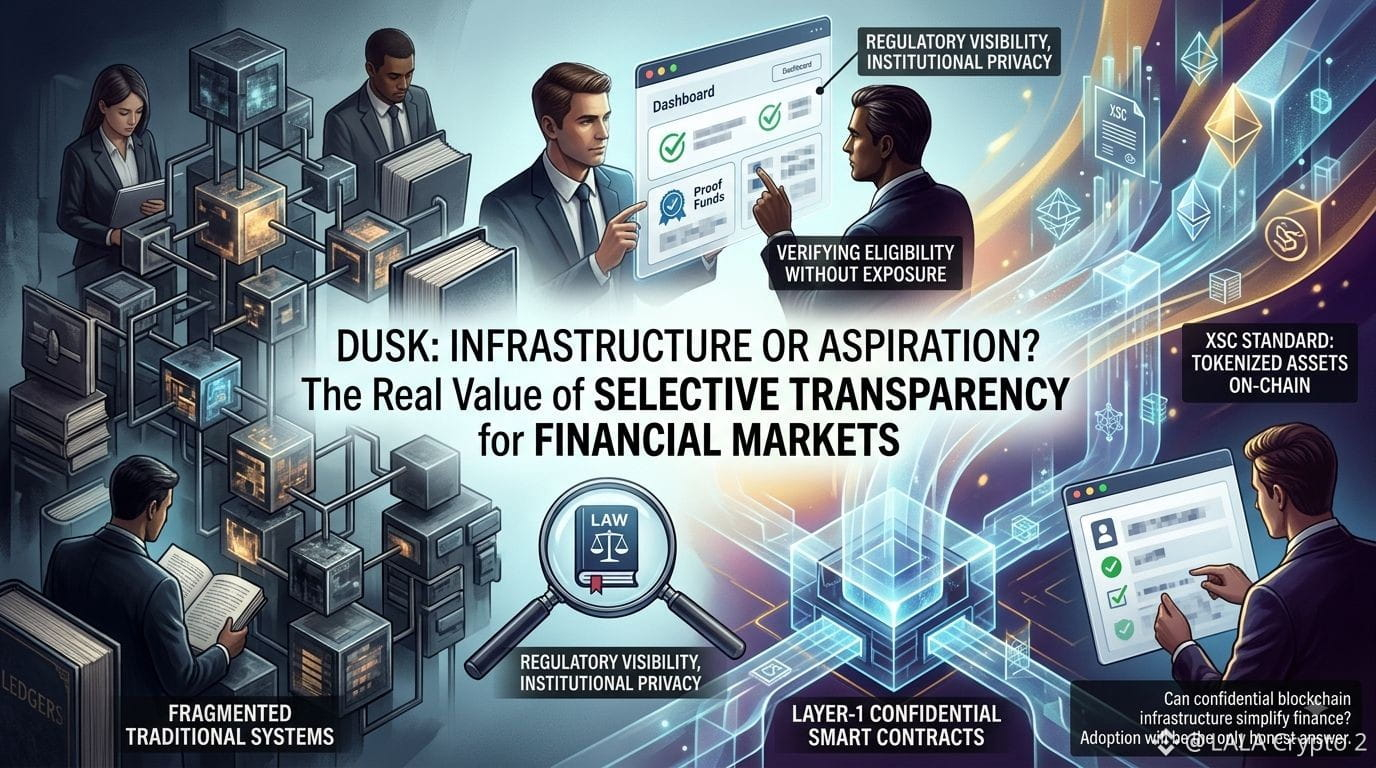
Traditionelles Finanzwesen löst das normalerweise, indem es alles voneinander trennt. Banken, Broker, Verwahrer und private Datenbanken kontrollieren jeweils unterschiedliche Informationsbausteine. Privatsphäre ist dadurch leichter, aber das System wird zersplittert und von Intermediären abhängig.
Dusk verfolgt mit seinen Layer-1-Confidential-Smart-Contracts und dem XSC-Standard einen anderen Ansatz: Finanzlogik und Eigentum on-chain abbilden, während sensible Details vertraulich bleiben sollen.
Stell dir ein tokenisiertes Asset aus einem privaten Markt vor.
Ein Investor muss möglicherweise nachweisen, dass er zum Kauf berechtigt ist, während der Rest des Marktes nicht unbedingt seine Identität, Bestände oder die vollständige Transaktionshistorie sehen sollte.
Das wirft einige interessante Fragen auf.
Können Regulierungsbehörden trotzdem die Transparenz erhalten, die sie brauchen?
Können Institutionen überprüfen, was zählt, ohne alles offenzulegen?
Und kann eine vertrauliche Blockchain-Infrastruktur tatsächlich einfacher sein als die Systeme, die bereits im Einsatz sind?
Die skeptische Seite liegt auf der Hand: Traditionelles Finanzwesen hat Jahrzehnte damit verbracht, Privacy- und Compliance-Systeme aufzubauen. Warum sollten Institutionen sie ersetzen?
Für mich liegt der echte Mehrwert in selektiver Transparenz – also darin, genau das nachzuweisen, was nachgewiesen werden muss, ohne alles andere offenzulegen.
Ich könnte mich irren. Eine technisch überzeugende Lösung bedeutet wenig, wenn echte finanzielle Aktivitäten niemals darauf verlagert werden.
Die Frage, die mich interessiert, lautet also:
Wird Dusk zu einer Infrastruktur, die Finanzmärkte wirklich brauchen – oder nur zu einer Infrastruktur, die auf dem Papier gut klingt?
Ich denke, die einzige ehrliche Antwort ist: Die Akzeptanz wird es zeigen.
Die Zeit wird es verraten.
@Dusk #dusk $DUSK
Zunächst klingt eine Privacy-Blockchain für Finanzanwendungen wie ein vertrautes Krypto-Narrativ.
Doch wenn man ein wenig tiefer geht, denke ich, dass das eigentliche Problem nicht die Privatsphäre ist.
Es geht darum, wie Finanzmärkte transparenter werden können, ohne sensible Finanzinformationen vollständig sichtbar zu machen.
Das klingt widersprüchlich, aber es ist wichtig.
Traditionelles Finanzwesen löst das normalerweise, indem es alles voneinander trennt. Banken, Broker, Verwahrer und private Datenbanken kontrollieren jeweils unterschiedliche Informationsbausteine. Privatsphäre ist dadurch leichter, aber das System wird zersplittert und von Intermediären abhängig.
Dusk verfolgt mit seinen Layer-1-Confidential-Smart-Contracts und dem XSC-Standard einen anderen Ansatz: Finanzlogik und Eigentum on-chain abbilden, während sensible Details vertraulich bleiben sollen.
Stell dir ein tokenisiertes Asset aus einem privaten Markt vor.
Ein Investor muss möglicherweise nachweisen, dass er zum Kauf berechtigt ist, während der Rest des Marktes nicht unbedingt seine Identität, Bestände oder die vollständige Transaktionshistorie sehen sollte.
Das wirft einige interessante Fragen auf.
Können Regulierungsbehörden trotzdem die Transparenz erhalten, die sie brauchen?
Können Institutionen überprüfen, was zählt, ohne alles offenzulegen?
Und kann eine vertrauliche Blockchain-Infrastruktur tatsächlich einfacher sein als die Systeme, die bereits im Einsatz sind?
Die skeptische Seite liegt auf der Hand: Traditionelles Finanzwesen hat Jahrzehnte damit verbracht, Privacy- und Compliance-Systeme aufzubauen. Warum sollten Institutionen sie ersetzen?
Für mich liegt der echte Mehrwert in selektiver Transparenz – also darin, genau das nachzuweisen, was nachgewiesen werden muss, ohne alles andere offenzulegen.
Ich könnte mich irren. Eine technisch überzeugende Lösung bedeutet wenig, wenn echte finanzielle Aktivitäten niemals darauf verlagert werden.
Die Frage, die mich interessiert, lautet also:
Wird Dusk zu einer Infrastruktur, die Finanzmärkte wirklich brauchen – oder nur zu einer Infrastruktur, die auf dem Papier gut klingt?
Ich denke, die einzige ehrliche Antwort ist: Die Akzeptanz wird es zeigen.
Die Zeit wird es verraten.
@Dusk #dusk $DUSK