#dusk $DUSK @Dusk
Vision der Institutionen von Dusk: Finanzwesen, das mit Regulierung funktioniert
Was wäre, wenn der nächste Schritt für Blockchain-Finanzierung nicht darin bestünde, Regulierung abzuschaffen, sondern Regulierung zu einem Teil der Infrastruktur zu machen?
Genau hier geht @Dusk einen interessanten Ansatz.
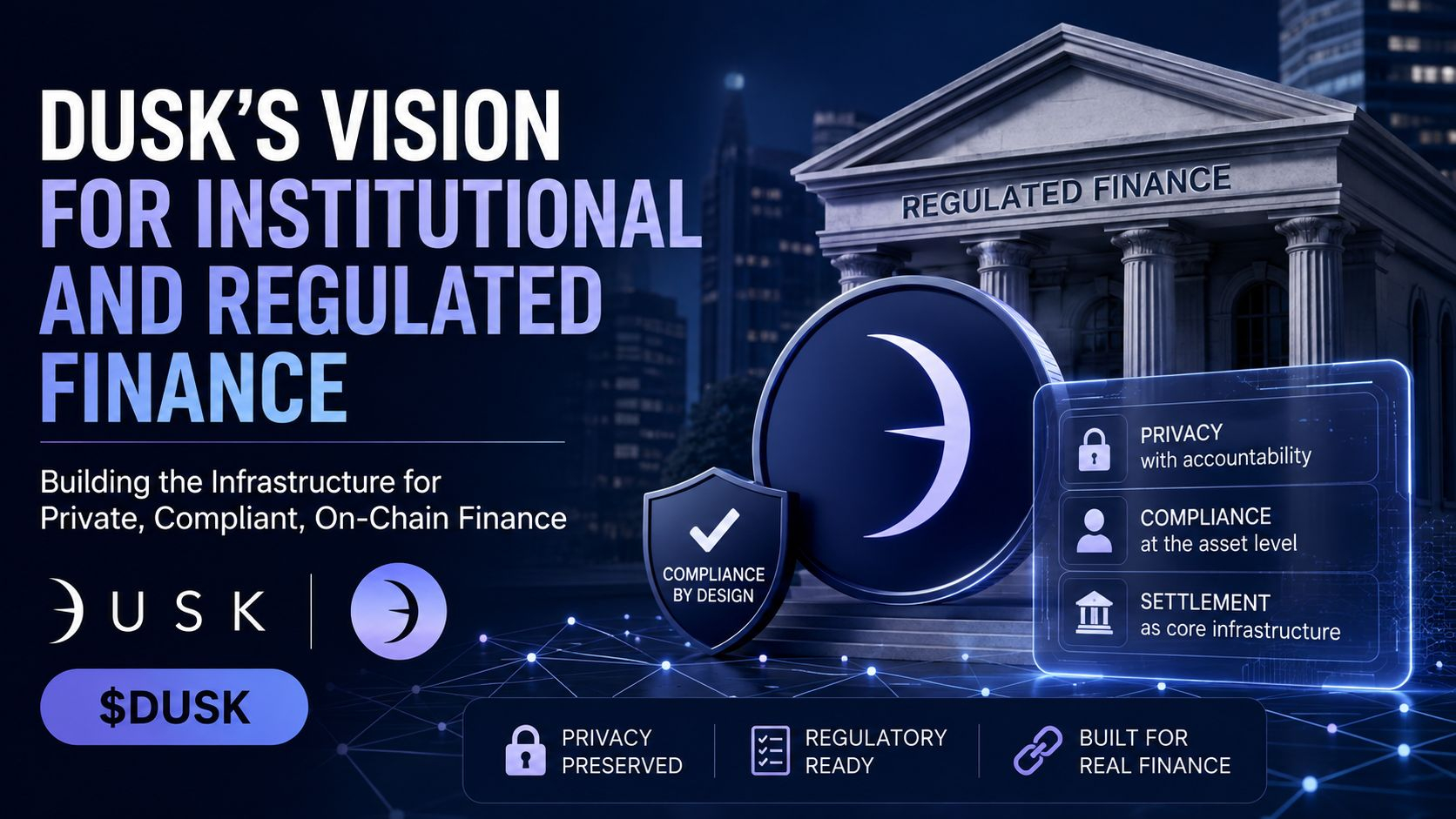
Dusk baut Infrastruktur für regulierte digitale Assets und konzentriert sich dabei auf drei wichtige Bausteine:
1. Privatsphäre mit Rechenschaftspflicht
Finanzinstitute können nicht jede Salden-, Positions- oder Transaktionsinformation öffentlich offenlegen. Dusk nutzt vertrauliche Übertragungen, Zero-Knowledge-Technologie und selektive Offenlegung, damit sensible Informationen privat bleiben können, während autorisierte Parteien weiterhin das prüfen können, was erforderlich ist.
2. Compliance auf Asset-Ebene
Dusk ist um reale finanzielle Anforderungen herum gestaltet, wie z. B. Eignungsprüfungen, Übertragungsbeschränkungen, Identitätskontrollen, Berichterstattung und Offenlegung. Das macht Tokenisierung zu mehr als nur dem bloßen Aufsetzen eines Assets auf eine Blockchain.
3. Abwicklung als zentrale Infrastruktur
Die Settlement-Ebene von Dusk bietet deterministische Endgültigkeit, während ihre Architektur regulierte Emission, Handel, Zahlungskoordination und Abwicklungs-Workflows unterstützt.
Die größere Idee, die ich sehe, ist: Die institutionelle Übernahme könnte weniger davon abhängen, dass Finanzwesen vollständig permissionless gemacht wird, sondern davon, reguliertes Finanzwesen programmierbar zu machen, ohne dabei die Privatsphäre zu opfern.
Das macht $DUSK zu Teil einer breiteren Infrastruktur-Erzählung – nicht nur zu einem weiteren Crypto-Asset.
Engagement-Frage: Können Privatsphäre und regulatorische Compliance zu komplementären Funktionen des On-Chain-Finanzwesens werden?
#dusk #RWA#Tokenization
$DUSK #Dusk
Vision der Institutionen von Dusk: Finanzwesen, das mit Regulierung funktioniert
Was wäre, wenn der nächste Schritt für Blockchain-Finanzierung nicht darin bestünde, Regulierung abzuschaffen, sondern Regulierung zu einem Teil der Infrastruktur zu machen?
Genau hier geht @Dusk einen interessanten Ansatz.
Dusk baut Infrastruktur für regulierte digitale Assets und konzentriert sich dabei auf drei wichtige Bausteine:
1. Privatsphäre mit Rechenschaftspflicht
Finanzinstitute können nicht jede Salden-, Positions- oder Transaktionsinformation öffentlich offenlegen. Dusk nutzt vertrauliche Übertragungen, Zero-Knowledge-Technologie und selektive Offenlegung, damit sensible Informationen privat bleiben können, während autorisierte Parteien weiterhin das prüfen können, was erforderlich ist.
2. Compliance auf Asset-Ebene
Dusk ist um reale finanzielle Anforderungen herum gestaltet, wie z. B. Eignungsprüfungen, Übertragungsbeschränkungen, Identitätskontrollen, Berichterstattung und Offenlegung. Das macht Tokenisierung zu mehr als nur dem bloßen Aufsetzen eines Assets auf eine Blockchain.
3. Abwicklung als zentrale Infrastruktur
Die Settlement-Ebene von Dusk bietet deterministische Endgültigkeit, während ihre Architektur regulierte Emission, Handel, Zahlungskoordination und Abwicklungs-Workflows unterstützt.
Die größere Idee, die ich sehe, ist: Die institutionelle Übernahme könnte weniger davon abhängen, dass Finanzwesen vollständig permissionless gemacht wird, sondern davon, reguliertes Finanzwesen programmierbar zu machen, ohne dabei die Privatsphäre zu opfern.
Das macht $DUSK zu Teil einer breiteren Infrastruktur-Erzählung – nicht nur zu einem weiteren Crypto-Asset.
Engagement-Frage: Können Privatsphäre und regulatorische Compliance zu komplementären Funktionen des On-Chain-Finanzwesens werden?
#dusk #RWA#Tokenization
$DUSK #Dusk