Zuerst klangen Beweise unter zwei Sekunden wie eine reine Performance-Meilenstein… aber irgendetwas wirkt daran nicht ganz stimmig, wenn man nur die Zahl für sich betrachtet.
Dann habe ich aber angefangen nachzudenken… was ändert sich denn eigentlich, wenn der Beweis so schnell wird – sobald er Teil des Workflows wird?
Es beginnt so auszusehen:
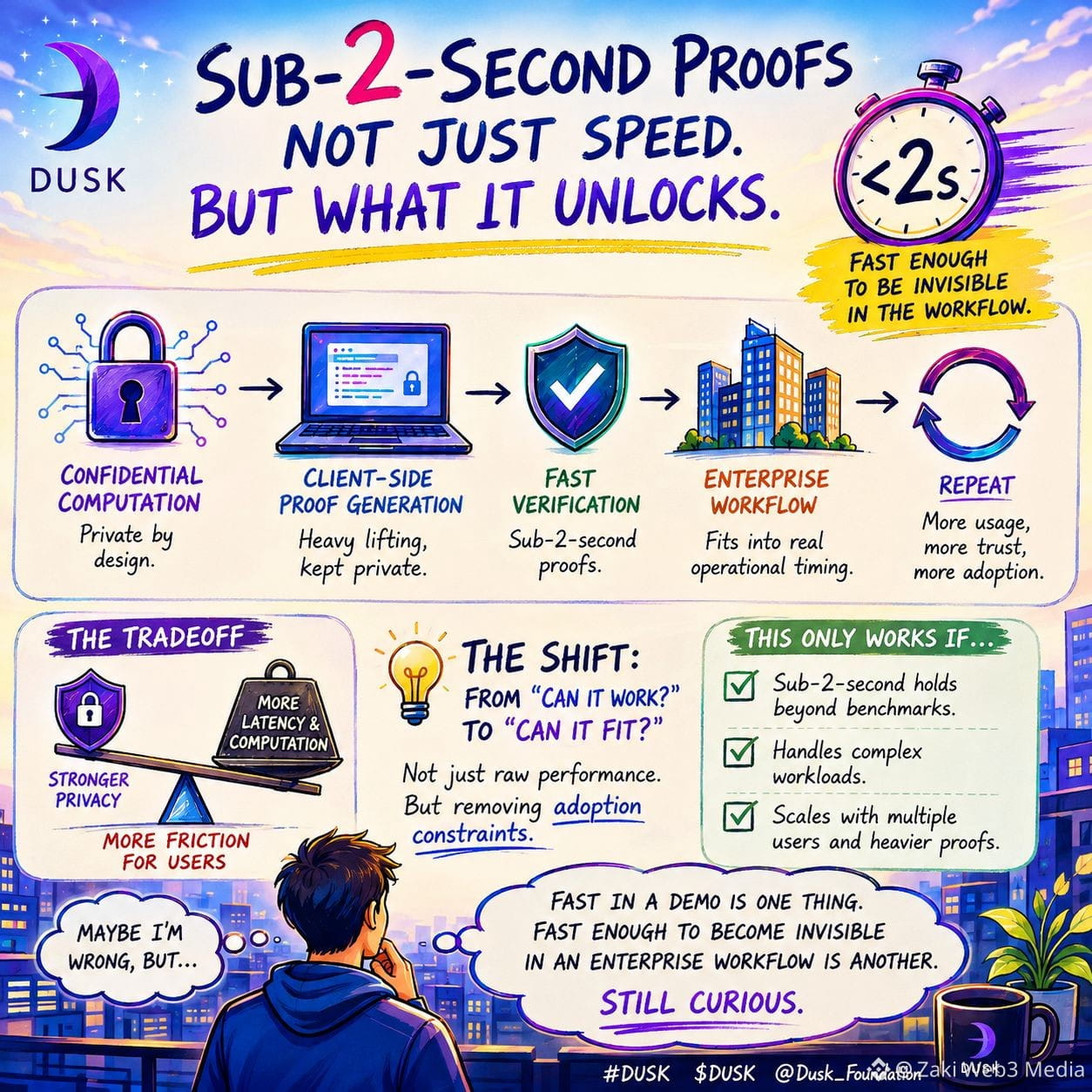
vertrauliche Berechnung → Client-seitige Beweiserzeugung → schnelle Verifikation → Unternehmens-Workflow → wiederholen
Diese Schleife ist wichtig, weil vertrauliche Systeme typischerweise mit einem Zielkonflikt konfrontiert sind: Stärkere Privatsphäre kann mehr Rechenaufwand, mehr Latenz und am Ende mehr Reibung für die Nutzer mit sich bringen.
Wenn @dusk die Beweiserzeugung für echte Unternehmens-Workflows unter zwei Sekunden drücken kann, könnte sich das Gespräch von „Funktioniert private Berechnung überhaupt?“ hin zu „Passt sie in die normalen betrieblichen Zeitvorgaben?“ verlagern.
Und diese Unterscheidung wirkt ziemlich entscheidend.
Das funktioniert nur, wenn die Erfahrung unter zwei Sekunden auch über kontrollierte Benchmarks hinaus Bestand hat — insbesondere, wenn Workloads komplexer werden, die Beweise schwerer werden und mehrere Nutzer gleichzeitig auf das System zugreifen.
Vielleicht liege ich falsch, aber das fühlt sich weniger nach einem reinen Wettrennen um Geschwindigkeit an, sondern eher nach der Entfernung einer Hürde für die Einführung.
Vielleicht verschiebt sich an genau dieser Stelle auch das Infrastruktur-Gespräch — weniger Faszination für große Performance-Zahlen, mehr Augenmerk darauf, was wirklich standhält, wenn die Nutzung real wird.
Trotzdem bin ich neugierig, ob die Geschwindigkeit unter Druck genauso sauber bleibt.
Denn schnell in einer Demo ist das eine.
Schnell genug, um in einem Unternehmens-Workflow unsichtbar zu werden, ist etwas anderes.#dusk $DUSK @Dusk
Dann habe ich aber angefangen nachzudenken… was ändert sich denn eigentlich, wenn der Beweis so schnell wird – sobald er Teil des Workflows wird?
Es beginnt so auszusehen:
vertrauliche Berechnung → Client-seitige Beweiserzeugung → schnelle Verifikation → Unternehmens-Workflow → wiederholen
Diese Schleife ist wichtig, weil vertrauliche Systeme typischerweise mit einem Zielkonflikt konfrontiert sind: Stärkere Privatsphäre kann mehr Rechenaufwand, mehr Latenz und am Ende mehr Reibung für die Nutzer mit sich bringen.
Wenn @dusk die Beweiserzeugung für echte Unternehmens-Workflows unter zwei Sekunden drücken kann, könnte sich das Gespräch von „Funktioniert private Berechnung überhaupt?“ hin zu „Passt sie in die normalen betrieblichen Zeitvorgaben?“ verlagern.
Und diese Unterscheidung wirkt ziemlich entscheidend.
Das funktioniert nur, wenn die Erfahrung unter zwei Sekunden auch über kontrollierte Benchmarks hinaus Bestand hat — insbesondere, wenn Workloads komplexer werden, die Beweise schwerer werden und mehrere Nutzer gleichzeitig auf das System zugreifen.
Vielleicht liege ich falsch, aber das fühlt sich weniger nach einem reinen Wettrennen um Geschwindigkeit an, sondern eher nach der Entfernung einer Hürde für die Einführung.
Vielleicht verschiebt sich an genau dieser Stelle auch das Infrastruktur-Gespräch — weniger Faszination für große Performance-Zahlen, mehr Augenmerk darauf, was wirklich standhält, wenn die Nutzung real wird.
Trotzdem bin ich neugierig, ob die Geschwindigkeit unter Druck genauso sauber bleibt.
Denn schnell in einer Demo ist das eine.
Schnell genug, um in einem Unternehmens-Workflow unsichtbar zu werden, ist etwas anderes.#dusk $DUSK @Dusk