Wenn du eine US-Adresse bekannt machen willst, hast du jetzt drei Wege, und die Leute reden darüber, als wären sie dasselbe Geschäft. Das sind sie nicht.
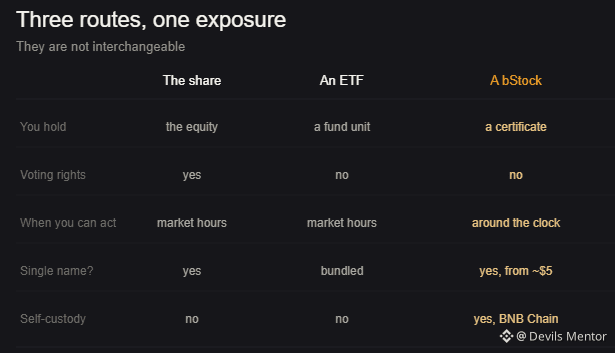
Der Anteil selbst. Tatsächliches Eigentum, Stimmrechte, der sauberste rechtliche Anspruch überhaupt. Das kostet dich ein Brokerkonto, nur-zu-Marktzeiten-Ausführung und in vielen Gerichtsbarkeiten einen Papierkram, der länger dauert als die Überzeugung.
Ein ETF, der ihn hält. Diversifikation, die du nicht angefragt hast, eine Kostenquote, die sich leise gegen dich aufbaut, und du kannst ihn trotzdem nicht um 3 Uhr nachts am Samstag handeln. Außerdem kannst du keinen einzelnen Namen isolieren – du kaufst 40 Unternehmen, um eine Meinung zu einem auszudrücken.
Ein bStock. Ausführung rund um die Uhr, Einstieg in Bruchteilen ab etwa 5 US-Dollar, und du kannst $CRCLB auf deine eigene BNB-Chain-Wallet auszahlen lassen. Der Nachteil ist real und es lohnt sich, ihn klar auszusprechen: Es ist ein Zertifikat eines Emittenten, kein Anteilseigentum, und es hat keine Stimmrechte.
Das Ding, das niemand laut sagt: Diese unterscheiden sich je nach Haltedauer. Für eine mehrjährige Position, bei der die Qualität des rechtlichen Anspruchs am wichtigsten ist, ist der schlichte Anteil schwer zu schlagen. Für eine taktische Position, bei der du vielleicht am Sonntag aussteigst, ist der Anteil unter den dreien am schlechtesten, weil du physisch nicht darauf reagieren kannst. Und der ETF ist weder das noch das – er ist für Menschen gebaut, die nicht auswählen wollen, was ein ganz anderes Problem ist.
Wähle die Verpackung, die zum Trade passt, nicht die, die am einfachsten zu eröffnen ist.
Regionale Updates über @BinanceCIS
#bStocksCIS
Der Anteil selbst. Tatsächliches Eigentum, Stimmrechte, der sauberste rechtliche Anspruch überhaupt. Das kostet dich ein Brokerkonto, nur-zu-Marktzeiten-Ausführung und in vielen Gerichtsbarkeiten einen Papierkram, der länger dauert als die Überzeugung.
Ein ETF, der ihn hält. Diversifikation, die du nicht angefragt hast, eine Kostenquote, die sich leise gegen dich aufbaut, und du kannst ihn trotzdem nicht um 3 Uhr nachts am Samstag handeln. Außerdem kannst du keinen einzelnen Namen isolieren – du kaufst 40 Unternehmen, um eine Meinung zu einem auszudrücken.
Ein bStock. Ausführung rund um die Uhr, Einstieg in Bruchteilen ab etwa 5 US-Dollar, und du kannst $CRCLB auf deine eigene BNB-Chain-Wallet auszahlen lassen. Der Nachteil ist real und es lohnt sich, ihn klar auszusprechen: Es ist ein Zertifikat eines Emittenten, kein Anteilseigentum, und es hat keine Stimmrechte.
Das Ding, das niemand laut sagt: Diese unterscheiden sich je nach Haltedauer. Für eine mehrjährige Position, bei der die Qualität des rechtlichen Anspruchs am wichtigsten ist, ist der schlichte Anteil schwer zu schlagen. Für eine taktische Position, bei der du vielleicht am Sonntag aussteigst, ist der Anteil unter den dreien am schlechtesten, weil du physisch nicht darauf reagieren kannst. Und der ETF ist weder das noch das – er ist für Menschen gebaut, die nicht auswählen wollen, was ein ganz anderes Problem ist.
Wähle die Verpackung, die zum Trade passt, nicht die, die am einfachsten zu eröffnen ist.
Regionale Updates über @BinanceCIS
#bStocksCIS