Ich habe genug Kreditvergabe-Zyklen beobachtet, um mich nicht mehr von der APY ablenken zu lassen, und stattdessen darüber nachzudenken, was wirklich passiert, wenn ein Kreditnehmer ausgelöscht wird. Genau dort spielt Liquidation eine Rolle.
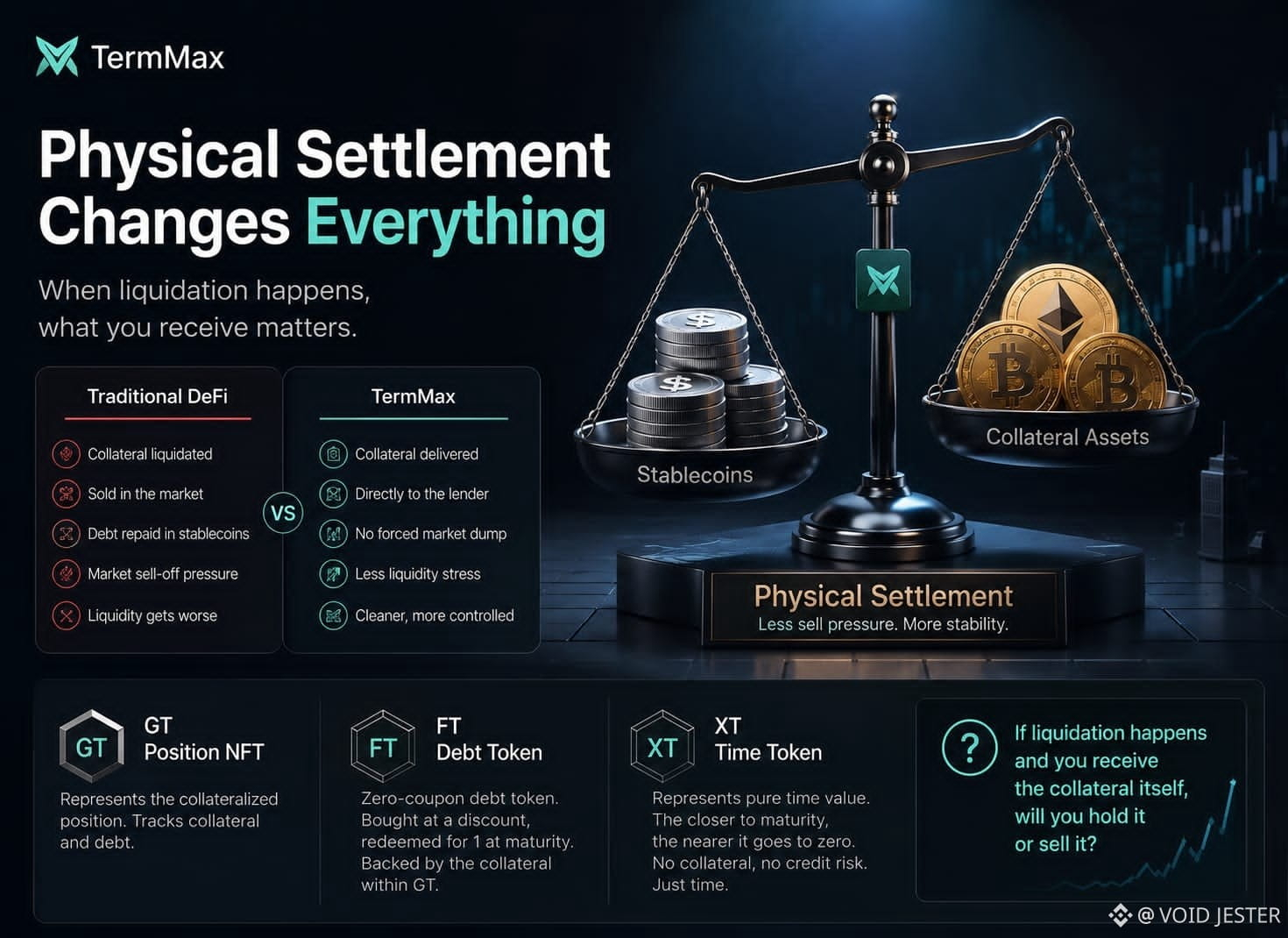
Deshalb hat mich auch die physische Abwicklung von TermMax aufmerksam gemacht. Der übliche DeFi-Weg ist ziemlich geradlinig: Sicherheiten werden liquidiert, in den Markt verkauft und die Schuld wird zurückgezahlt. Aber wenn die Märkte bereits hart fallen, kann das Einbringen einer riesigen Menge an Sicherheiten in eine dünne Liquidität die Lage sogar noch verschlimmern.
TermMax geht einen anderen Weg. Anstatt die Sicherheiten direkt in den Markt zu zwingen, kann es letztlich beim Kreditgeber enden. Das klingt kontrollierter, aber es nimmt das Risiko nicht einfach magisch weg. Es verändert, was der Kreditgeber am Ende in der Hand hat.
Man könnte erwarten, dass Stablecoins ausgezahlt werden – und stattdessen erhält man BTC, ETH oder irgendein anderes Asset, das die Position abgesichert hat. Ab dann liegt die Entscheidung bei dir: Halte die Sicherheiten und akzeptiere die Volatilität – oder verkaufe sie in einen Markt, der möglicherweise bereits unter Druck steht.
Das GT-, FT- und XT-Setup macht die ganze Sache besonders interessant. GT steht für die besicherte Position, FT ist die diskontierte feste Forderung, die sich bis zur Fälligkeit ihrem vollen Wert annähert, während XT den verbleibenden Zeitwert abbildet.
Doch nach genug Zyklen habe ich gelernt: Genaue Mechanik ist nur ein Teil der Geschichte.
Orakel-Verzögerungen, plötzliche Kurslücken, wenn die Liquidität im falschen Moment verschwindet, und das Risiko von Smart Contracts können trotzdem schaden. Kein Abwicklungsdesign kann dafür sorgen, dass diese Risiken komplett verschwinden.
Deshalb komme ich immer wieder zu einer einfacheren Frage als APY:
Wenn die Position platzt und ich stattdessen die Sicherheiten selbst erhalte, möchte ich sie dann wirklich halten – oder werde ich sie sofort verkaufen?
@TermMax #TermMax
Deshalb hat mich auch die physische Abwicklung von TermMax aufmerksam gemacht. Der übliche DeFi-Weg ist ziemlich geradlinig: Sicherheiten werden liquidiert, in den Markt verkauft und die Schuld wird zurückgezahlt. Aber wenn die Märkte bereits hart fallen, kann das Einbringen einer riesigen Menge an Sicherheiten in eine dünne Liquidität die Lage sogar noch verschlimmern.
TermMax geht einen anderen Weg. Anstatt die Sicherheiten direkt in den Markt zu zwingen, kann es letztlich beim Kreditgeber enden. Das klingt kontrollierter, aber es nimmt das Risiko nicht einfach magisch weg. Es verändert, was der Kreditgeber am Ende in der Hand hat.
Man könnte erwarten, dass Stablecoins ausgezahlt werden – und stattdessen erhält man BTC, ETH oder irgendein anderes Asset, das die Position abgesichert hat. Ab dann liegt die Entscheidung bei dir: Halte die Sicherheiten und akzeptiere die Volatilität – oder verkaufe sie in einen Markt, der möglicherweise bereits unter Druck steht.
Das GT-, FT- und XT-Setup macht die ganze Sache besonders interessant. GT steht für die besicherte Position, FT ist die diskontierte feste Forderung, die sich bis zur Fälligkeit ihrem vollen Wert annähert, während XT den verbleibenden Zeitwert abbildet.
Doch nach genug Zyklen habe ich gelernt: Genaue Mechanik ist nur ein Teil der Geschichte.
Orakel-Verzögerungen, plötzliche Kurslücken, wenn die Liquidität im falschen Moment verschwindet, und das Risiko von Smart Contracts können trotzdem schaden. Kein Abwicklungsdesign kann dafür sorgen, dass diese Risiken komplett verschwinden.
Deshalb komme ich immer wieder zu einer einfacheren Frage als APY:
Wenn die Position platzt und ich stattdessen die Sicherheiten selbst erhalte, möchte ich sie dann wirklich halten – oder werde ich sie sofort verkaufen?
@TermMax #TermMax