Ich habe eine Stunde in den Doku von TermMax verbracht, um eine einzige Frage zu beantworten: Woher kommt der zitierte Zinssatz tatsächlich? Nicht die Philosophie dahinter — die wörtliche, mechanische Quelle der Zahl, die auf dem Bildschirm steht.
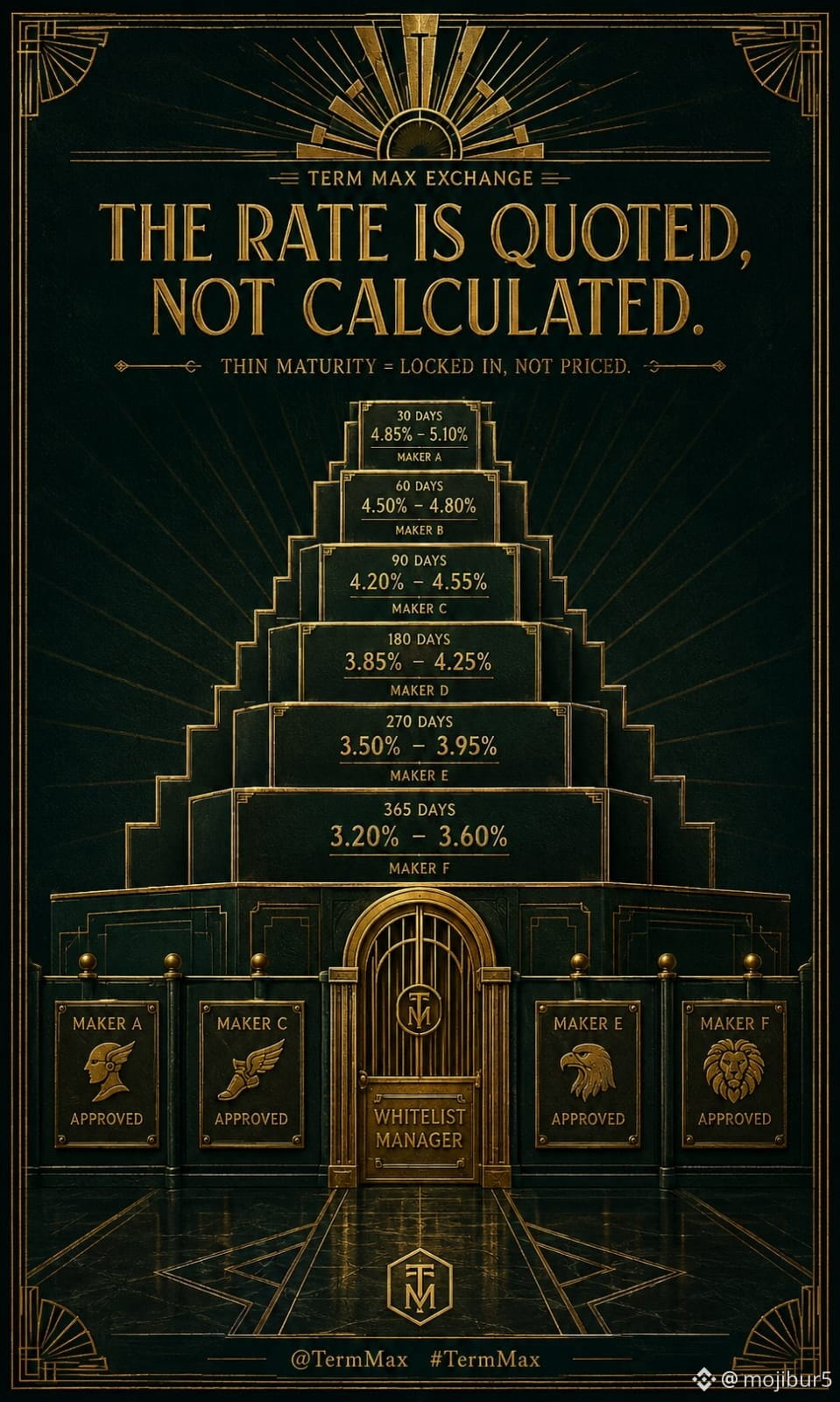
Die Antwort war einfacher und seltsamer, als erwartet. Es gibt keine Auslastungs-Kurve, die aus Angebot und Nachfrage einen Zinssatz berechnet. Kuratoren und Order-Macher konfigurieren Range-Orders auf einer Uniswap-V3-ähnlichen Kurve: Jede/r platziert im Grunde etwas, das nahe an einer Limit-Order liegt, um zu dem von ihnen gewählten Fälligkeitszeitpunkt zu verleihen oder zu leihen. Der Zinssatz ist „fixiert“, weil er zitiert wird, nicht berechnet — und wenn mehrere Macher aktiv denselben Fälligkeitstermin quotieren, ist der Wettbewerb zwischen ihnen das, was die Spreads enger macht. Das ist ein echter Vorteil gegenüber formelbasierten Märkten, wenn das funktioniert.
Was die Landingpage nicht erklärt, ist, was passiert, wenn es nicht funktioniert. Wenn bei einer bestimmten Fälligkeit nur ein oder zwei Macher aktiv sind, ist die Kurve im Grunde das, was sie eingestellt haben — ohne etwas, das sie in Richtung eines wettbewerbsfähigen Preises zwingt. Und wer überhaupt berechtigt ist, diese Orders zu platzieren, ist nicht offen — ein Whitelist-Manager-Contract regelt, welche Adressen überhaupt als Kurator oder Order-Macher agieren dürfen. Dünne Liquidität ist hier kein gelegentlicher Aussetzer. Sie ist der Standardzustand für jede Fälligkeit, bei der die gelisteten Macher noch nicht aufgetaucht sind, um sich gegenseitig Konkurrenz zu machen.
Dieses Risiko liegt nicht beim Protokoll. Es liegt bei denjenigen, die in eine Fälligkeit hineingehen, in der „fixiert“ bedeutet: fest verdrahtet, nicht kompetitiv bepreist.
Erzeugen maker-zitierte Zinssätze oder formelabgeleitete Zinssätze in einem dünnen Markt fairere Kosten — und warum?
#termmax @TermMax
Die Antwort war einfacher und seltsamer, als erwartet. Es gibt keine Auslastungs-Kurve, die aus Angebot und Nachfrage einen Zinssatz berechnet. Kuratoren und Order-Macher konfigurieren Range-Orders auf einer Uniswap-V3-ähnlichen Kurve: Jede/r platziert im Grunde etwas, das nahe an einer Limit-Order liegt, um zu dem von ihnen gewählten Fälligkeitszeitpunkt zu verleihen oder zu leihen. Der Zinssatz ist „fixiert“, weil er zitiert wird, nicht berechnet — und wenn mehrere Macher aktiv denselben Fälligkeitstermin quotieren, ist der Wettbewerb zwischen ihnen das, was die Spreads enger macht. Das ist ein echter Vorteil gegenüber formelbasierten Märkten, wenn das funktioniert.
Was die Landingpage nicht erklärt, ist, was passiert, wenn es nicht funktioniert. Wenn bei einer bestimmten Fälligkeit nur ein oder zwei Macher aktiv sind, ist die Kurve im Grunde das, was sie eingestellt haben — ohne etwas, das sie in Richtung eines wettbewerbsfähigen Preises zwingt. Und wer überhaupt berechtigt ist, diese Orders zu platzieren, ist nicht offen — ein Whitelist-Manager-Contract regelt, welche Adressen überhaupt als Kurator oder Order-Macher agieren dürfen. Dünne Liquidität ist hier kein gelegentlicher Aussetzer. Sie ist der Standardzustand für jede Fälligkeit, bei der die gelisteten Macher noch nicht aufgetaucht sind, um sich gegenseitig Konkurrenz zu machen.
Dieses Risiko liegt nicht beim Protokoll. Es liegt bei denjenigen, die in eine Fälligkeit hineingehen, in der „fixiert“ bedeutet: fest verdrahtet, nicht kompetitiv bepreist.
Erzeugen maker-zitierte Zinssätze oder formelabgeleitete Zinssätze in einem dünnen Markt fairere Kosten — und warum?
#termmax @TermMax