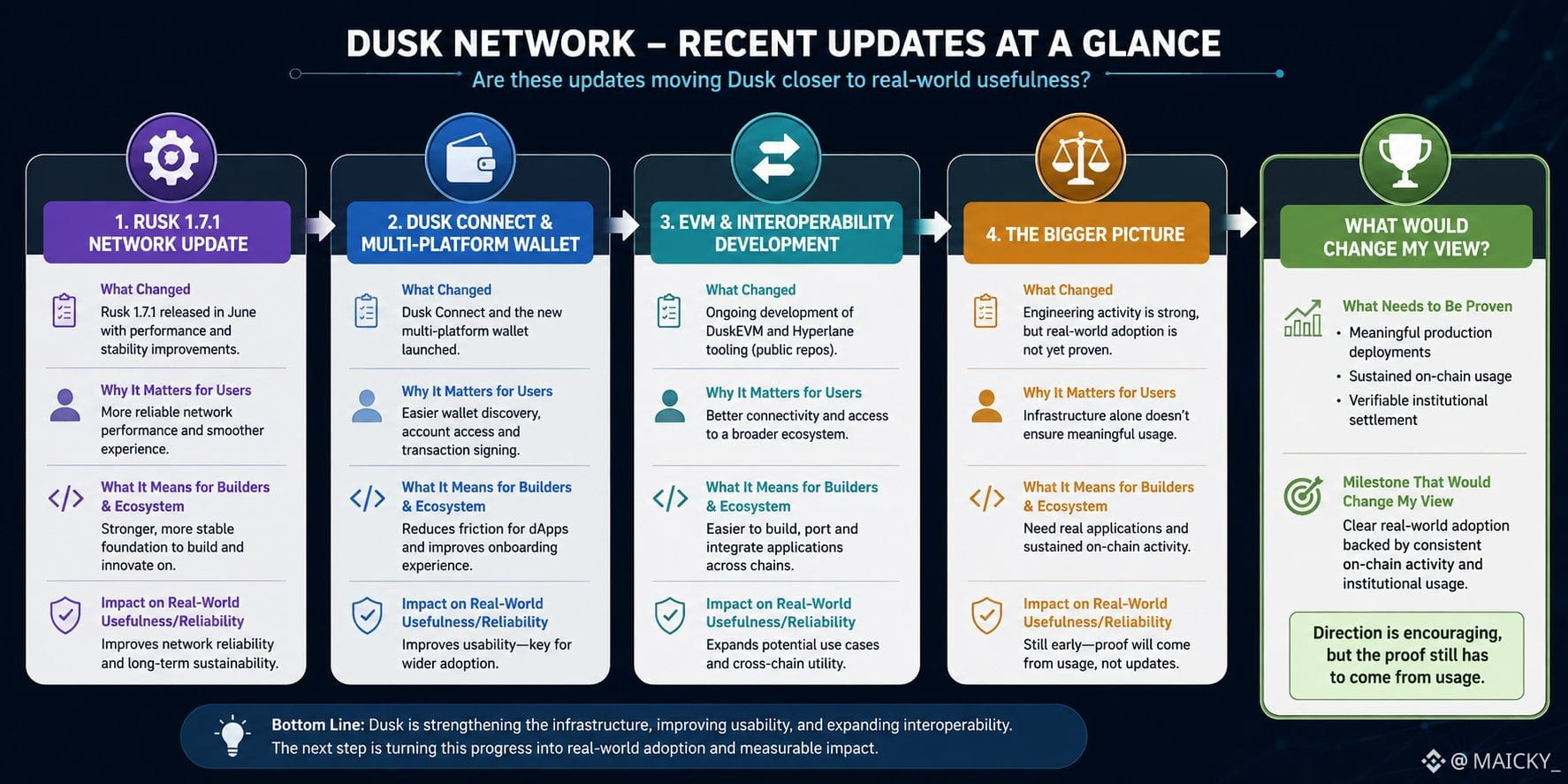

Ich habe Dusk wieder genau im Blick, und die jüngsten Fortschritte wirken eher wie das Härten der Infrastruktur als wie eine reißerische Schlagzeile. Rusk 1.7.1 wurde im Juni veröffentlicht, während Wallet und Core-Stack weiterhin bis in den Juli hinein Updates erhalten haben.
Das größere Signal für mich ist die Entwickler-Ebene. Dusk Connect und das neue Multi-Platform-Wallet sind darauf ausgelegt, Wallet-Erkennung, Kontozugriff und Transaktionssignierung für dApps zu vereinfachen, was direkt einen Teil der Reibung für Entwickler reduziert.
Außerdem achte ich auf die Arbeit an der EVM- und Interoperabilitätsebene. Die öffentlichen Repositories von Dusk zeigen eine fortgesetzte Entwicklung rund um DuskEVM und die Hyperlane-Tooling-Komponenten. Das legt nahe, dass das Ökosystem versucht, Dusk leichter zu entwickeln und mit ihm zu verbinden—nicht nur die Basiskette zu verbessern.
Aber ich würde das noch nicht als Beleg für echte weltweite Nutzung bezeichnen. Die jüngste technische Aktivität ist zwar bedeutsam, doch die schwierigere Frage bleibt, ob Entwickler tatsächlich hilfreiche Anwendungen bereitstellen und ob institutionelle Workflows dauerhaft Onchain-Aktivität erzeugen.
Mein Vertrauen hat sich leicht verbessert, weil die Bausteine allmählich besser nutzbar werden. Dennoch warte ich weiterhin auf stärkere Belege jenseits des Infrastrukturfortschritts. Für mich würden relevante Produktions-Deployments, anhaltende Nutzung und verifizierbare institutionelle Abwicklung meine Sicht deutlich verändern.
Also bleibt die Frage: Bringen diese Updates Dusk wirklich in Richtung Alltagstauglichkeit, oder sind es bisher größtenteils nur inkrementelle Fortschritte? Aktuell würde ich sagen, die Richtung ist ermutigend—aber der Beweis muss aus der Nutzung kommen.
#dusk @Dusk $DUSK
Das größere Signal für mich ist die Entwickler-Ebene. Dusk Connect und das neue Multi-Platform-Wallet sind darauf ausgelegt, Wallet-Erkennung, Kontozugriff und Transaktionssignierung für dApps zu vereinfachen, was direkt einen Teil der Reibung für Entwickler reduziert.
Außerdem achte ich auf die Arbeit an der EVM- und Interoperabilitätsebene. Die öffentlichen Repositories von Dusk zeigen eine fortgesetzte Entwicklung rund um DuskEVM und die Hyperlane-Tooling-Komponenten. Das legt nahe, dass das Ökosystem versucht, Dusk leichter zu entwickeln und mit ihm zu verbinden—nicht nur die Basiskette zu verbessern.
Aber ich würde das noch nicht als Beleg für echte weltweite Nutzung bezeichnen. Die jüngste technische Aktivität ist zwar bedeutsam, doch die schwierigere Frage bleibt, ob Entwickler tatsächlich hilfreiche Anwendungen bereitstellen und ob institutionelle Workflows dauerhaft Onchain-Aktivität erzeugen.
Mein Vertrauen hat sich leicht verbessert, weil die Bausteine allmählich besser nutzbar werden. Dennoch warte ich weiterhin auf stärkere Belege jenseits des Infrastrukturfortschritts. Für mich würden relevante Produktions-Deployments, anhaltende Nutzung und verifizierbare institutionelle Abwicklung meine Sicht deutlich verändern.
Also bleibt die Frage: Bringen diese Updates Dusk wirklich in Richtung Alltagstauglichkeit, oder sind es bisher größtenteils nur inkrementelle Fortschritte? Aktuell würde ich sagen, die Richtung ist ermutigend—aber der Beweis muss aus der Nutzung kommen.
#dusk @Dusk $DUSK