

Vanar Blockchain has been popping up on my screens for a while, but it didn’t really feel “tradable” to me until the AI narrative stopped being vague and started shipping into the stack. In late January 2026, the project is getting attention because it’s trying to glue three things together that usually live in separate corners of crypto: AI tooling, gaming-grade performance, and real-world Web3 rails like payments and tokenized assets. That blend is exactly the kind of cross-narrative setup traders watch, because it tends to attract liquidity when themes rotate. Still, the important question is the boring one: what’s actually real here, and what’s still just roadmap?
At the base level, Vanar is positioned as a Layer-1 network launched in 2023, with its native token VANRY used for gas and network activity. If you’re newer, “Layer-1” just means the base chain itself (think the rails), not an app running on top. One data point I always look for is whether a chain has a clear economic footprint and user distribution. A recent overview pegged Vanar at 7,554 token holders and about 1.96 billion VANRY circulating as of 2026. That doesn’t tell you adoption is guaranteed, but it does help frame the size of the market you’re dealing with and why moves can be sharp when sentiment flips.
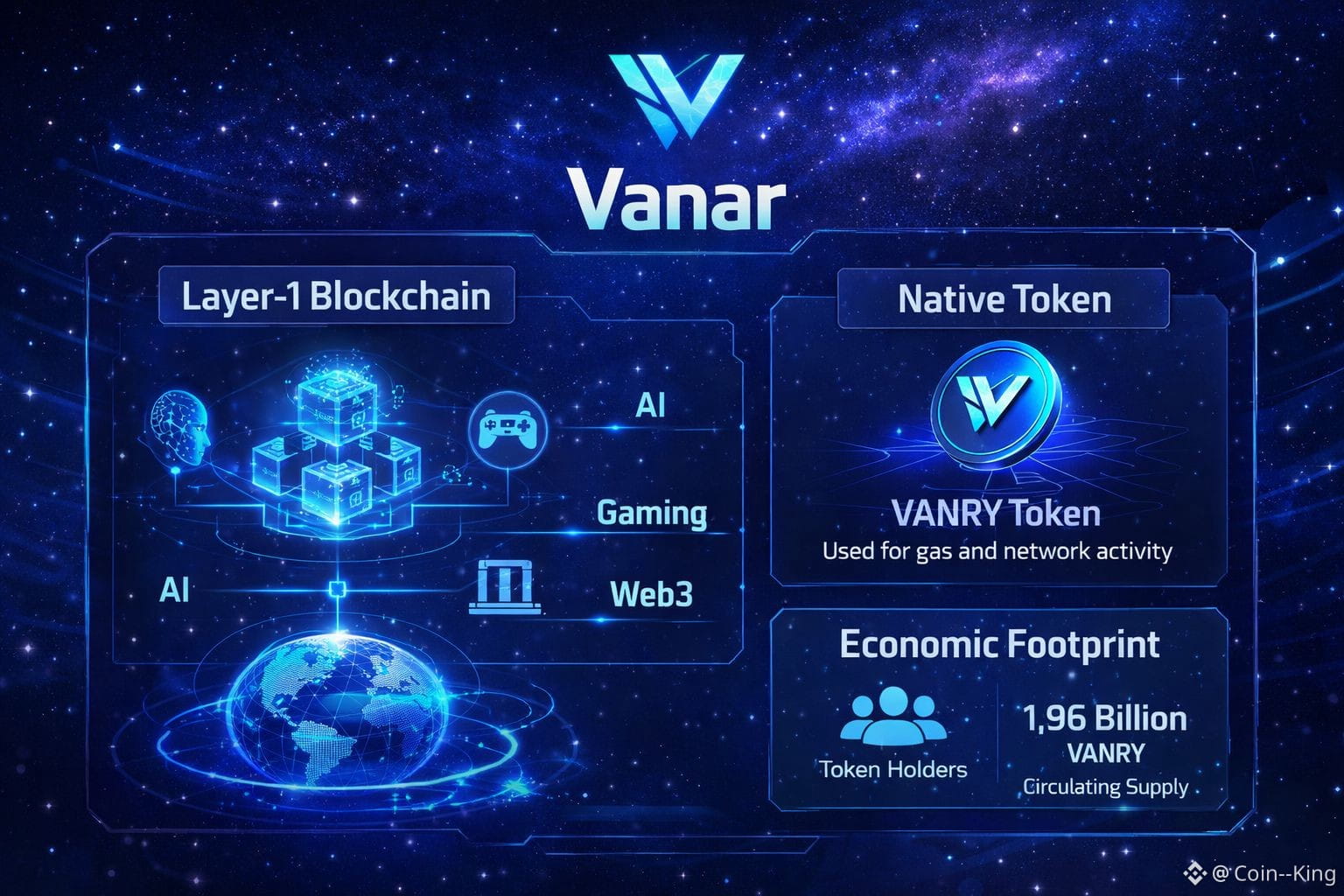
Where Vanar stands out is the “AI-native” pitch, and I’ll translate that into plain terms. Most blockchains treat AI like an external app: you run models off chain, then post results back on-chain through an oracle or an API. Vanar’s messaging is that AI components models, agents, datasets, and storageبare intended to be first class citizens in the infrastructure so apps can be “intelligent by default.” That’s still a broad claim, but it matters because developers want fewer moving parts. Fewer dependencies usually means fewer failure points, and failure points are where traders get surprised.
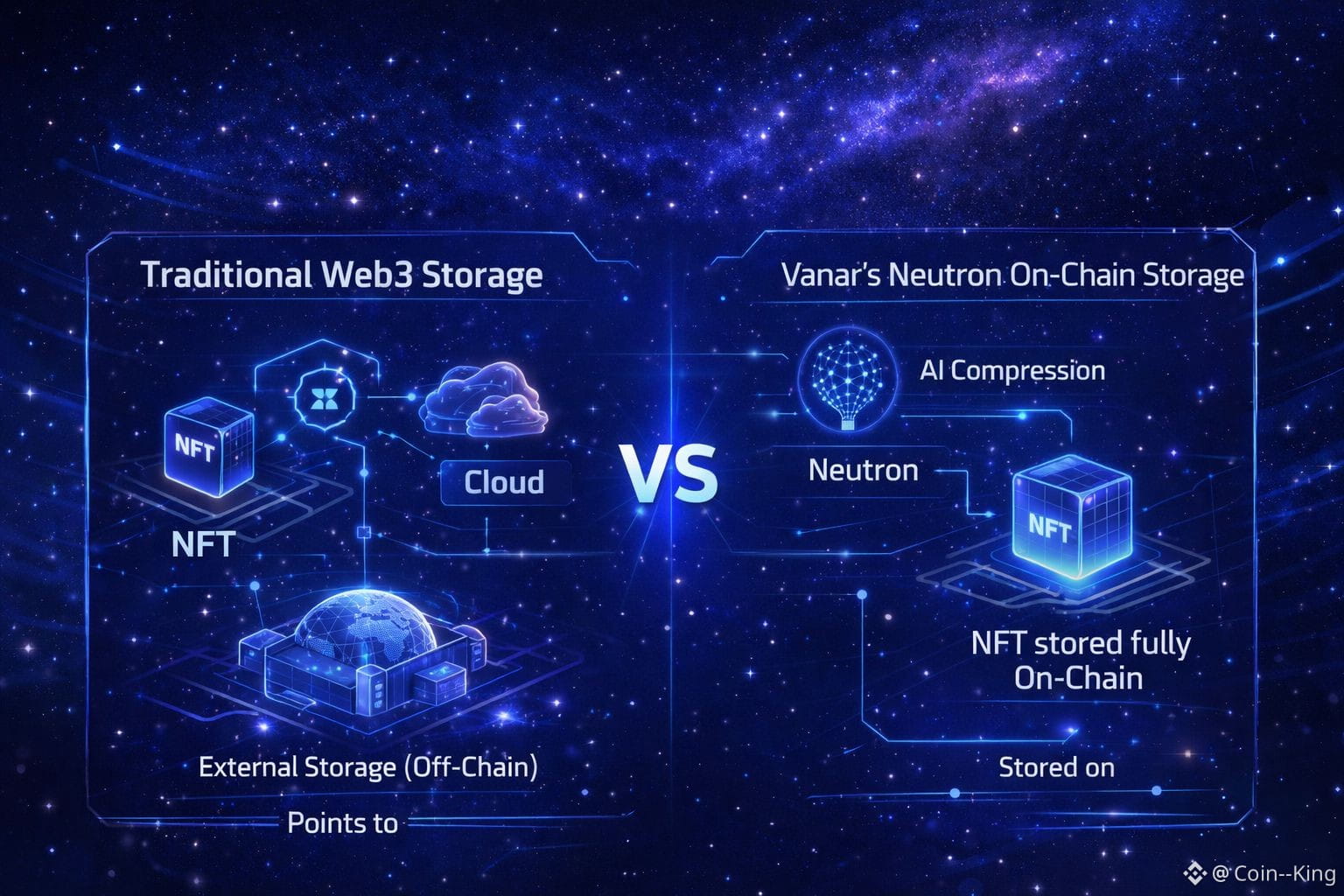
The most concrete technical milestone people cite is Neutron, which was publicly demonstrated at the Vanar Vision event on April 30, 2025 in Dubai (TODA). Neutron is described as an AI powered compression layer that can store complete files directly on-chain as “Seeds.” In normal Web3, your NFT image or game asset often sits on IPFS or even a regular cloud server, and the token just points to it. If the link dies, “ownership” becomes philosophical. Neutron’s promise is that compression makes full on chain storage practical, reducing reliance on external storage providers and making assets more self-contained. Whether it’s “first” or not is marketing territory, but the underlying direction less off chain dependency is a legit engineering goal.
Now layer gaming onto that. Gaming is brutal on infrastructure because it’s not one big transaction; it’s thousands of tiny actions. If fees spike or confirmations lag, players leave. Vanar’s documentation leans into fixed, tiny fee tiers, with common actions designed to land in a low tier that the docs equate to about $0.0005 in VANRY. That’s the kind of detail I like seeing because it’s measurable. As a trader, I’m not just asking “is it fast,” I’m asking “can a game economy survive real user load without turning into a fee simulator?”
Progress wise, Vanar has been talking about mainnet milestones since mid 2024, and community updates around June 2024 described the mainnet going live. I treat ecosystem recaps cautiously because they can be optimistic by design, but they do help establish a timeline: testnet to mainnet, validators, exchange integrations, and so on. What matters now is what’s built on top and whether developers stick around after the initial launch window. The more chains I’ve watched over the years, the more I’ve learned that “mainnet” is the starting gun, not the finish line.
So why is it trending specifically right now? A big catalyst is the January 19, 2026 “AI native infrastructure” launch that’s been circulating in market update feeds, plus the earlier 2025 GraphAI partnership narrative around making on chain data easier to index and query for AI use cases. Traders love clean story arcs: storage breakthrough in 2025, indexing/data readability in 2025, then a formal AI stack push in early 2026. That sequence is easy to understand, and easy narratives travel faster than nuanced ones.
The “real world Web3” angle is where I stay the most skeptical but also the most curious. Anything touching payments, compliance, or enterprise partnerships tends to move slower than crypto timelines. There’s public chatter about partnerships aimed at payments infrastructure, but partnerships alone don’t equal usage. The question I keep coming back to is simple: are merchants, studios, or apps actually routing meaningful activity through the chain, or is it still early positioning? If you’re investing or building here, that’s the line between a narrative trade and a durable thesis.
My takeaway, wearing my trader hat, is that Vanar sits in a sweet spot of narratives AI, gaming, and practical Web3 infrastructure at a time when markets are constantly hunting the “next” intersection. But the way I’d track it is unglamorous: watch developer output, watch whether on chain storage claims translate into real products, and watch whether the low fee promise holds under stress. If those pieces keep landing, the trend makes sense. If not, it becomes another chart driven cycle.
