
#termmax @TermMax
Früher dachte ich, dass TermMax vor allem ein Problem löst: die feste Verzinsung für Kredite direkt auf der Kette verfügbar zu machen. Nachdem ich mehr Zeit mit dem Design verbracht habe, glaube ich, dass die schwierigere Frage ist, was mit diesem festen Kredit passiert, wenn sich die Liquidität zu bewegen beginnt.
Genau dort wurde die Architektur für mich interessanter.
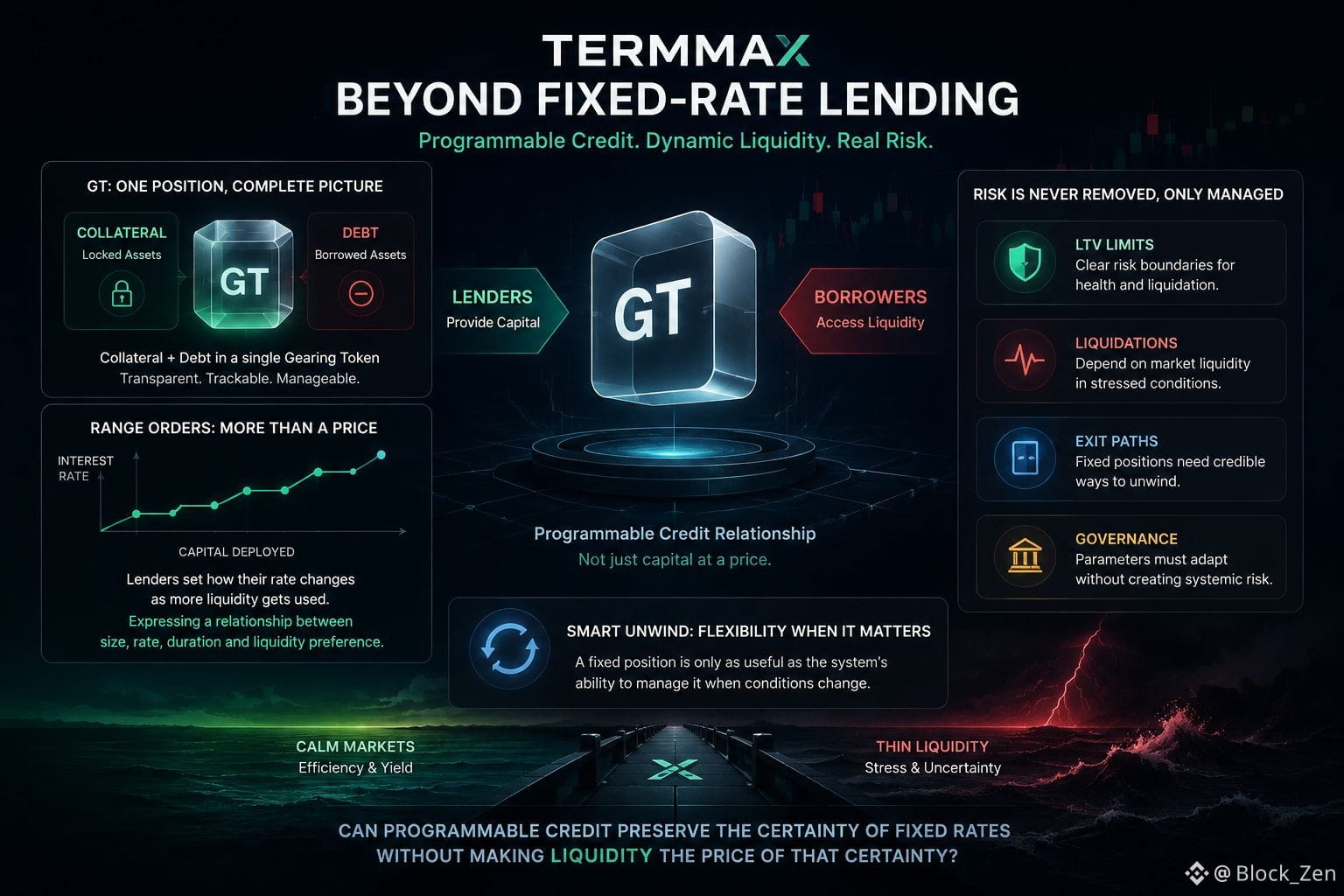
Die GT-Struktur bringt Sicherheiten und Schulden in eine einzige Position, während LTV-Limits die Risikogrenze leichter erkennbar machen. Range Orders gehen noch einen Schritt weiter, indem sie es Kreditgebern ermöglichen, auszudrücken, wie sich ihre geforderte Rate ändert, sobald mehr ihrer Liquidität in Anspruch genommen wird.
Dieser subtile Unterschied ist entscheidend.
Das bedeutet, dass der Markt nicht nur Kapital zu einem Preis zusammenbringt. Er kann beginnen, eine Beziehung zwischen Größe, Rate, Laufzeit und Liquiditätspräferenz auszudrücken.
Aber Flexibilität nimmt kein Risiko weg. Sie verlagert einen Teil der Komplexität an anderer Stelle.
Zwangsverwertungen hängen weiterhin von der Marktlabilität ab. Feste Positionen brauchen weiterhin glaubwürdige Ausstiegswege. Governance muss die Parameter ändern können, ohne dass eine lokale Anpassung in ein größeres Risikoereignis umschlägt.
Deshalb hat auch Smart Unwind meine Aufmerksamkeit geweckt. Eine feste Position ist nur so nützlich, wie das System in der Lage ist, sie zu verwalten, wenn sich die ursprünglichen Bedingungen nicht mehr richtig anfühlen.
Darum beobachte ich TermMax heute weniger wegen der Schlagzeilen-Rate, sondern vielmehr dafür, was passiert, wenn die Liquidität dünn wird.
Kann programmierbarer Kredit die Sicherheit fester Zinssätze bewahren, ohne stillschweigend Liquidität zum Preis dieser Sicherheit zu machen?
#TermMax @TermMax
Früher dachte ich, dass TermMax vor allem ein Problem löst: die feste Verzinsung für Kredite direkt auf der Kette verfügbar zu machen. Nachdem ich mehr Zeit mit dem Design verbracht habe, glaube ich, dass die schwierigere Frage ist, was mit diesem festen Kredit passiert, wenn sich die Liquidität zu bewegen beginnt.
Genau dort wurde die Architektur für mich interessanter.
Die GT-Struktur bringt Sicherheiten und Schulden in eine einzige Position, während LTV-Limits die Risikogrenze leichter erkennbar machen. Range Orders gehen noch einen Schritt weiter, indem sie es Kreditgebern ermöglichen, auszudrücken, wie sich ihre geforderte Rate ändert, sobald mehr ihrer Liquidität in Anspruch genommen wird.
Dieser subtile Unterschied ist entscheidend.
Das bedeutet, dass der Markt nicht nur Kapital zu einem Preis zusammenbringt. Er kann beginnen, eine Beziehung zwischen Größe, Rate, Laufzeit und Liquiditätspräferenz auszudrücken.
Aber Flexibilität nimmt kein Risiko weg. Sie verlagert einen Teil der Komplexität an anderer Stelle.
Zwangsverwertungen hängen weiterhin von der Marktlabilität ab. Feste Positionen brauchen weiterhin glaubwürdige Ausstiegswege. Governance muss die Parameter ändern können, ohne dass eine lokale Anpassung in ein größeres Risikoereignis umschlägt.
Deshalb hat auch Smart Unwind meine Aufmerksamkeit geweckt. Eine feste Position ist nur so nützlich, wie das System in der Lage ist, sie zu verwalten, wenn sich die ursprünglichen Bedingungen nicht mehr richtig anfühlen.
Darum beobachte ich TermMax heute weniger wegen der Schlagzeilen-Rate, sondern vielmehr dafür, was passiert, wenn die Liquidität dünn wird.
Kann programmierbarer Kredit die Sicherheit fester Zinssätze bewahren, ohne stillschweigend Liquidität zum Preis dieser Sicherheit zu machen?
#TermMax @TermMax