#dusk $DUSK @Dusk Piecrust überrascht mich immer wieder, je tiefer ich blicke.
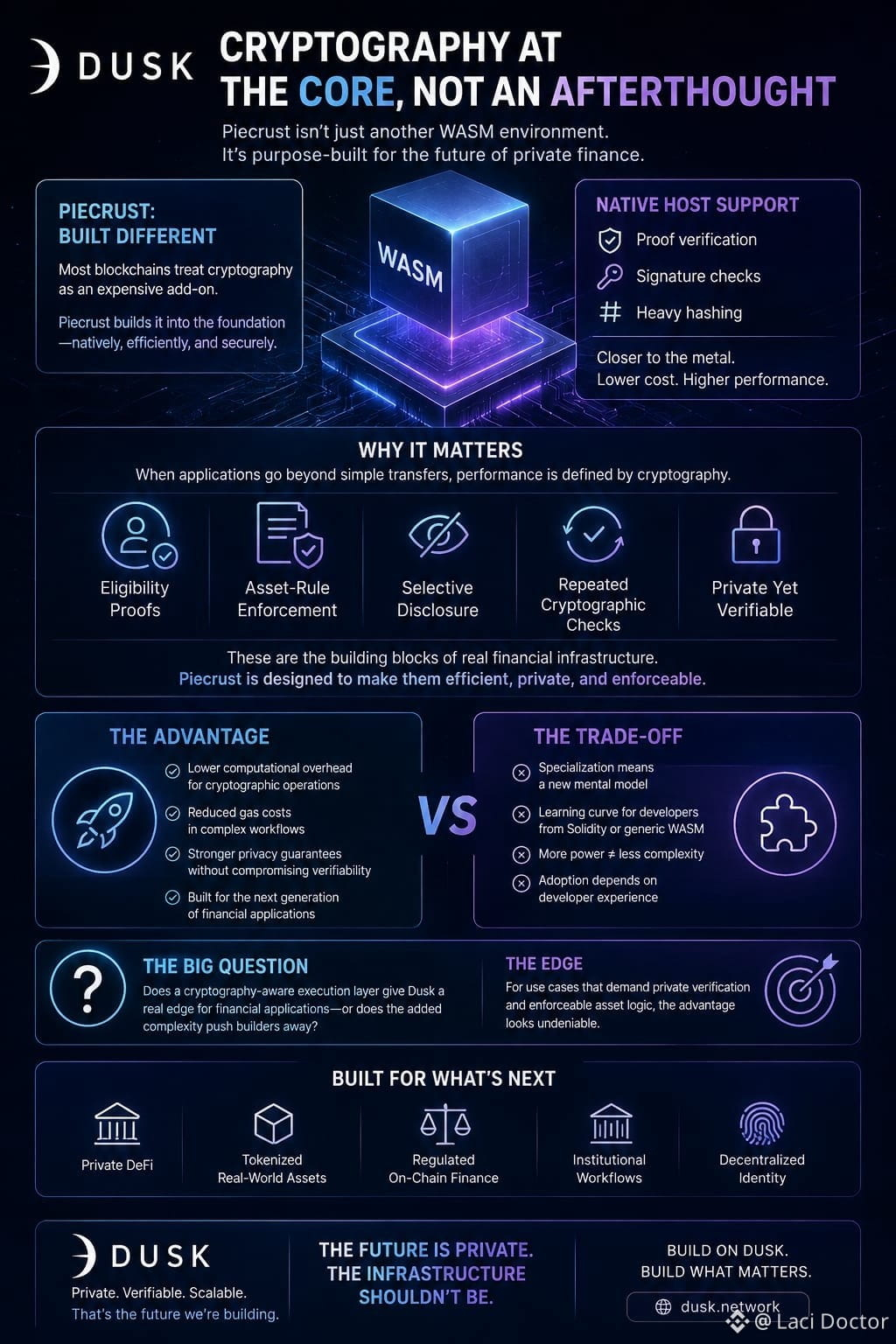
$DUSK ’s Smart-Contract-Umgebung läuft auf WebAssembly, aber das echte Highlight ist, wie bewusst sie mit kryptografischen Operationen umgeht. Die meisten Ausführungsschichten behandeln die Verifikation von Beweisen, Signaturprüfungen und aufwendiges Hashing als teure Extras, die man später nachrüstet. Piecrust geht den umgekehrten Weg: Diese Workloads sitzen durch nativen Host-Support näher am Metall, sodass der Contract nicht jedes Mal die übliche Virtualisierungs-Steuer zahlt, wenn er etwas verifizieren muss.
Diese Designentscheidung wird erst dann wirklich relevant, wenn die Anwendungen über einfache Token-Transfers hinausgehen. Finanzielle Infrastruktur benötigt routinemäßig Berechtigungsnachweise, Asset-Regel- Durchsetzung, selektive Offenlegung und wiederholte kryptografische Prüfungen, die privat bleiben, aber dennoch verifizierbar sind. Diese Operationen sind deutlich anspruchsvoller als einfache Zustandsupdates. Eine Umgebung, die genau für solche Anforderungen geformt ist, ist kein Marketing-Blabla – sie ist eine konkrete Architekturentscheidung, die Reibung genau dort reduziert, wo Finanzwesen sie am meisten spürt.
Natürlich gibt es dabei auch einen Tradeoff. Spezialisierung macht das System für eine bestimmte Art von Arbeit schärfer, führt aber auch ein zusätzliches mentales Modell ein, das Entwickler verinnerlichen müssen. Zusätzliche Fähigkeiten bedeuten nicht automatisch einfachere Entwicklung. Teams, die aus reinem Solidity oder generischem WASM kommen, stehen weiterhin vor einer Lernkurve; man kann nicht einfach Gewohnheiten übernehmen und erwarten, dass die Spitzenleistung automatisch erreicht wird.
Also bleibt die offene Frage spannend. Gibt eine kryptografie- bewusste Ausführungsschicht Dusk einen messbaren Vorteil für echte Finanzanwendungen, oder schafft die zusätzliche Spezialisierung genug Komplexität, sodass Entwickler am Ende doch Abstand nehmen? Für Use Cases, die tatsächlich private Verifikation und durchsetzbare Asset-Logik brauchen, wirkt der Vorteil erheblich. Ob dieser Vorsprung die Hürde für genügend Teams überwiegt, wird entscheiden, wie weit das Design getragen wird.
#DUSKARMY. #Dusk/usdt✅ #Dusk. #duskcoin $DUSK
$DUSK ’s Smart-Contract-Umgebung läuft auf WebAssembly, aber das echte Highlight ist, wie bewusst sie mit kryptografischen Operationen umgeht. Die meisten Ausführungsschichten behandeln die Verifikation von Beweisen, Signaturprüfungen und aufwendiges Hashing als teure Extras, die man später nachrüstet. Piecrust geht den umgekehrten Weg: Diese Workloads sitzen durch nativen Host-Support näher am Metall, sodass der Contract nicht jedes Mal die übliche Virtualisierungs-Steuer zahlt, wenn er etwas verifizieren muss.
Diese Designentscheidung wird erst dann wirklich relevant, wenn die Anwendungen über einfache Token-Transfers hinausgehen. Finanzielle Infrastruktur benötigt routinemäßig Berechtigungsnachweise, Asset-Regel- Durchsetzung, selektive Offenlegung und wiederholte kryptografische Prüfungen, die privat bleiben, aber dennoch verifizierbar sind. Diese Operationen sind deutlich anspruchsvoller als einfache Zustandsupdates. Eine Umgebung, die genau für solche Anforderungen geformt ist, ist kein Marketing-Blabla – sie ist eine konkrete Architekturentscheidung, die Reibung genau dort reduziert, wo Finanzwesen sie am meisten spürt.
Natürlich gibt es dabei auch einen Tradeoff. Spezialisierung macht das System für eine bestimmte Art von Arbeit schärfer, führt aber auch ein zusätzliches mentales Modell ein, das Entwickler verinnerlichen müssen. Zusätzliche Fähigkeiten bedeuten nicht automatisch einfachere Entwicklung. Teams, die aus reinem Solidity oder generischem WASM kommen, stehen weiterhin vor einer Lernkurve; man kann nicht einfach Gewohnheiten übernehmen und erwarten, dass die Spitzenleistung automatisch erreicht wird.
Also bleibt die offene Frage spannend. Gibt eine kryptografie- bewusste Ausführungsschicht Dusk einen messbaren Vorteil für echte Finanzanwendungen, oder schafft die zusätzliche Spezialisierung genug Komplexität, sodass Entwickler am Ende doch Abstand nehmen? Für Use Cases, die tatsächlich private Verifikation und durchsetzbare Asset-Logik brauchen, wirkt der Vorteil erheblich. Ob dieser Vorsprung die Hürde für genügend Teams überwiegt, wird entscheiden, wie weit das Design getragen wird.
#DUSKARMY. #Dusk/usdt✅ #Dusk. #duskcoin $DUSK