Zwei Dämmerungs-Fakten wirkten zunächst widersprüchlich auf mich.
Der eine spricht von nativer Ausgabe und davon, dass dadurch der Bedarf an separaten Verwahr- und Registry-Ebenen sinkt. Dann gibt es Dusk, das mit Cordial Systems bei der institutionellen Verwahrung über Dusk Vault zusammenarbeitet.
Also habe ich mich gefragt: Wenn der Vermögenswert bereits nativ zur Kette gehört, warum braucht man dann trotzdem einen Verwahrdienst?
Ich denke, die Verwirrung entsteht dadurch, dass „Verwahrung“ für zwei unterschiedliche Dinge verwendet wird.
#dusk
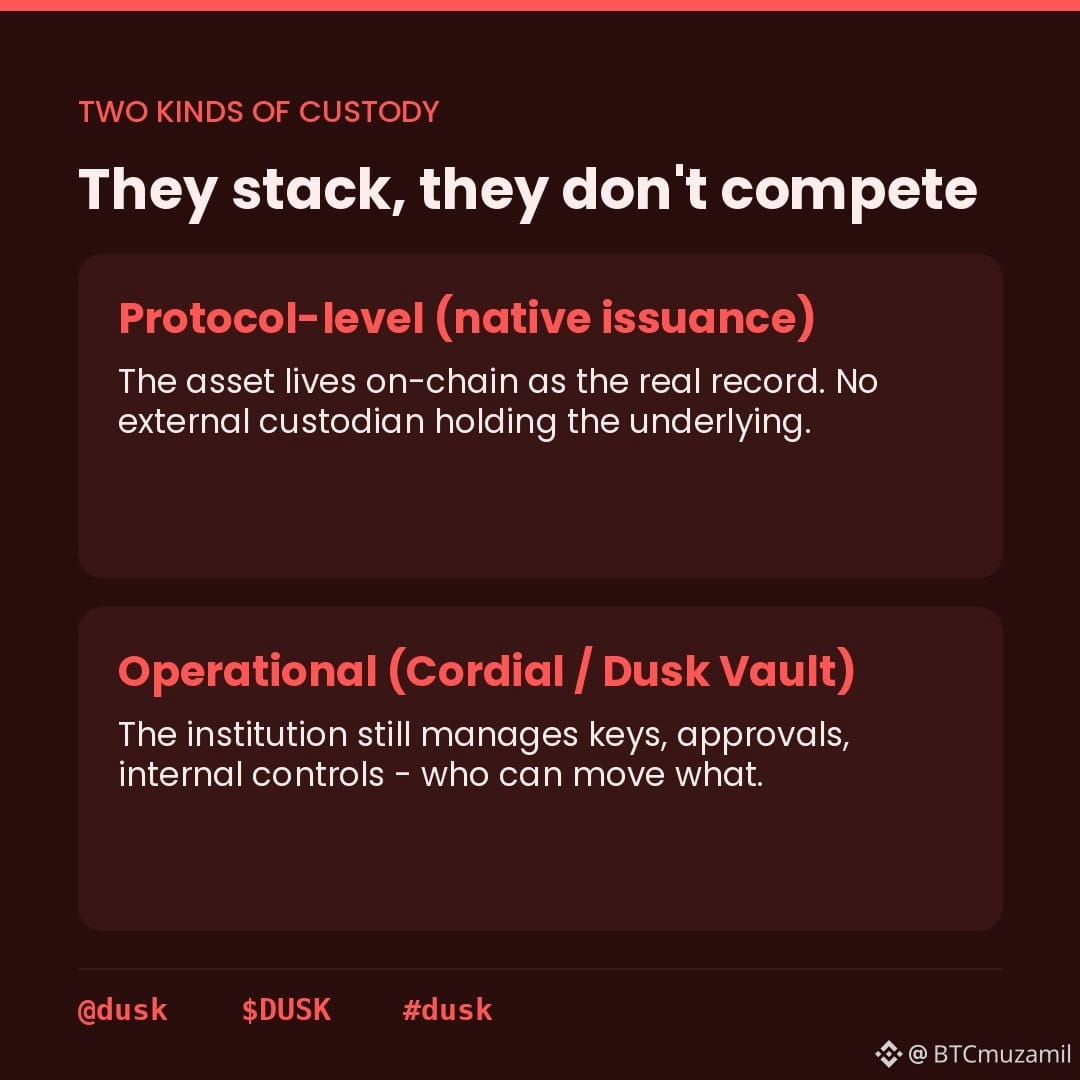
Bei nativer Ausgabe ist der entscheidende Punkt, dass der Vermögenswert und sein Eigentumsnachweis direkt Onchain leben können, statt dass der Token auf einen separaten 0ffchain-Eintrag zurückweist. Die Blockchain übernimmt die Eigentums- und Abwicklungslogik direkt im Rahmen der rechtlichen Struktur hinter dem Vermögenswert.
Cordial löst hingegen ein anderes Problem.
Eine Institution, die digitale Vermögenswerte hält, muss sich weiterhin mit Schlüssel-Freigaben, Signier-Richtlinien, Berechtigungen, internen Kontrollen und Audit-Anforderungen befassen. Das ist die operative Seite der Verwahrung. Dass der Vermögenswert 0nchain ist, lässt diese Probleme nicht einfach verschwinden.
Deshalb würde ich es nicht wirklich als Protokoll-Verwahrung versus institutionelle Verwahrung rahmen.
@Dusk
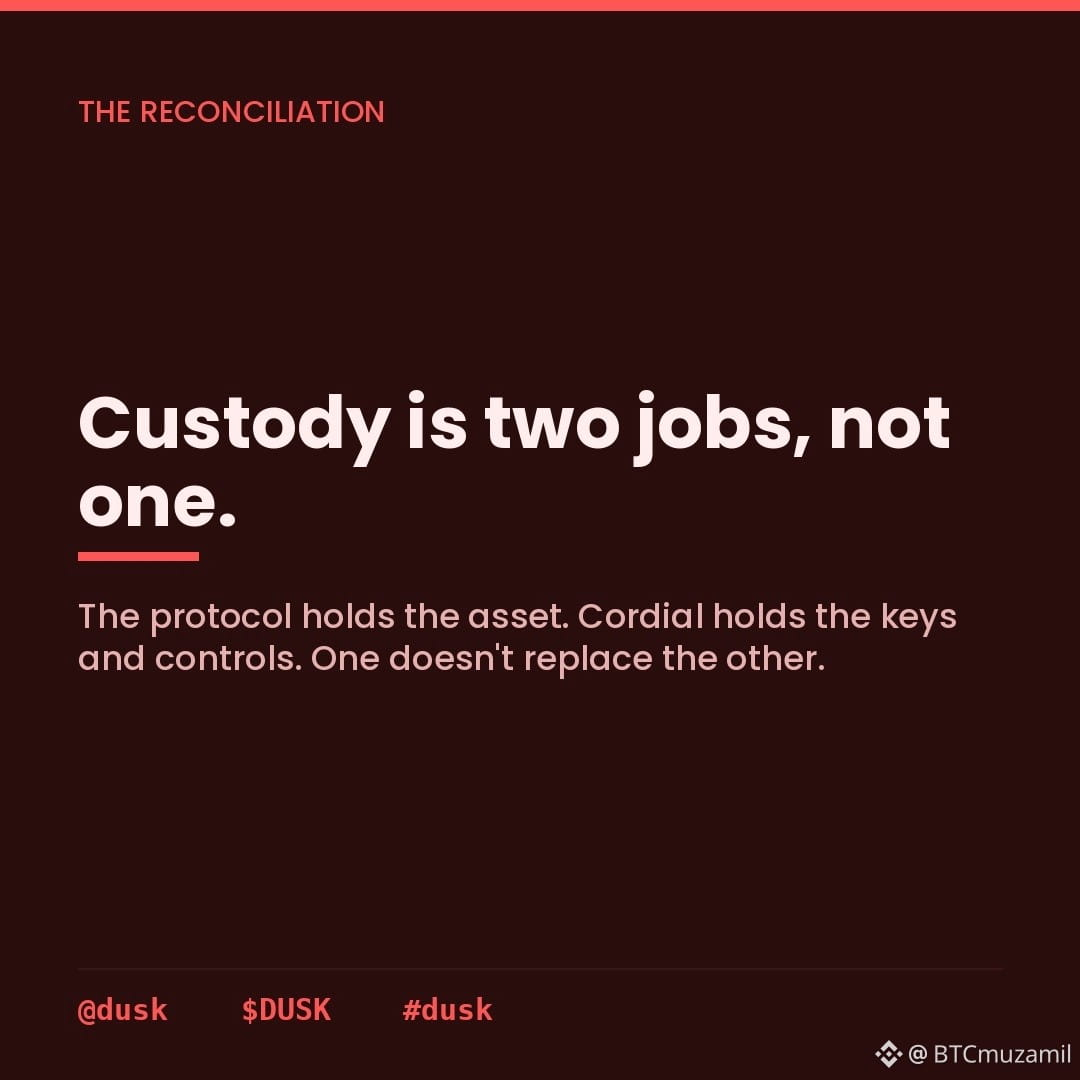
Es ist eher so: Das Onchain-System übernimmt den Vermögenswert und die Logik für die Übertragung, während institutionelle Verwahr-Tools die Art steuern, wie eine Organisation sicher Zugriff auf diese Vermögenswerte kontrolliert.
Und diese Unterscheidung ergibt für mich jetzt auch mehr Sinn.
Das Onchain-Setzen eines Security Tokens kann einige der alten Verwahr- und Abstimmungs-Schichten reduzieren. Das bedeutet aber nicht, dass eine Bank- oder Treasury-Abteilung plötzlich will, dass alle einen einzelnen privaten Schlüssel nutzen, ohne Freigabeprozess.
Das wirft eine interessantere Frage auf:
Was ist für ein institutionelles Treasury das größere Risiko, das gelöst werden muss: die Infrastruktur, die den Vermögenswert verwahrt, oder die c0ntrollen darum, wer ihn tatsächlich bewegen kann?
$DUSK
Der eine spricht von nativer Ausgabe und davon, dass dadurch der Bedarf an separaten Verwahr- und Registry-Ebenen sinkt. Dann gibt es Dusk, das mit Cordial Systems bei der institutionellen Verwahrung über Dusk Vault zusammenarbeitet.
Also habe ich mich gefragt: Wenn der Vermögenswert bereits nativ zur Kette gehört, warum braucht man dann trotzdem einen Verwahrdienst?
Ich denke, die Verwirrung entsteht dadurch, dass „Verwahrung“ für zwei unterschiedliche Dinge verwendet wird.
#dusk
Bei nativer Ausgabe ist der entscheidende Punkt, dass der Vermögenswert und sein Eigentumsnachweis direkt Onchain leben können, statt dass der Token auf einen separaten 0ffchain-Eintrag zurückweist. Die Blockchain übernimmt die Eigentums- und Abwicklungslogik direkt im Rahmen der rechtlichen Struktur hinter dem Vermögenswert.
Cordial löst hingegen ein anderes Problem.
Eine Institution, die digitale Vermögenswerte hält, muss sich weiterhin mit Schlüssel-Freigaben, Signier-Richtlinien, Berechtigungen, internen Kontrollen und Audit-Anforderungen befassen. Das ist die operative Seite der Verwahrung. Dass der Vermögenswert 0nchain ist, lässt diese Probleme nicht einfach verschwinden.
Deshalb würde ich es nicht wirklich als Protokoll-Verwahrung versus institutionelle Verwahrung rahmen.
@Dusk
Es ist eher so: Das Onchain-System übernimmt den Vermögenswert und die Logik für die Übertragung, während institutionelle Verwahr-Tools die Art steuern, wie eine Organisation sicher Zugriff auf diese Vermögenswerte kontrolliert.
Und diese Unterscheidung ergibt für mich jetzt auch mehr Sinn.
Das Onchain-Setzen eines Security Tokens kann einige der alten Verwahr- und Abstimmungs-Schichten reduzieren. Das bedeutet aber nicht, dass eine Bank- oder Treasury-Abteilung plötzlich will, dass alle einen einzelnen privaten Schlüssel nutzen, ohne Freigabeprozess.
Das wirft eine interessantere Frage auf:
Was ist für ein institutionelles Treasury das größere Risiko, das gelöst werden muss: die Infrastruktur, die den Vermögenswert verwahrt, oder die c0ntrollen darum, wer ihn tatsächlich bewegen kann?
$DUSK