
Im Jahr 2021 war Dogecoin überall. Elons Musk Posts, Reddit-Communities, Privatanleger und der umfassende Meme-Coin-Hype verwandelten DOGE von einem Internetwitz in eine der größten Kryptowährungen der Welt. DOGE erreichte ein Allzeithoch bei rund 0,7376 US-Dollar, während seine Marktkapitalisierung in diesem Zyklus explodierte.
Heute sieht die Lage ganz anders aus.
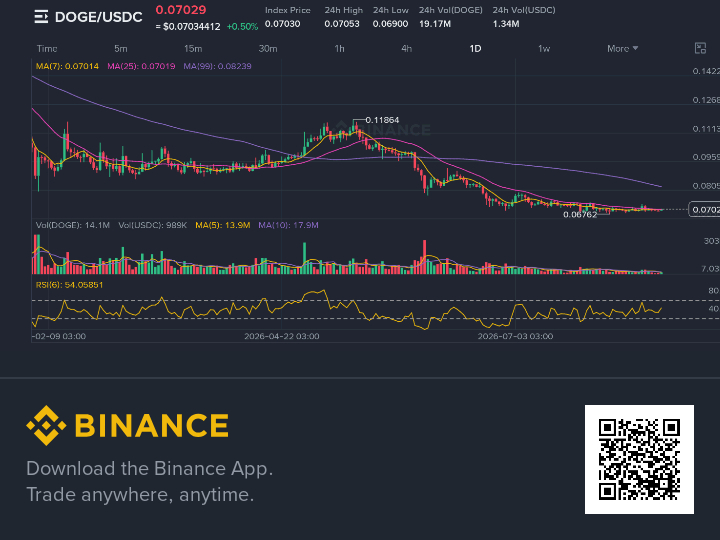
Das Diagramm zeigt DOGE/USDC bei etwa 0,07029 US-Dollar. Der Preis ist von dem im Diagramm sichtbaren Hoch von 0,11864 US-Dollar gefallen und hat anschließend eine lange Zeit seitwärts im Bereich von etwa 0,0676–0,071 US-Dollar gehandelt.
Das Auffälligste ist nicht einfach der Kursrückgang — sondern die fehlende Aufregung.
📉 Dieser Chart sieht aus wie eine vergessene Coin
Schau dir das Volumen an.
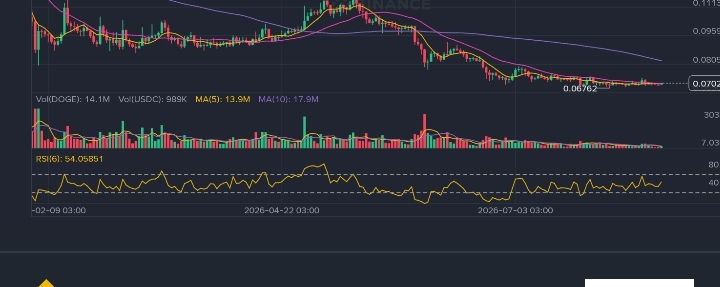
Während der großen Rallyes zog DOGE enorme Kaufvolumina an. Auf deinem Chart ist das Volumen jedoch zunehmend ausgedünnt, während der Preis tiefer ging und dann seitwärts lief.
Auch die gleitenden Durchschnitte erzählen die Geschichte:
MA(7): $0.07014
MA(25): $0.07019
MA(99): $0.08239
Aktueller Preis: ~ $0.07029
RSI: ~54
Die kurzfristigen Durchschnitte sind fast vollständig flach und liegen um den aktuellen Preis herum. Das ist typisch für einen Markt, der in eine Konsolidierungsphase übergegangen ist — statt eine starke Trend-Momentum-Phase zu haben.
Währenddessen liegt der 99-Tage-Durchschnitt deutlich höher — das zeigt, dass DOGE immer noch unter seinem längerfristigen Trend liegt.
🤔 Warum fühlt sich DOGE vergessen an?
Die größte Veränderung ist der Meme-Coin-Markt selbst.
DOGE dominierte früher die Meme-Coin-Erzählung. Aber neuere Meme Coins, Solana-basierte Tokens, politische Tokens, KI-Storys und andere spekulative Assets konkurrieren um die Aufmerksamkeit, die früher fast ausschließlich Dogecoin gehört hat.
Die Memecoin-Forschung von CoinGecko hat ergeben, dass DOGE weiterhin die größte Memecoin nach Marktanteil ist, aber seine Dominanz ist deutlich zurückgegangen, als neue Meme-Coin-Zyklen entstanden sind.
Und da gibt es noch einen wichtigen Faktor:
Der „Elon Musk-Effekt“ ist nicht mehr das, was er einmal war.
Musk war zweifellos der stärkste Katalysator hinter der Explosion von DOGE im Jahr 2021. Aber der Markt reagiert inzwischen weniger auf gelegentliche DOGE-bezogene Aktivitäten, während versprochene oder spekulierte Integrationen mit X nicht zu der Art von großem DOGE-Zahlungs-Ökosystem geführt haben, das sich viele Investoren vorgestellt hatten.
🔥 Aber hier wird es interessant
Eine vergessene Coin kann manchmal zu einem spannenden Kontraindikator-Setup werden.
DOGE muss nicht zwingend, dass alle bullisch sind.
Das braucht Aufmerksamkeit, um zurückzukehren.
Stell dir vor, DOGE bleibt monatelang bei etwa $0.07, während die Leute aufhören, darüber zu reden. Und dann plötzlich:
Bitcoin-Rallyes → Retail kommt zurück → Meme Coins fangen an sich zu bewegen → DOGE bekommt wieder Aufmerksamkeit → das Volumen explodiert.
Dann kann ein Chart wie dieser sich sehr schnell verändern.
Zum Beispiel ein Move von:
$0.070 → $0.10 = +42,9%
$0.070 → $0.15 = +114,3%
$0.070 → $0.20 = +185,7%
Die Prozentwerte sind mathematisch möglich, aber keine Prognosen. DOGE hat weiterhin ein erhebliches Abwärtsrisiko, und dass jedes Jahr ungefähr 5 Milliarden neue DOGE geschaffen werden, bedeutet, dass eine anhaltende Nachfrage für eine langfristige Preissteigerung wichtig ist.
🧠 Die eigentliche Frage ist nicht „Ist DOGE tot?“
Es ist:
> "Was passiert, wenn alle DOGE vergessen — und dann erinnert sich der Markt wieder daran?"
Das ist der interessante Teil deines Charts.
DOGE ist immer noch eine große Kryptowährung — eine aktuelle Marktrangliste ordnete sie etwa bei 12 Milliarden US-Dollar Marktkapitalisierung ein — daher wäre es ungenau, sie wörtlich als „tot“ zu bezeichnen.
Aber die Euphorie ist eindeutig verblasst.
Und Märkte verhalten sich oft seltsam: Das Asset, über das niemand reden will, kann plötzlich das Asset werden, das alle auf einmal haben wollen, sobald das Momentum zurückkommt.
DOGE ist vielleicht nicht tot. Es wartet vielleicht nur auf seine nächste Story. 🐕🦺📈