Flughäfen haben mir etwas beigebracht, das ich über Blockchain nicht erwartet hatte.
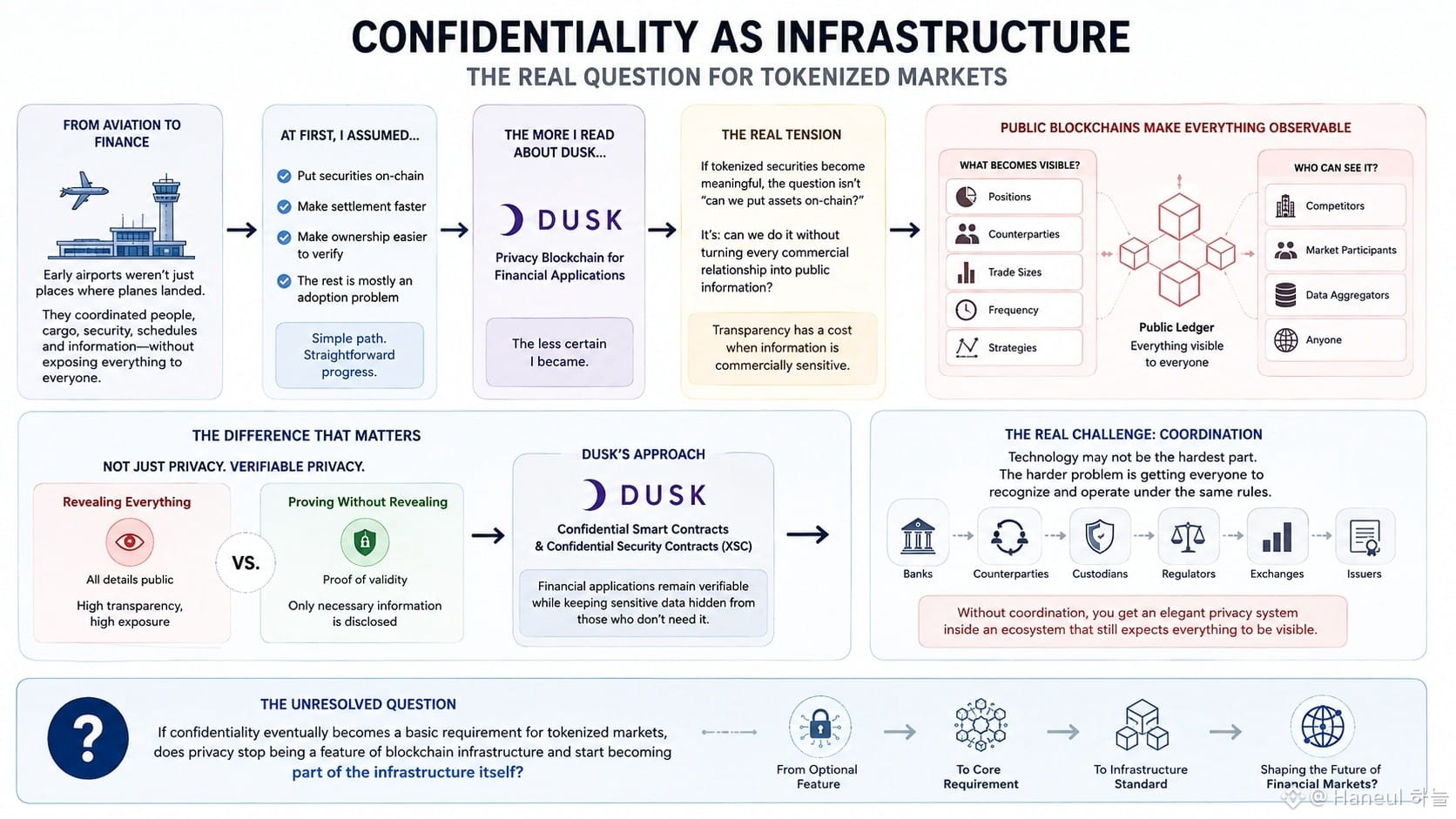
Eine Landung ist im Vergleich zu allem, was um das Flugzeug herum passiert, einfach: Fahrpläne, Sicherheitskontrollen, Fracht, Passagiere, Identitäten und Koordination. Das Schwierige war nie nur, das Flugzeug zu bewegen.
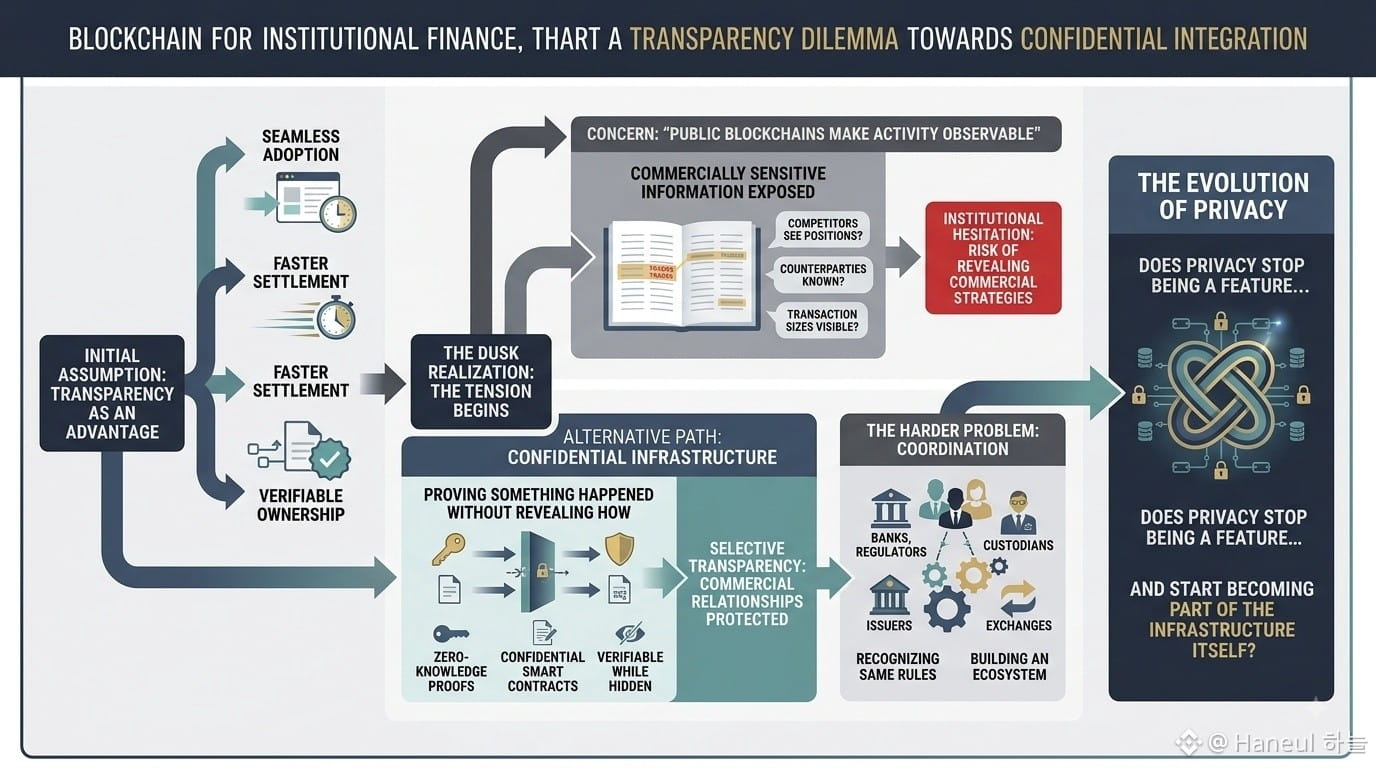
Zunächst nahm ich an, dass tokenisierte Finanzen ähnlich sein würden. Wertpapiere on-chain stellen, die Abwicklung beschleunigen, den Besitz leichter nachprüfbar machen – und dass die institutionelle Übernahme größtenteils folgen würde.
Je mehr ich über #dusk las, desto unsicherer wurde ich.
Wenn tokenisierte Wertpapiere wirklich bedeutsam werden, möchten Institutionen möglicherweise nicht jede Position, jede Handelsgröße, jeden Kontrahenten und jede finanzielle Beziehung in einem öffentlichen Ledger offenlegen.
Transparenz hilft. Regulierer können Aktivitäten überprüfen, Teilnehmende können die Abhängigkeit von Vermittlern reduzieren, und die Abwicklung wird leichter zu prüfen.
Aber Transparenz schafft auch ein seltsames Problem: Etwas nachzuweisen, dass es passiert ist, ist nicht unbedingt dasselbe wie offenzulegen, wie es passiert ist.
Ich denke immer wieder an diese Unterscheidung.
Dusk hat mit seinem Ansatz für vertrauliche Smart Contracts und dem Modell des Confidential Security Contract die Frage noch interessanter gemacht. Kann finanzielle Aktivität nachweisbar bleiben, während sensible Informationen vor denjenigen verborgen bleiben, die keinen Zugriff darauf benötigen?
Vielleicht ist das die eigentliche institutionelle Engstelle.
Ich bin mir nicht sicher.
Vielleicht wird Privatsphäre gar kein zusätzliches Feature der Blockchain-Finanzwelt sein. Vielleicht ist die größere Frage, ob Märkte on-chain werden können, ohne vollständig offengelegt zu werden.
#dusk
@Dusk
$DUSK
$GPS
$SNXXB
Eine Landung ist im Vergleich zu allem, was um das Flugzeug herum passiert, einfach: Fahrpläne, Sicherheitskontrollen, Fracht, Passagiere, Identitäten und Koordination. Das Schwierige war nie nur, das Flugzeug zu bewegen.
Zunächst nahm ich an, dass tokenisierte Finanzen ähnlich sein würden. Wertpapiere on-chain stellen, die Abwicklung beschleunigen, den Besitz leichter nachprüfbar machen – und dass die institutionelle Übernahme größtenteils folgen würde.
Je mehr ich über #dusk las, desto unsicherer wurde ich.
Wenn tokenisierte Wertpapiere wirklich bedeutsam werden, möchten Institutionen möglicherweise nicht jede Position, jede Handelsgröße, jeden Kontrahenten und jede finanzielle Beziehung in einem öffentlichen Ledger offenlegen.
Transparenz hilft. Regulierer können Aktivitäten überprüfen, Teilnehmende können die Abhängigkeit von Vermittlern reduzieren, und die Abwicklung wird leichter zu prüfen.
Aber Transparenz schafft auch ein seltsames Problem: Etwas nachzuweisen, dass es passiert ist, ist nicht unbedingt dasselbe wie offenzulegen, wie es passiert ist.
Ich denke immer wieder an diese Unterscheidung.
Dusk hat mit seinem Ansatz für vertrauliche Smart Contracts und dem Modell des Confidential Security Contract die Frage noch interessanter gemacht. Kann finanzielle Aktivität nachweisbar bleiben, während sensible Informationen vor denjenigen verborgen bleiben, die keinen Zugriff darauf benötigen?
Vielleicht ist das die eigentliche institutionelle Engstelle.
Ich bin mir nicht sicher.
Vielleicht wird Privatsphäre gar kein zusätzliches Feature der Blockchain-Finanzwelt sein. Vielleicht ist die größere Frage, ob Märkte on-chain werden können, ohne vollständig offengelegt zu werden.
#dusk
@Dusk
$DUSK
$GPS
$SNXXB